walking upstream…
Schoolly D


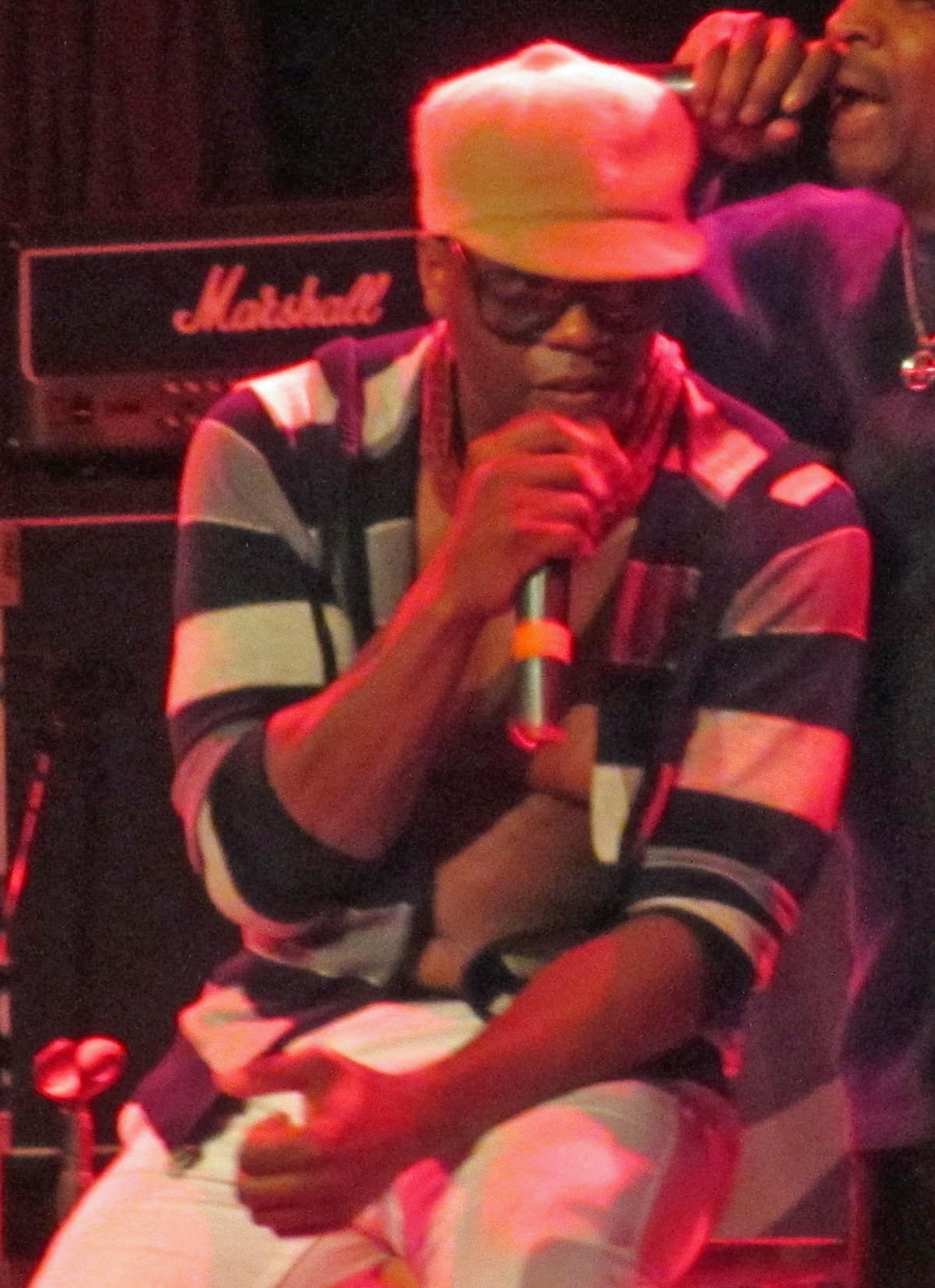 photo: swimfinfan · cc by-sa 2.0 ↗
Schoolly D
In 1976, watching Richard Pryor spar with Johnny Carson, a Philadelphia teenager born Jesse B. Weaver Jr. told his mother he wanted to do that, but with music. Nearly a decade later, after two overlooked singles, he self-released 'P.S.K. What Does It Mean?' (1985), a flat, menacing account of his Park Side Killers crew, cut live in a cavernous classical-music studio with DJ Code Money scratching over a drum machine while the two of them kept calling for 'more reverb.' A Spin writer covering Baltimore gang members who wouldn't stop playing the single coined the term that stuck to him for good: gangsta rap. Schoolly D's icy, deadpan delivery over a sparse beat became a direct blueprint for the West Coast sound that broke through a few years later.
the sound in question
1985
P.S.K. What Does It Mean?Schoolly D
walk the tributaries ↓
Spoonie Gee1970s–80s · Old-school hip hop / Hip hop
Schoolly D names Spoonie Gee's early-80s records — heard alongside the pioneering rap group Funky Four Plus One — as the reason he abandoned a plan to become a painter in the south of France and started writing rhymes instead. Years later, accused of copying Spoonie Gee's style outright, he barely pushed back: he recorded one response track, performed it exactly once, for Chuck D, then retired it for good. 'I felt it was silly because he's my hero,' he explained, twice, unprompted — old-school peer Grand Daddy IU calls the resemblance common knowledge from the era.
listen: upstream & heresource: HipHopDX (via Wayback Machine) — Schoolly D ↗
1979
Spoonin' RapSpoonie Gee
1985
P.S.K. What Does It Mean?Schoolly D
listen forCue Spoonie Gee's 'Spoonin' Rap' before Schoolly D's 'P.S.K.,' and the family resemblance is immediate: both rappers drop the sing-song bounce of early rap for something closer to a spoken confession, unhurried, almost bored, every line half-mumbled through a thick wash of reverb. Spoonie Gee narrates himself as the smoothest man in the room; Schoolly D narrates himself as the most dangerous one. Same cadence, same soaked-tape booth, opposite threat level.
Isaac Hayes1970s · Soul / Funk / Orchestral soul
Isaac Hayes shaped Schoolly D twice — first as a childhood touchstone, named in the same breath as Wattstax, the 1972 Stax soul festival captured on film, and the writer Langston Hughes as things that 'inspired me... all of it.' Decades later, scoring the theme song for Cartoon Network's Aqua Teen Hunger Force, Schoolly D says he consciously copied Hayes's own template of turning a soundtrack gig into a second act. 'I actually try to channel a piece of Issac Hayes,' he admitted. 'I pretend to be Issac Hayes.'
listen: upstream & heresource: HipHopDX (via Wayback Machine) — Schoolly D ↗
1971
Theme from ShaftIsaac Hayes
2000
Aqua Teen RapSchoolly D
listen forSet Hayes's 'Theme from Shaft' beside Schoolly D's Aqua Teen Hunger Force theme and the blueprint is audible: a spoken-sung baritone laying out a whole persona in under a minute over a tight, wah-wah-guitar funk bed. Hayes turned that formula into an Oscar and a soundtrack career; Schoolly D borrowed it wholesale for cable television, the same cool authority intact even over cartoon aliens.
Funkadelic1970s · Funk / Psychedelic rock / Funk rock / Soul
Funkadelic taught Schoolly D what an album was supposed to be, not just what it should sound like. He remembers his older brother handing him Funkadelic LPs to study for hours while rolling joints and playing the record — 'they got the art, it's gotta be a whole package,' he said, describing how that ritual became his own ambition for his self-titled 1985 debut: 'I wanted to make an album so people could see the art, so they could read it, so they could listen. And it should be a complete concept.'
listen: upstream & heresource: Billboard — Schoolly D Reflects on Creating Gangsta Rap With 'P.S.K.' on Its 30th Anniversary (bio, Funkadelic influence) ↗
1975
Get Off Your Ass and JamFunkadelic
1985
Gucci TimeSchoolly D
listen for'Get Off Your Ass and Jam' and Schoolly D's 'Gucci Time' share the same stripped-to-the-bone architecture: a fat, repetitive bass-and-drum vamp built for a room, punctuated by a shouted, call-and-response party chant instead of a melody. It's the general Funkadelic sound Schoolly D says he was chasing, rather than any one specific lift — a looser resemblance of a record he spent hours studying, not a direct lineage moment.