walking upstream…
Geto Boys


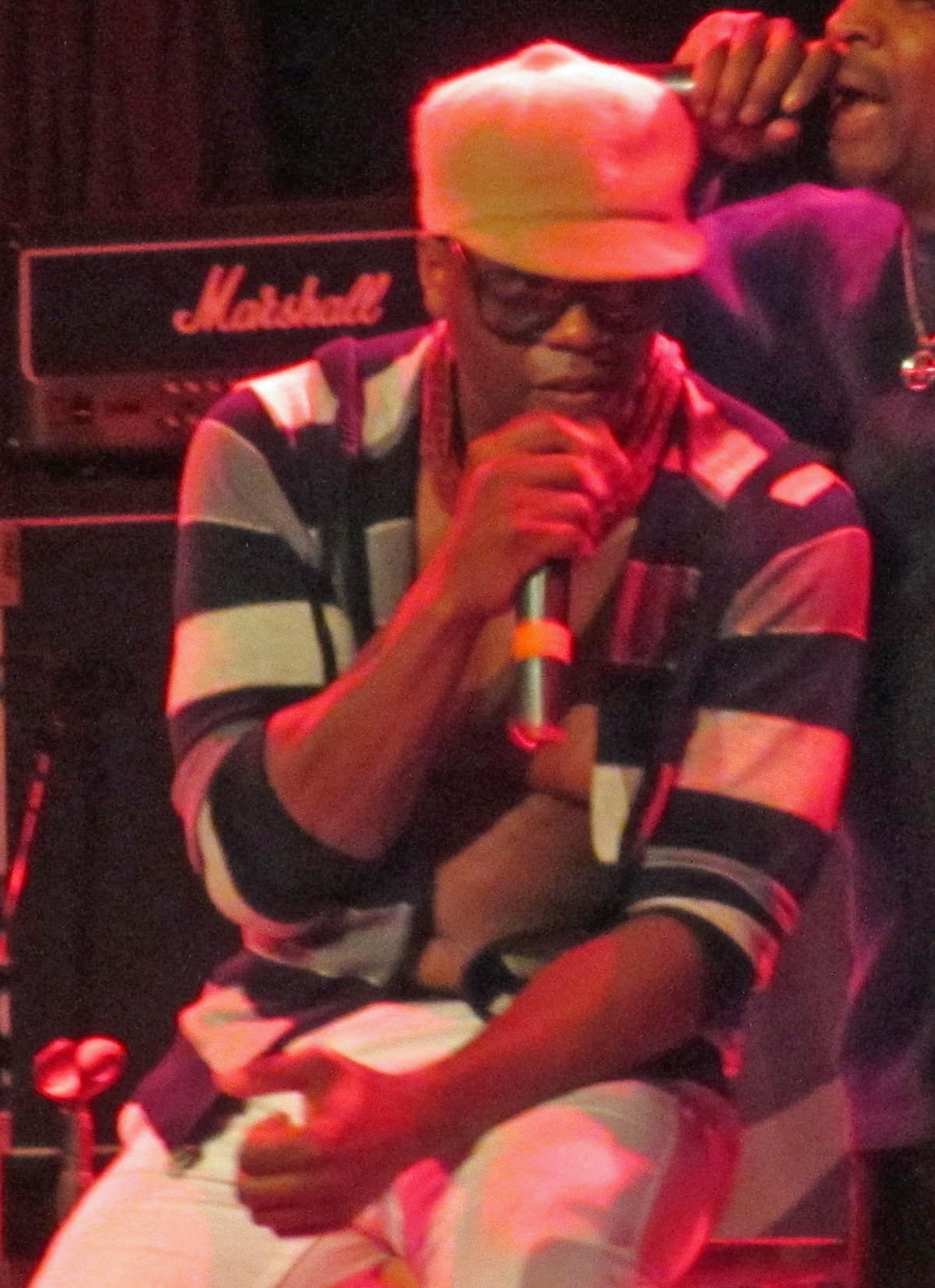
Geto Boys
sourcesFact Magazine — A beginner's guide to Scarface and the Geto Boys (RUN-DMC-clone-to-Bomb-Squad/Dre shift, tied to "Mind of a Lunatic") · The Root — 30 Days of Musical Blackness, Day 10 · Billboard — Schoolly D Reflects on Creating Gangsta Rap With 'P.S.K.' on Its 30th Anniversary (genre-founding status, Ice-T borrowing his cadence)
Willie D became the Texas Golden Gloves boxing champion in 1985, a year before he traded the ring for a microphone. Brad Jordan — soon Scarface — had already dropped out of high school and was selling drugs when Rap-A-Lot Records signed him under the alias Akshen. The Geto Boys they joined in 1986 started out chasing New York, wearing fedoras and gold chains and mimicking Run-D.M.C.'s drum-machine minimalism. Scarface's arrival tipped the sound toward something noisier and more sample-dense, and by 1991 that shift had produced "Mind Playing Tricks On Me," built from an Isaac Hayes loop turned inside out into paranoia. Houston already had rappers before the Geto Boys; after them, it had a genre with its own particular nightmares.
the sound in question
1991
Mind Playing Tricks On MeGeto Boys
walk the tributaries ↓
Isaac Hayes1970s · Soul / Funk / Orchestral soul
Scarface didn't hide the source. "Mind Playing Tricks On Me" is built from Isaac Hayes' 1974 deep cut "Hung Up On My Baby," and critic Nate Patrin credited the way Scarface "built a new verse-chorus-verse structure around the loops he made, and let the chorus play out on its own without vocals — a rare but well-deployed instance of a hip-hop anthem with an instrumental hook more memorable than some rappers' vocals." Panama Jackson put it more plainly: the Geto Boys "took a song that was pretty joyous in 'Hung Up…' and stayed true to its sound while flipping it on its head" into a study of paranoia.
listen: upstream & heresource: Stereogum — Breaks With Tradition ↗
1974
Hung Up On My BabyIsaac Hayes
1991
Mind Playing Tricks On MeGeto Boys
listen forListen to Isaac Hayes' original for its warm, blues-inflected guitar figure looping under a lounge-soul groove built for a slow night. Then cue "Mind Playing Tricks On Me" and hear Scarface strip that same loop of its warmth, turning it into something closer to a held breath — the chorus drops the vocals entirely and lets the guitar hook carry the dread on its own, the exact inversion of Hayes' original mood.
Run-D.M.C.1980s · Hip-hop / Old-school hip-hop
Before Scarface rapped a verse, the group that would become the Geto Boys was doing an impression. "Group members replicated the Larry Smith-produced Run-D.M.C. sound," the Houston Press wrote, "and even aesthetically emulated the Hollis, Queens pioneers by wearing the requisite black fedoras, black clothes and ostentatious gold chains." It was a starter kit, not a destination. Once Scarface joined, Fact Magazine noted, the group shifted "towards the noisy, sample collage style popularized by The Bomb Squad and Dr. Dre" — turning New York's stripped-down blueprint into something rowdier, and distinctly Houston's own.
listen: upstream & heresource: Houston Press — The Musical and Cinematic Origins of the Geto Boys (Run-D.M.C. aesthetic/sound, Ready Red's sampling, Schoolly D/BDP/N.W.A. positioning) ↗
1985
King of RockRun-D.M.C.
1989
Mind of a LunaticGeto Boys
listen forCue Run-D.M.C.'s "King of Rock" for its bare drum machine and Run and DMC trading blunt, declarative bars over almost nothing. Then play "Mind of a Lunatic," the track Fact Magazine cites as the turning point where the group first ditched that formula, and listen for the same unhurried, commanding cadence now buried under a much denser wall of samples — the vocal control Run-D.M.C. pioneered survives, even as the Geto Boys outgrow the bare-bones New York blueprint for something louder and more theatrical.
Schoolly D1980s · Gangsta rap / East Coast hip hop
Schoolly D's 1985 single "P.S.K. What Does It Mean?" is, as Billboard put it on the record's 30th anniversary, "a track now commonly regarded as the first gangsta rap song ever recorded" — a flat, matter-of-fact account of a Philadelphia gang that gave street narrative its documentary nerve. The Houston Press later placed the Geto Boys in that same lineage, writing that "alongside the likes of Schooly D, Boogie Down Productions and N.W.A.," their hard-boiled rhymes about Fifth Ward life helped drag rap "from imaginative but innocuous verbal gymnastics to realistic and often disturbing street-life scenarios."
listen: upstream & heresource: Houston Press — The Musical and Cinematic Origins of the Geto Boys (Run-D.M.C. aesthetic/sound, Ready Red's sampling, Schoolly D/BDP/N.W.A. positioning) ↗
1985
P.S.K. What Does It Mean?Schoolly D
1990
ScarfaceGeto Boys
listen forPlay "P.S.K." first and notice how Schoolly D just reports — a flat, half-sung cadence over a bare drum-machine loop, no remorse and no punchline. Then cue the Geto Boys' "Scarface" and hear that same reportorial deadpan, dressed now in Houston's murkier, more theatrical production: the narrator still describes the violence like a police blotter, but the beat has thickened into something closer to a horror score.