walking upstream…
Ice-T
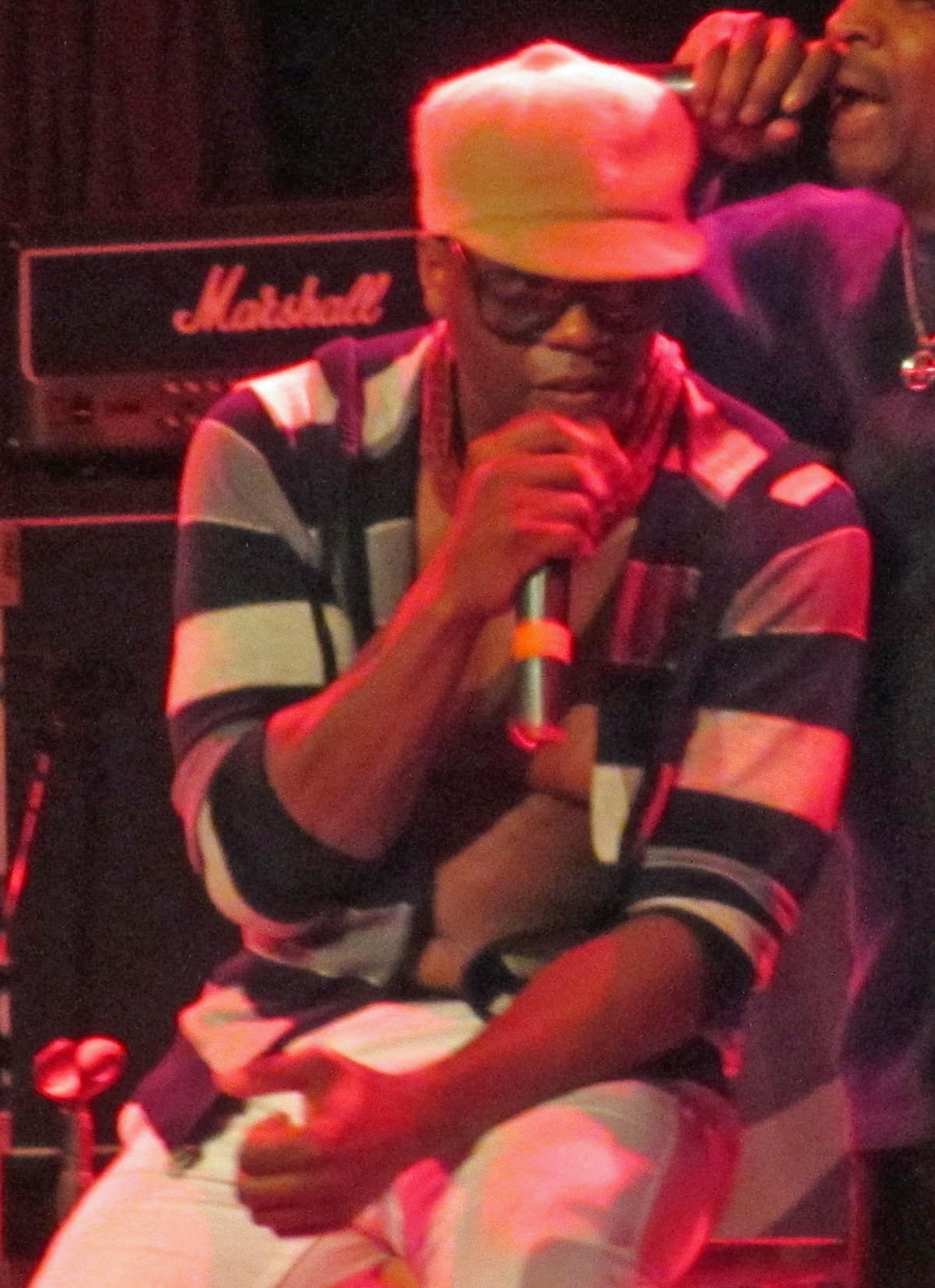


Tracy Marrow was orphaned as a young teenager in South Central Los Angeles and, by his own account, was already deep into the hustling and stickup life that surrounded Crenshaw High School. He has said rap saved him from it outright: "I was so programmed into being a hustler that if I hadn't had a chance to rap, I'd either be dead or in jail — or I'd be rich, but I knew the odds were against it." He took his name and his method from paperbacks passed around in study hall, then built a career narrating the streets like the writer he'd found there. By 1986's "6 in the Mornin'," gangsta rap had a founding text, and Ice-T had written it.
the sound in question
1986
6 in the Mornin'Ice-T
walk the tributaries ↓
Iceberg Slim1960s–70s · Spoken word / Street literature
Ice-T took his name and his method from a paperback he found at Crenshaw High: as a teenager he memorized passages from Robert Beck's Iceberg Slim novels and recited them for friends, one of whom started calling him "Ice." The debt runs deeper than the name. He has pointed to Slim's 1976 spoken-word record Reflections as the model for his own unglamorous, first-person street narration. "Who writes like that?" he told Collider in 2012. "It is poetry before rap. That is why I took the hook."
listen: upstream & heresource: Red Bull Music Academy — Ice-T lecture transcript (Iceberg Slim, Schoolly D, Curtis Mayfield influences, career narrative) ↗
1976
DureallaIceberg Slim
1991
Original GangsterIce-T
listen forPlay "Durealla" from Reflections and Slim narrates a street scene in the same unhurried, matter-of-fact voice he used on the page — no chorus, no performance, just an account delivered straight. Ice-T's "Original Gangster" answers directly: over a spare beat, he runs his own decade in chronological order, verse by verse, with the same reporter's remove Slim brought to the game. It's the sound of a rapper choosing to document rather than perform, exactly the distinction Ice-T has always drawn.
Schoolly D1980s · Gangsta rap / East Coast hip hop
Ice-T has said flatly that hearing Schoolly D's 1985 single "P.S.K. What Does It Mean?" in a club handed him the exact cadence for "6 in the Mornin'": "I took the cadence from that," he's explained, lining up the two hooks almost word for word — "P.S.K, we making that green" becomes "6 in the morning, police at my door." Schoolly D confirmed the debt from his own side, telling Billboard in 2015 that Ice-T called him directly before releasing the single, worried he'd think he was "biting your style."
listen: upstream & heresource: Red Bull Music Academy — Ice-T lecture transcript (Iceberg Slim, Schoolly D, Curtis Mayfield influences, career narrative) ↗
1985
P.S.K. What Does It Mean?Schoolly D
1986
6 in the Mornin'Ice-T
listen forCue up "P.S.K." and its bobbing, half-sung "P.S.K., we're making that green" hook, then drop into "6 in the Mornin'" and its "6 in the morning, police at my door" — the same sing-song stress pattern and deadpan menace, carried from Philadelphia's Park Side Killas to South Central. Ice-T slows the tempo and thins out the drums, but the vocal cadence is the through-line he has named as a direct, deliberate lift, not a coincidence of two rappers sharing an era's drum machine.
Curtis Mayfield1960s–70s · Soul / Funk / R&B
"I'm Your Pusher" (1988) built its hook from a Curtis Mayfield sample, and the song became a hit — the first rap record, Ice-T has said, with a full singing hook. He never repeated the trick. "Because 'I'm Your Pusher' had a Curtis Mayfield hook, and it hit, I thought it was cheating," he said at a 2017 Red Bull Music Academy talk. "That's too easy... no more singing hooks." The title inverts Mayfield's own: where "Pusherman" narrates a dealer's world from inside it, Ice-T recasts the pusher as a rapper peddling rhymes instead of dope.
listen: upstream & heresource: Red Bull Music Academy — Ice-T lecture transcript (Iceberg Slim, Schoolly D, Curtis Mayfield influences, career narrative) ↗
1972
PushermanCurtis Mayfield
1988
I'm Your PusherIce-T
listen forMayfield's falsetto hook on "Pusherman" floats over a loping, wah-wah bassline built for a dealer's strut; Ice-T lifts that same hook wholesale into "I'm Your Pusher," looping it under his own verses rather than writing a new melody. Listen for the seam: Mayfield's sung line arrives fully formed inside a harder, drum-machine-driven track, an island of melody in a rapped record — precisely the kind of singing hook Ice-T said afterward he'd never let himself use again.