walking upstream…
Rakim


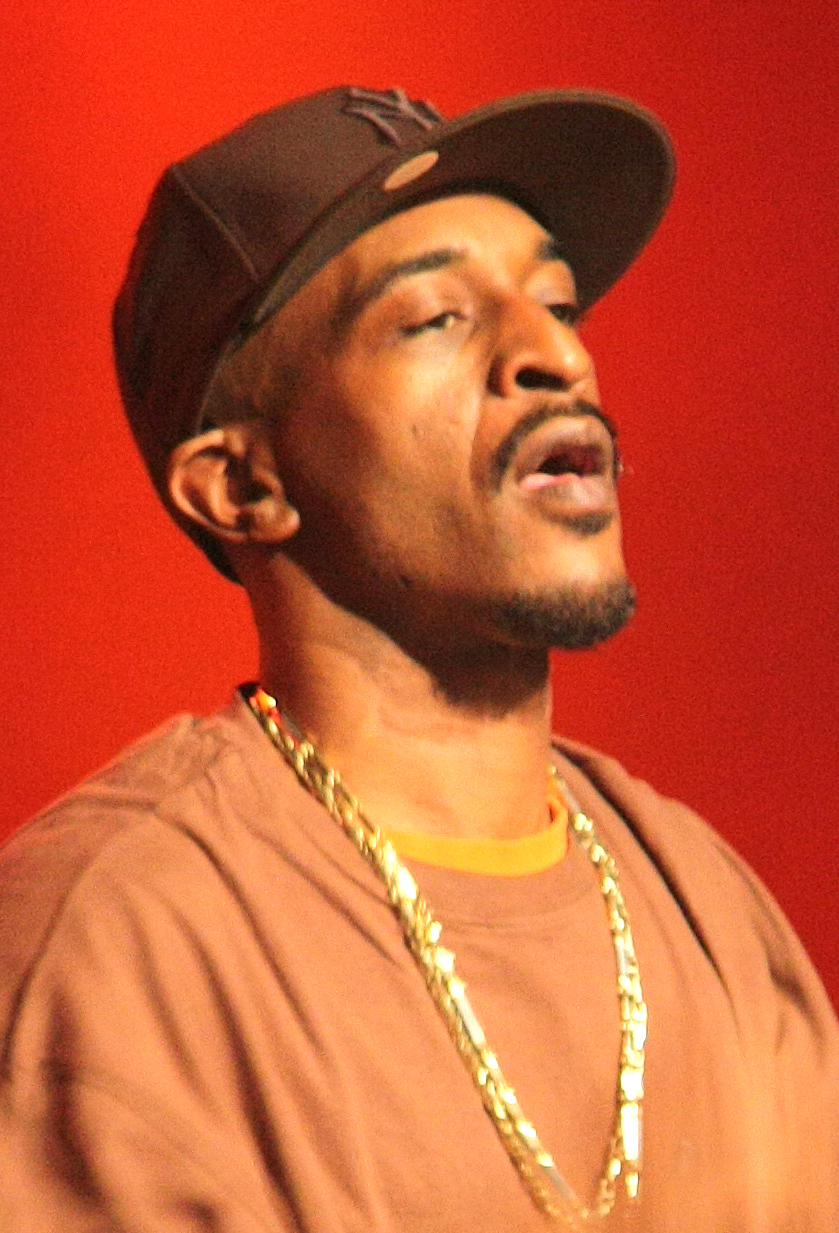
At seven, William Michael Griffin Jr. wrote his first rhyme about Mickey Mouse. Growing up in Wyandanch, on New York's Long Island, he had two other identities in reserve: a high school quarterback with football scouts watching, and a saxophone player raised around jazz, with an aunt, the R&B singer Ruth Brown, in the family. When the DJ Eric Barrier — Eric B. — recruited him in 1985, Griffin brought a horn player's patience to the microphone instead of a shout, and a new name, Rakim, followed. "Eric B. Is President" and Paid in Full (1987) introduced a rhyme scheme built on internal rhymes and unresolved cadences instead of a punchline every four bars; Follow the Leader (1988) pushed the idea further, stacking multisyllables until the beat seemed to be catching up to the words. Rakim didn't just rap well — he rewrote what rapping was allowed to sound like.
the sound in question
1987
Paid in FullRakim
walk the tributaries ↓
John Coltrane1960s · Jazz / Modal jazz / Spiritual jazz
In 1985, in his mother's basement, Rakim heard a John Coltrane record that rewired how he thought about writing. "It was rocking while never playing the same melody twice," he remembered. "I said to myself, 'I'm never gonna use the same cadence in one show. I'm going to switch it up, like a jazz musician.'" He'd already been a saxophone student who idolized the man — "I fell in love with the sax and I was always a big fan of saxophone players from... Coltrane to Dexter Gordon to Charlie [Parker]," he said — but that basement afternoon turned fandom into a rule for how a rhyme could move.
listen: upstream & heresource: Okayplayer — Rakim Talks John Coltrane with The Revivalist (saxophone background, Coltrane solo-style writing method) ↗
1964
A Love Supreme, Pt. I – AcknowledgementJohn Coltrane
1988
Follow the LeaderRakim
listen forOn "A Love Supreme," Coltrane's tenor drifts across the changes without repeating a phrase, never resolving where a listener expects. Rakim chases the same restlessness on "Follow the Leader," burying rhymes mid-line instead of at the bar's end. "I had an internal clock that kept interfering with the songs we were making," he said. "It was because I listened to all this different jazz... I really grasped the concept of timing." Listen for how his couplets refuse to land on the same beat twice — the cadence itself keeps modulating, like a solo that won't repeat a melody.
Melle Mel1980s · Hip hop / Old-school hip hop
Rakim has never been shy about his sources: "Grandmaster Caz, Melle Mel, and Kool Moe Dee are my Mount Rushmore," he said. "These MCs and their words and phrases sent me on my way." Of the three, Melle Mel came first: he "was there first [to me], and he was the dopest... Even early on, he was so prolific," Rakim said, marveling at a generation of MCs who invented a whole style with no footage to study, working, in his words, "with their bare hands." Before Rakim ever picked up a mic, Melle Mel had already proven a rapper could narrate a neighborhood instead of hyping a party.
listen: upstream & here
1982
The MessageMelle Mel
1987
Paid in FullRakim
listen forCue up "The Message" next to "Paid in Full" and the throughline is delivery, not subject: both records trade exuberant party rhymes for a level, unhurried voice describing exactly what's in front of it. Rakim called one Melle Mel verse from the early '80s "timeless" on first listen, and traced his own habit of writing plainly straight back to it: "I always wondered who he was influenced by. Where did he get his style from? Later, I realized he simply got it from himself." Neither MC ever raises his voice to make the moment land — the authority is already in the pacing.
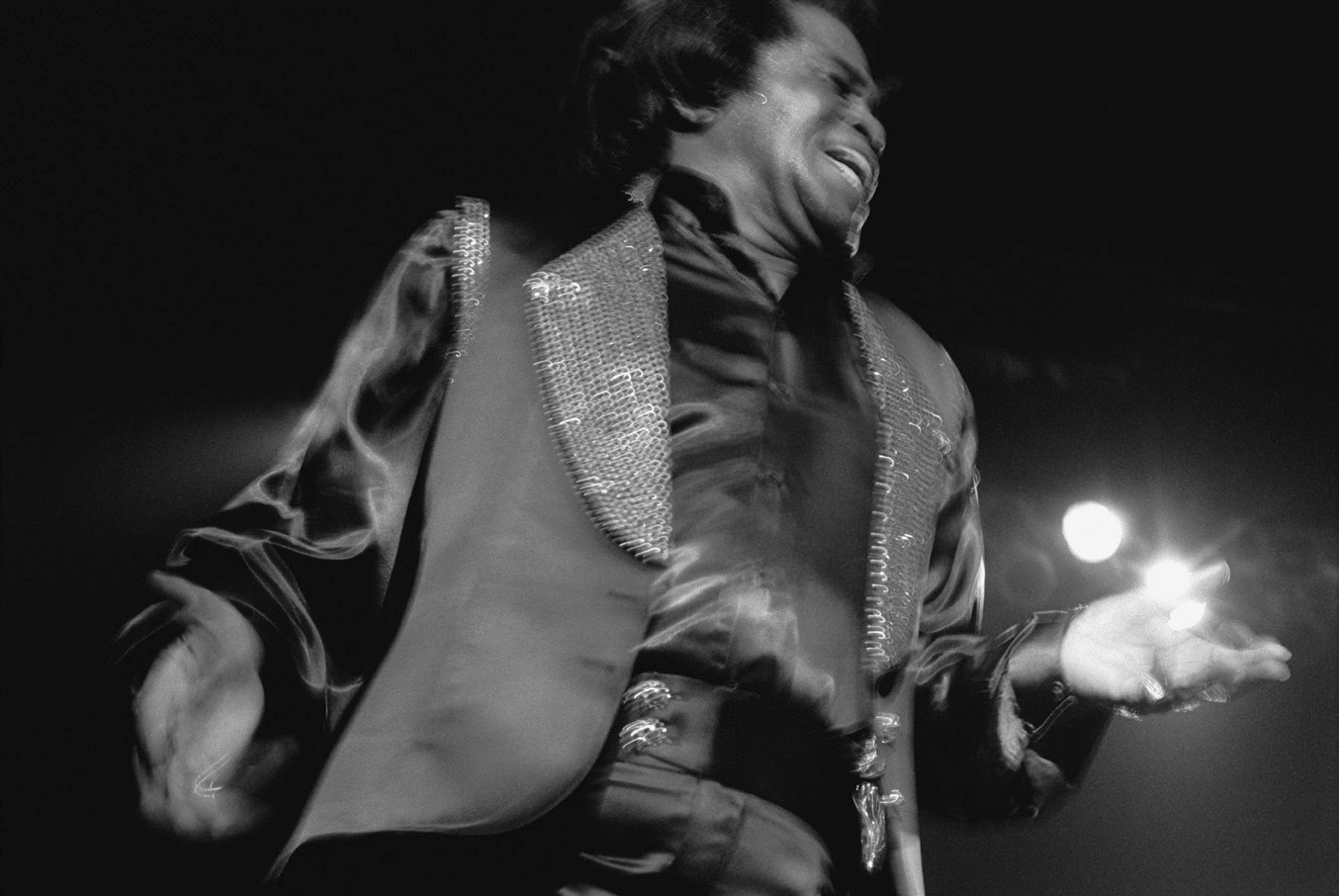
James Brown1960s–70s · Funk / Soul / Rhythm and blues
Eric B. built the sound Rakim rapped over almost entirely out of James Brown's band. "Eric B. Is President," the duo's 1986 debut single, loops two different Brown horn-and-groove records — "Get Up, Get Into It, Get Involved" and "Funky President" — under Rakim's verses, and the pair went back to Brown's drummer Clyde Stubblefield's "Funky Drummer" break a year later on "Lyrics of Fury." One retrospective credits the duo among the acts who "rediscovered" that break "in the 1980s," alongside Run-DMC, LL Cool J, and Public Enemy. Brown never rapped a bar, but the rhythmic floor under Rakim's most technical verses came from his catalogue.
listen: upstream & heresource: Songfacts — Eric B. Is President (James Brown samples ↗
1970
Get Up, Get Into It, Get InvolvedJames Brown
1986
Eric B. Is PresidentRakim
listen forPlay James Brown's "Get Up, Get Into It, Get Involved" against "Eric B. Is President" and listen for the horn stabs and drum pattern looped almost untouched under the verses — Eric B. didn't reinvent the groove, he isolated it and let it run. Rakim's flow rides on top of that repetition instead of fighting it, stretching long, unbroken lines across the same bars Brown's band vamps on. The connection isn't lyrical, it's structural: a JB break turned into a rhythm bed sturdy enough to carry rap's most patient rhymer.