walking upstream…
Paco de Lucía


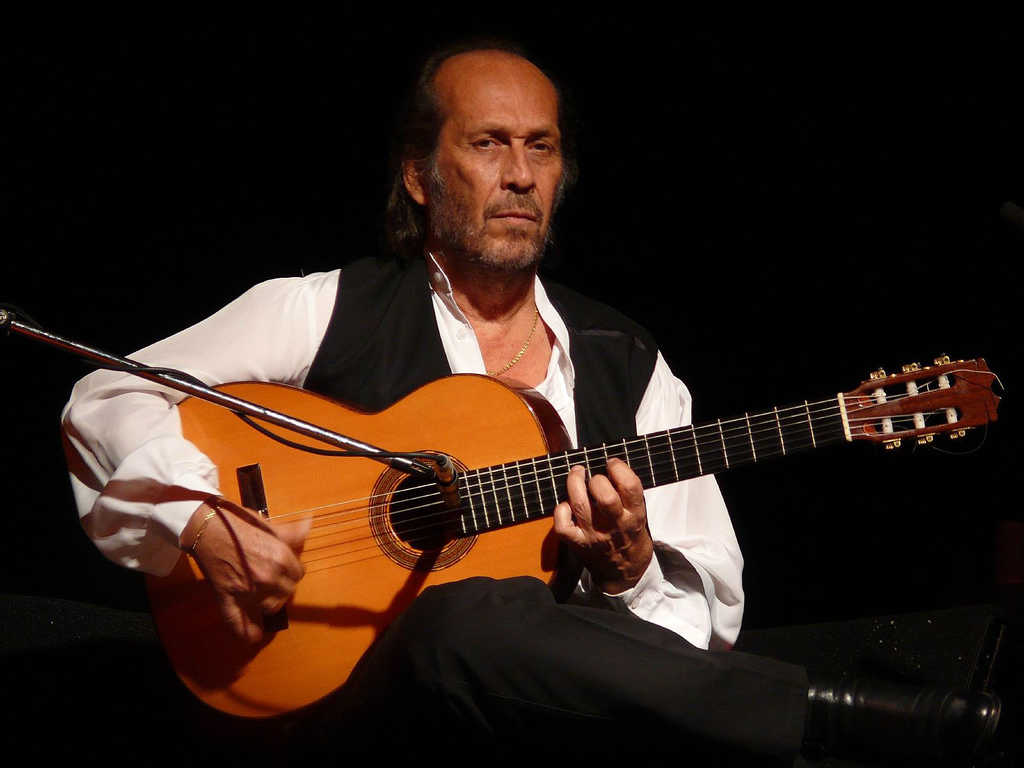 photo: cornel putan · cc by 2.0 ↗
Paco de Lucía
sourcesEl Independiente de Granada — Paco de Lucía · Lecturas.com — Paco de Lucía, en 1988 (TV interview transcript on his father) · El Español — El Cultural — Paco de Lucía, el genio de la guitarra (father's teaching, Los Chiquitos de Algeciras origin) · DeFlamenco.com — Entrevista histórica a Paco de Lucía (1986) (Sabicas relationship, purism debate) · Fundación Paco de Lucía — Discografía, Zyryab (Tío Sabas dedication to Sabicas) · Wikipedia — Paco de Lucía
Francisco Sánchez Gómez was six when his father put a guitar in his hands in Algeciras and refused to let him quit; by his teens he was touring the United States with dancer José Greco's company, soaking up New York's flamenco expatriate colony before coming home to reinvent the music. As Paco de Lucía he spent 1969 to 1977 accompanying singer Camarón de la Isla, then built a solo and ensemble career — with John McLaughlin, Al Di Meola, and Chick Corea — that carried flamenco guitar out of the tablao, flamenco's small stage venues, and into concert halls and jazz festivals worldwide, fusing traditional toque with jazz harmony and Latin rhythm. He died in 2014 having rewritten what the instrument could do.
the sound in question
1973
Entre Dos AguasPaco de Lucía
walk the tributaries ↓
Sabicas1950s · Flamenco / Flamenco Guitar
In the early 1960s, on tour with José Greco's company, teenage Paco was asleep in a New York hotel when Sabicas, flamenco's reigning solo virtuoso, showed up asking which flamenco players were in town. Woken and handed a guitar, Paco played the only music he knew — Niño Ricardo's. Sabicas heard him out, then told him, as Paco recalled to biographer Juan José Téllez, "que un guitarrista debía tocar su propia música, que no tenía que copiar a nadie" ("a guitarist had to play his own music, not copy anyone"). Paco said he never knew if it was kindness or vanity, but that it changed him more than any lesson.
listen: upstream & heresource: Fundación Paco de Lucía — Biografía oficial (father's teaching, family background, Sabicas encounter) ↗
Aires de Linares (Taranta)Sabicas
1990
Tío Sabas (Taranta)Paco de Lucía
listen forSabicas's "Aires de Linares," one of the tarantas he cut during his New York years, moves with a cleanliness and speed Paco singled out by name: "una limpieza de sonido que yo nunca había oído, una velocidad que igualmente desconocía" ("a cleanness of sound I'd never heard, a speed I hadn't known either"). Three decades on, Paco's own "Tío Sabas," an explicitly named taranta dedication on 1990's Zyryab, carries that same unhurried clarity in the right hand — the direct, audible thank-you to the man who redirected him.
Niño Ricardo1940s · Flamenco / Flamenco Guitar
Before there was a Paco de Lucía sound, there was note-for-note Niño Ricardo. Growing up in Algeciras, Paco fed on Ricardo's records and live playing the way his whole generation did — "el guitarrista que enseñó a toda nuestra generación, era un poco como el maestro de todos" ("the guitarist who taught our whole generation — a kind of teacher to everyone"), he told Téllez. The devotion bordered on religious: "hasta que descubrí a Sabicas, pensaba que Dios era Niño Ricardo" ("until I discovered Sabicas, I thought Niño Ricardo was God"). Biographer Paco Espínola confirmed the debt was still audible on Paco's 1967 debut LP.
listen: upstream & heresource: Campo de Gibraltar Siglo XXI — Paco de Lucía, made in USA (Téllez; Niño Ricardo devotion, Sabicas New York encounter, both men's testimony) ↗
1950
Por Soleares (En Mi)Niño Ricardo
1987
Gloria al Niño Ricardo (Soleá)Paco de Lucía
listen forRicardo's "Por Soleares" packs its falsetas — the guitar's signature melodic runs — tight with chromatic passing notes rarely heard in flamenco accompaniment before him. Paco's own tribute, "Gloria al Niño Ricardo," names its debt outright and keeps that same dense, harmonically restless soleá vocabulary, but stretches the runs faster and further from the home chord than Ricardo ever risked — the pupil answering the model in the model's own language, a generation later.
Antonio Sánchez Pecino1950s · Flamenco / Flamenco Guitar
Antonio Sánchez Pecino was mid-lesson with an older son when six-year-old Paco, who'd never touched a guitar, interrupted to correct an exercise out of compás, flamenco's pulse. He tested the boy, put a guitar in his hands, and never let go, drilling him eight hours a day until, per the Fundación's biography, there was nothing left to teach and training passed to his brother Ramón. Paco's own account carries no softening: "A mi padre se lo debo todo pues me obligó a tocar desde niño" ("I owe my father everything — he forced me to play from childhood") — his father had no money to send him to school.
listen: upstream & here
No known recordingAntonio Sánchez Pecino
1961
Hasta la Fe de Bautismo (Soleares)Paco de Lucía
listen forNo recording of the father's own guitar survives — he played for market stalls and private juergas, never a microphone. What's audible instead is his training's result: recorded in Madrid in 1961, when Paco was twelve, "Hasta la Fe de Bautismo," cut with brother Pepe as Los Chiquitos de Algeciras, already carries compás locked down tight enough to anchor a commercial soleares — eight hours a day, for six years, made audible before Paco was even a teenager.