walking upstream…
Alejandro Sanz
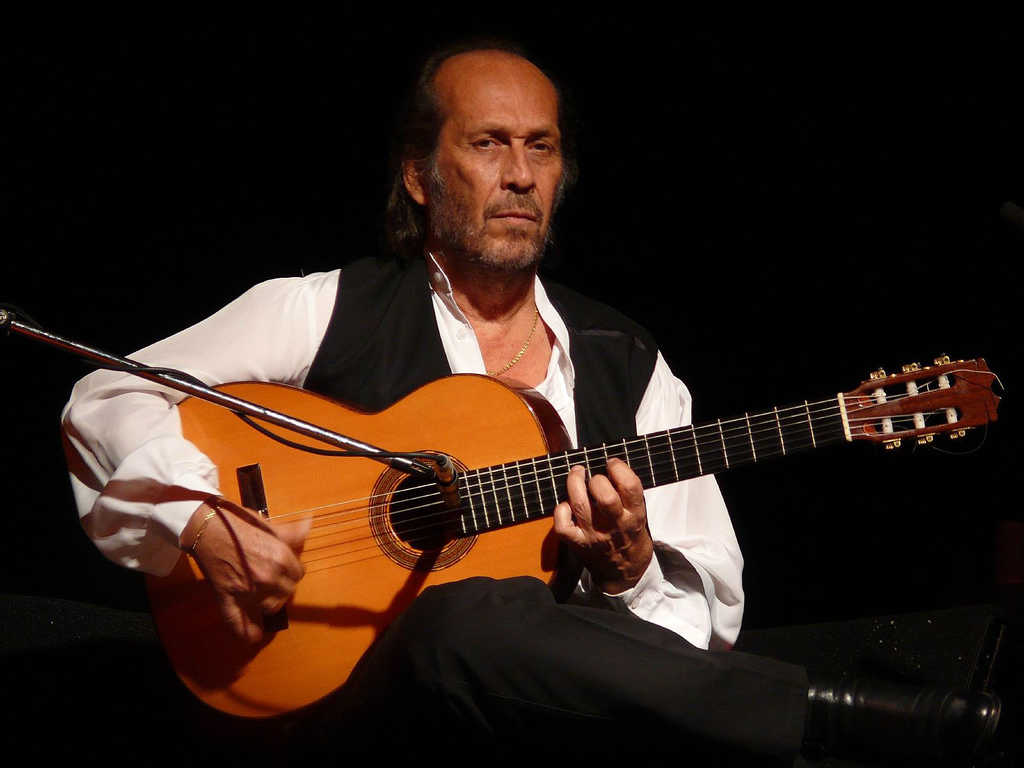

 photo: pedro j pacheco · cc by-sa 4.0 ↗
Alejandro Sanz
sourcesBillboard — Alejandro Sanz Talks 'Syrup' and the Ghost of Paco de Lucia (on Paco de Lucía's death and his inherited guitar) · Los Angeles Times — Not content to be stuck in success (early biography and flamenco training) · Chicago Tribune — Recovered from breakdown, Alejandro Sanz finds power (2007 tour breakdown) · Billboard Español — Alejandro Sanz on New Album '¿Y Ahora Qué?' (career overview, label relationship) · The Metal Circus — Alejandro Sanz recuerda su pasado heavy metal (teenage metal band, Deep Purple/AC-DC/Dio)
One morning in Madrid, Alejandro Sánchez Pizarro's mother broke his guitar in half — the seven-year-old wouldn't stop practicing long enough to let the family sleep. Raised in the city but summering in his parents' native Andalusia, he learned flamenco under teachers he later called 'very strict and very cruel,' then fronted a teenage metal band that idolized Deep Purple, AC/DC and Ronnie James Dio before deciding he could never out-play flamenco's own guitarists. He built pop songs on that foundation instead, breaking through in Spain with 1991's 'Viviendo Deprisa' and topping the country's all-time album chart six years later with 'Más.' A 2007 breakdown forced him off tour for two months. 'The voice of Camarón and the guitar of Paco de Lucía,' he said in 2009, 'put the poison of music into me.'
the sound in question
1997
Amiga MíaAlejandro Sanz
walk the tributaries ↓
Paco de Lucía1970s · Flamenco / Flamenco Guitar / Jazz Fusion
When Paco de Lucía died in February 2014, Sanz couldn't leave the studio for two or three days. He owned one of de Lucía's own guitars, a gift from years earlier, and only then found a dedication carved inside it. 'I get goose bumps,' he told Billboard, 'because when Paco died ... I had a guitar that Paco gave me ... and it had a dedication inside. I'd never seen it.' Sanz grew up unable to match flamenco's own guitarists on their terms, so he kept de Lucía's vocabulary — the rumba rhythm, the hand-clapped compás, the nylon-string runs — as the floor under his pop songwriting instead.
listen: upstream & heresource: eldiario.es (Europa Press) — "Camarón y Paco de Lucía pusieron el veneno de la música en mí" (Sanz names both as his defining influences) ↗
1976
Entre Dos AguasPaco de Lucía
1997
Corazón PartíoAlejandro Sanz
listen forDe Lucía's 'Entre Dos Aguas' rides a compás of hand claps under fast, rolling nylon-string runs — pure instrumental flamenco, no vocal at all. 'Corazón Partío' opens the same way: a flamenco guitar figure and a rhythmic pulse before the horns and drums even enter, the compás still audible underneath everything Sanz built on top of it. It's the difference between the raw grammar and the pop sentence it became — same rhythmic backbone, one instrumental and untranslated, the other now carrying an entire chorus.
Camarón de la Isla1970s · Flamenco / Nuevo Flamenco
'I've always sung in a flamenco style,' Sanz told Newsday in 2008. 'I learned to sing listening to Camarón de la Isla. But in flamenco there is a way of singing without a lot of melody, more about rhythm.' Camarón de la Isla, the Cádiz-born flamenco singer who died in 1992 at 41, gave Sanz the grain in his voice — not a technique so much as permission to sound cracked and unresolved rather than pretty, to let rhythm carry a phrase where melody runs out.
listen: upstream & heresource: Newsday — Sanz still looking to expand his horizons (Sanz on learning to sing from Camarón de la Isla) ↗
1979
Volando VoyCamarón de la Isla
1997
Y ¿Si Fuera Ella?Alejandro Sanz
listen forCamarón's voice on 'Volando Voy' cracks and bends around the beat rather than resolving into clean pitch — the quejío, flamenco's vocal cry. Sanz reaches for the same rasp on 'Y ¿Si Fuera Ella?,' pushing his voice to break at the top of each phrase instead of smoothing it out, riding the rhythm section rather than a conventional pop melody line.