Los Tigres del Norte
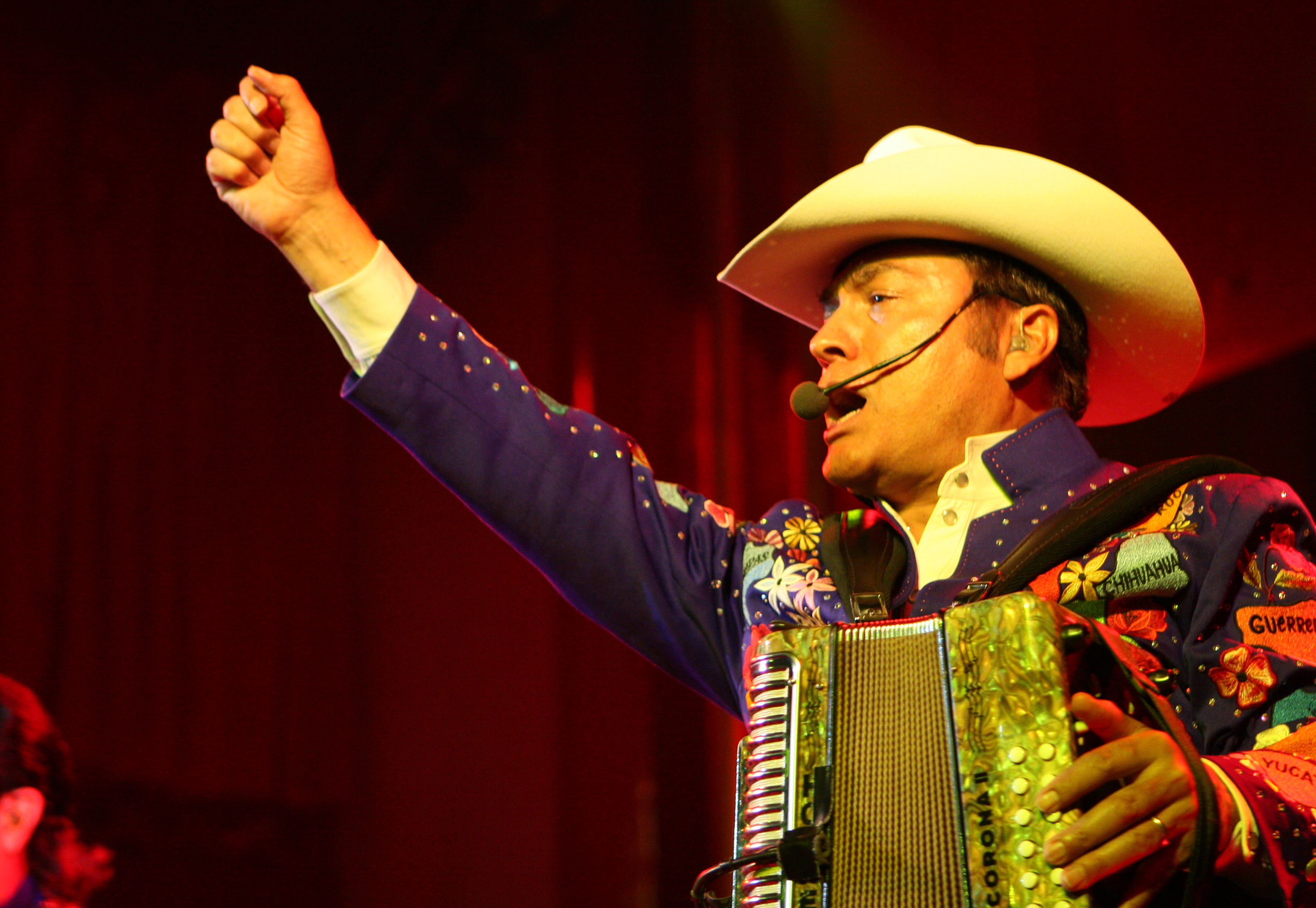 photo: alterna2 (flickr) · cc by 2.0 ↗
In 1966, in the Sinaloa hamlet of Rosa Morada, the Hernández family's father suffered a crippling back injury. To pay for his care, his teenage sons Jorge, Raúl, and Hernán, with their cousin Óscar Lara, began playing parties, calling themselves simply "los hijos de Lalo y Consuelo." They knew corridos only by ear. "We didn't know if we were right or wrong," Jorge Hernández remembered, "because we had no record or documentation... later, when I came to read the lyrics, they coincided with what they had taught us." The family moved to San Jose, California, and by 1974 had turned a corrido about drug smuggling, "Contrabando y Traición," into the genre's defining crossover hit. Fifty years and 32 million records on, Hernán Hernández summed up the distance traveled: "we are their reference, that we are the ones that their parents listened to."
The Hernández boys had no radio in their rancho until their grandmother hauled home a Philco that pulled in one Texas station; the rest of their musical education came at hometown fiestas, where, according to the family's own account, "they encountered additional influences including Los Alegres de Terán" — the accordion-and-vocal duo already remembered as "the fathers of modern norteño music." Ortiz and Ábrego had been the first act to marry close vocal harmony to an instrument that was, until then, strictly a soloist's tool. That pairing became the blueprint the Hernández brothers built their own sound from.
listen forCue Los Alegres de Terán's 1953 "Carta Jugada": two voices locked in tight harmony over a rolling accordion-and-bajo-sexto pulse, neither singer stepping out front. Los Tigres' 1984 "La Jaula de Oro" keeps that same close-harmony frame around the accordion even as the subject shifts — a father growing rich in the U.S. while mourning the home and language slipping away from his children. The instrumentation barely moved in three decades; what the Hernández brothers updated was who the corrido was allowed to be about.
The Hernández family's only radio, a Philco their grandmother carried home, pulled in a single signal — "a 150,000-watt powerhouse from Harlingen, Texas" playing "música de acordeón" — and that was how young Jorge first heard "major norteño artists like Freddie Gómez, Los Donneños, and Los Dos Gilbertos." Los Donneños, a Rio Grande Valley duo built on Ramiro Cavazos's guitar and Mario Montes's accordion, had already proven a bare-bones duet could out-sell the cantina circuit — the sound the Hernández brothers absorbed before they owned instruments of their own.
listen forLos Donneños' 1947 debut side "Ojos Negros Nunca Engañan" is spare: one guitar, one accordion, two voices trading a plainspoken verse-by-verse story, nothing ornamental to distract from the plot. Los Tigres' "Contrabando y Traición" keeps that same discipline — bajo sexto and accordion laying down a simple two-step under a narrative sung almost flatly, so a couple's drug run and betrayal lands like reported fact, not melodrama. It's the corrido's oldest rule, still being followed: let the story do the work.