walking upstream…
Ariel Camacho

Ariel Camacho
sourcesWikipedia — Ariel Camacho (biography, band formation, death, chart history) · Wikipedia — Regional Mexican music (Camacho leading the sierreño style, influence on later artists) · Milenio — Natanael Cano recuerda a Ariel Camacho (Cano's testimony on Camacho's influence) · mitú — Eslabon Armado interview (Pedro Tovar on Camacho's impact on regional Mexican music)
Ariel Camacho's grandfather nicknamed him "La Tuyía" because, as the family told it, "la guitarra estaba más grande que él" — the guitar was bigger than the boy. Born in Guamúchil, Sinaloa, in 1992, Camacho met his future guitarist, César Iván Sánchez, in middle school; by 2013 the two had formed Ariel Camacho y Los Plebes del Rancho, trading the accordion of norteño tradition for a pair of twelve-string requintos and a tololoche bass. The stripped-down sound, driven by hits like "El Karma" and "Hablemos," made him sierreño's breakout star within two years. He died in a car crash near Angostura, Sinaloa, in February 2015, at 22, returning from a festival in Mocorito. "El Karma" reached No. 1 on Billboard's Hot Latin Songs weeks later. Natanael Cano still calls him "parte fundamental de todo lo mío" — the foundation an entire generation of corridos tumbados was built on.
the sound in question
2014
El KarmaAriel Camacho
walk the tributaries ↓
Chalino Sánchez1990s · Narcocorrido / Norteño / Regional Mexican
Chalino Sánchez's own story reads like one of his songs: after his brother Armando was shot dead in a Tijuana hotel in July 1984, Chalino wrote his first corrido to answer it, then spent the rest of the decade singing in the blunt Sinaloan slang and cadence no polished ranchera star had risked before him. He was murdered himself in 1992, by which point critics already called him the era's most influential narcocorrido singer. That plainspoken regional voice — not any single song — is the ground Camacho grew up standing on, two hours north in Guamúchil, a decade later.
listen: upstream & heresource: Wikipedia — Chalino Sánchez (life, murder of brother, pioneering Sinaloan-dialect corridos) ↗
1992
Nieves de EneroChalino Sánchez
2014
El KarmaAriel Camacho
listen forChalino's 1992 "Nieves de Enero" rides a plain, unhurried vocal line over a spare backing built to stay out of the lyric's way — no ornament, no vibrato flourish, the words landing one at a time. Camacho's 2014 "El Karma" does the same job with a different toolkit: twin requintos and a tololoche instead of Chalino's conjunto, but the same syllable-by-syllable delivery riding low and level over a minor-key melody, letting the story carry weight the voice refuses to oversell.
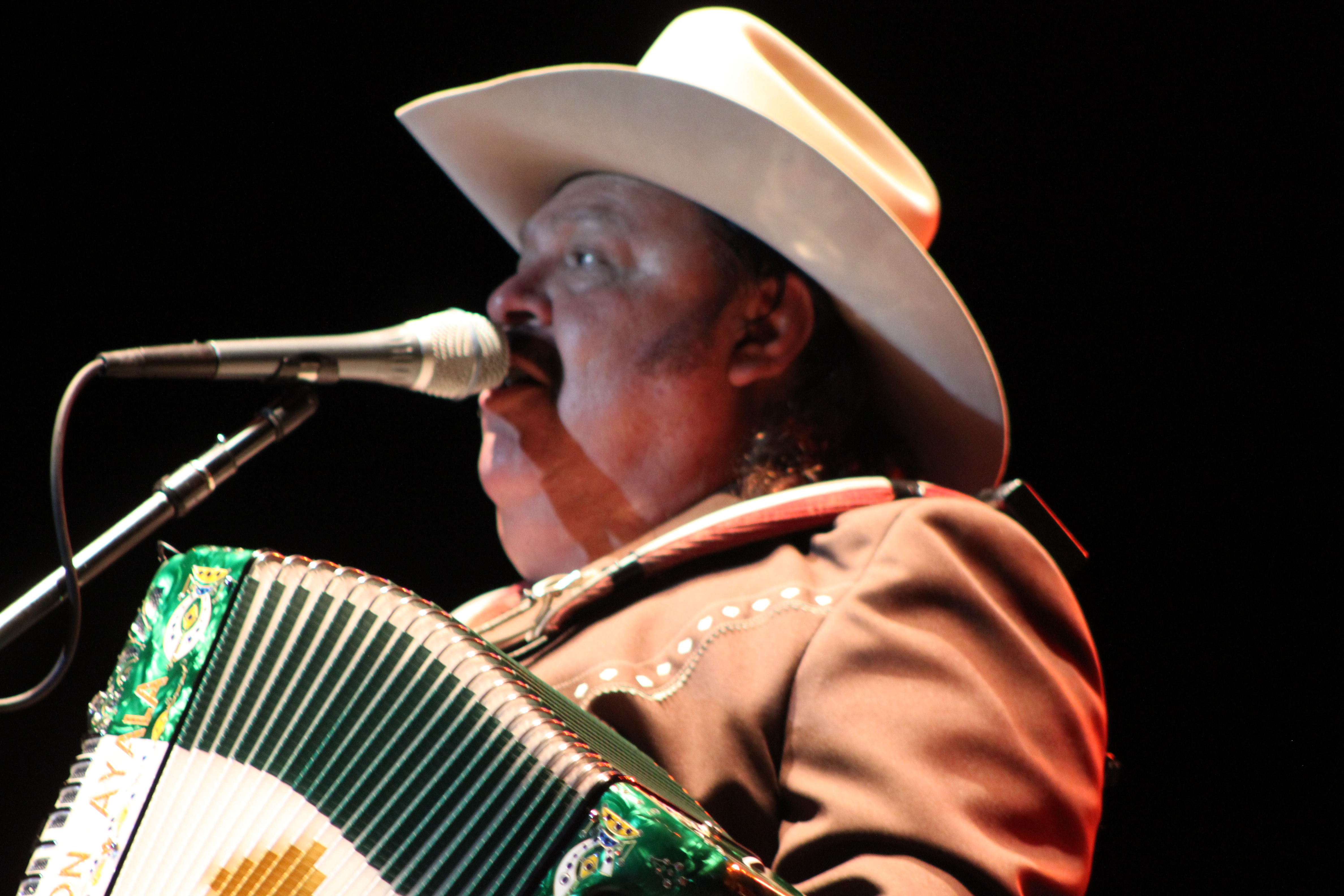
Ramón Ayala1970s–90s · Norteño / Corrido / Regional Mexican
Ramón Ayala earned the nickname "El Rey del Acordeón" over six decades fronting Los Bravos del Norte, setting the tuba-and-bajo-sexto foundation that norteño passed down to nearly every Sinaloan band that followed, Los Plebes del Rancho included. Camacho's sierreño swapped Ayala's lead accordion for a pair of ringing twelve-string requintos, but kept the rhythm section Ayala spent a career refining underneath it — tuba anchoring the bottom, guitar filling every pause the vocal leaves open. The debt is structural, not decorative.
listen: upstream & heresource: Wikipedia — Ramón Ayala (career, King of the Accordion, Los Bravos del Norte) ↗
1989
Mi Corazón y YoRamón Ayala
2014
Te MetisteAriel Camacho
listen forOn "Mi Corazón y Yo," Ayala's accordion trades short answering phrases with his own vocal line, filling every gap the voice leaves open — the classic norteño conversation between singer and instrument. Camacho's "Te Metiste" keeps that same call-and-response intact but recasts it for requinto: listen for the twelve-string filling the identical spaces between vocal phrases, the tololoche walking underneath where Ayala's bajo sexto once sat. Same architecture, new lead voice.
Los Tigres del Norte1970s–90s · Norteño / Corrido / Regional Mexican
Los Tigres del Norte formed around teenage brothers from Rosa Morada, in the Sinaloan municipality of Mocorito — the same corner of the state Camacho was driving home from the night he died. Their 1974 single "Contrabando y Traición," the tale of a female smuggler betrayed by her partner, proved a corrido could carry a movie's worth of plot and still top charts on both sides of the border, turning the narcocorrido into a commercial genre rather than a regional curiosity. That narrative-first template — verse as scene, chorus as consequence — is what Camacho's own songwriting followed two generations later.
listen: upstream & heresource: Wikipedia — Los Tigres del Norte (formation in Rosa Morada, Mocorito; Contrabando y Traición breakthrough) ↗
1974
Contrabando y TraiciónLos Tigres del Norte
2015
HablemosAriel Camacho
listen for"Contrabando y Traición" unfolds like spoken scenes set to a polka bounce, each verse adding a plot beat before the accordion punctuates the turn. "Hablemos" slows that same beat-by-beat structure to a conversational crawl — Camacho narrates a breakup the way Los Tigres narrate a border crossing, the melody serving the sentence rather than the reverse, right down to a payoff line held back for the final verse.