walking upstream…
Banda MS de Sergio Lizárraga
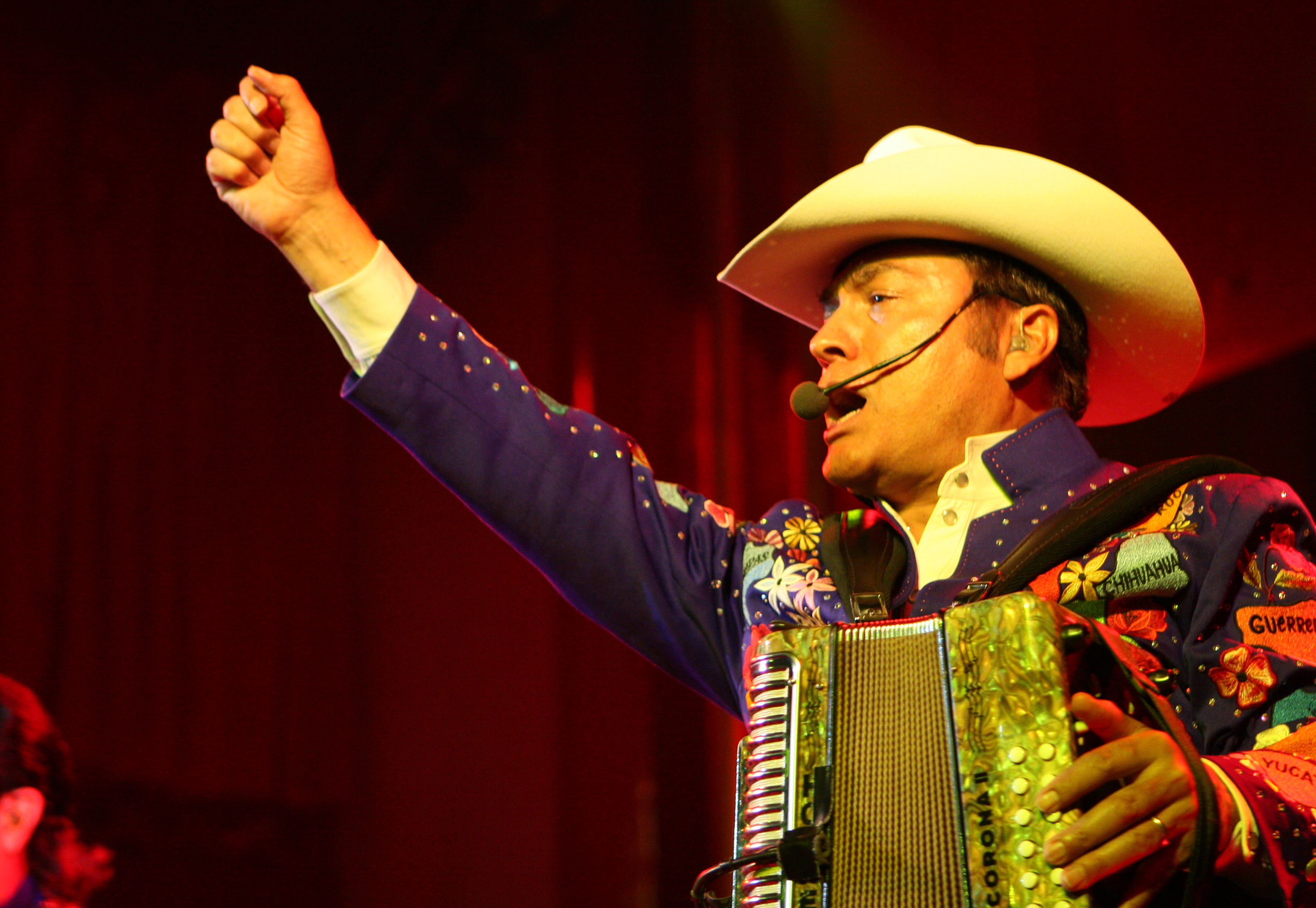

 photo: gobierno de cholula · cc by-sa 2.0 ↗
Banda MS de Sergio Lizárraga
Formed in Mazatlán, Sinaloa in 2003 by tuba player Sergio Lizárraga and his clarinetist brother Alberto — with Julión Álvarez fronting the group until his 2007 departure for a solo career, after which Alan Ramírez and Oswaldo Silvas became its signature voices — Banda MS built a fifteen-plus-piece sinaloense banda out of Lizárraga's own years on the genre's touring circuit. The group paired banda's tuba-and-clarinet brass wall with radio-ready romantic balada songwriting, turning hits like "El Color de Tus Ojos" and "Qué Bendición" into some of regional Mexican music's biggest crossover successes and running its own independent label, Lizos Music, since 2014.
the sound in question
2022
Hay Que Hacer Dinero (con Edén Muñoz)Banda MS de Sergio Lizárraga
walk the tributaries ↓
Los Tigres del Norte1970s–90s · Norteño / Corrido / Regional Mexican
Describing how Banda MS handles corridos, Lizárraga has said plainly that "we sing stories in the same way Los Tigres del Norte do" — pointing to the norteño group's model of chronicling real, often-deceased figures in plain, unembellished verses rather than glorifying anyone still living.
listen: upstream & heresource: Billboard — Banda MS 15-year anniversary interview ↗
1974
Contrabando y TraiciónLos Tigres del Norte
2012
Dicen del SeñorBanda MS de Sergio Lizárraga
listen forLine up Los Tigres' 1974 landmark "Contrabando y Traición" against Banda MS's own corrido "Dicen del Señor" — both keep the vocal flat and matter-of-fact, letting a specific, named story do the work instead of a big emotional delivery.
Banda La Costeña1990s · Banda / Sinaloense / Regional Mexican
Before founding Banda MS in 2003, Lizárraga spent years playing tuba in Banda La Costeña, the veteran Mazatlán outfit Ramón López Alvarado had led since 1950 — and Banda MS's own founding lineup drew other members from that same touring band, carrying its road-tested horn arranging and showband discipline straight into the new group.
listen: upstream & heresource: Buena Música — Banda MS biography ↗
1993
Una AventuraBanda La Costeña
2016
Qué BendiciónBanda MS de Sergio Lizárraga
listen forCompare the dynamic, call-and-response horn arrangement that carries La Costeña's breakthrough "Una Aventura" to the same swelling brass build in Banda MS's "Qué Bendición" — both stage a big emotional turn by thickening the horn stack rather than changing tempo.
Banda El Recodo1990s · Banda / Sinaloense / Regional Mexican
Lizárraga came up in Mazatlán, the same city that's been home to Banda El Recodo since 1938 — the group Billboard credits with shaping the sinaloense banda blueprint (tuba-anchored horn choir, tambora backbeat, ranchera-to-cumbia songbook) that Banda MS's own lineup grew up inside long before they picked their own name.
listen: upstream & heresource: Billboard — Banda MS 15-year anniversary interview ↗
1997
Qué Sólo Estoy Sin TiBanda El Recodo
2016
El Color de Tus OjosBanda MS de Sergio Lizárraga
listen forSet El Recodo's 1997 hit "Qué Sólo Estoy Sin Ti" against Banda MS's "El Color de Tus Ojos" — both let a walking tuba line and stacked clarinets and trombones carry the harmony while the tambora clips out a tight, syncopated backbeat underneath.