walking upstream…
Leonard Cohen
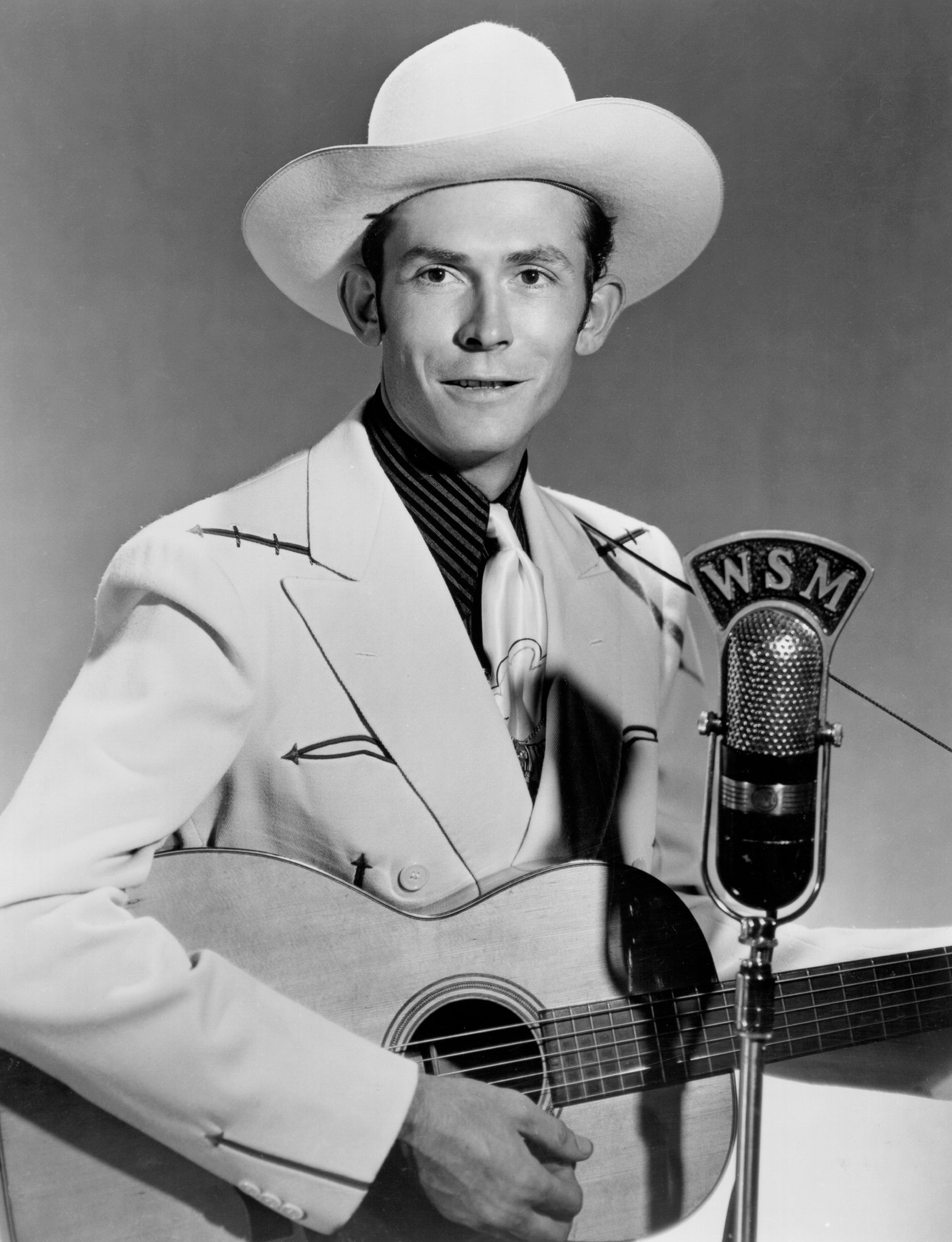

 photo: gorupdebesanez · cc by-sa 3.0 ↗
Leonard Cohen
sourcesWPLN News — How Time in a Tiny Cabin Near Nashville Revived Leonard Cohen's Songwriting Career (Nashville period, Charlie Daniels, Boudleaux Bryant) · Princess of Asturias Foundation — 2011 acceptance speech "How I Got My Song" (the flamenco guitarist and Lorca, bio) · Speakola — transcript of the 2011 Prince of Asturias speech (corroborating mirror) · Rolling Stone — Leonard Cohen · Wikipedia — Leonard Cohen (general biography, lead only)
In October 2011, accepting Spain's Prince of Asturias Award, Leonard Cohen told a story about a boy he met in a Montreal park in his early twenties: a young Spanish guitarist who taught him six flamenco chords in his mother's parlor, then took his own life the next day. "It was that guitar pattern," Cohen said, "that has been the basis of all my songs." Born in 1934 to an Orthodox Jewish family, he had already discovered the Spanish poet Federico García Lorca, who, he said, "gave me permission to locate a voice." He published poetry first — Let Us Compare Mythologies, at 21 — and didn't turn to recording until Judy Collins cut "Suzanne" in 1966; Songs of Leonard Cohen followed in 1967. What Lorca's permission built, Cohen then measured against two very different American singers.
the sound in question
1984
HallelujahLeonard Cohen
walk the tributaries ↓
Hank Williams1940s-50s · Country / Honky-tonk
Cohen placed exactly one contemporary songwriter's name inside "Tower of Song" (1988): "I said to Hank Williams, how lonely does it get? Hank Williams hasn't answered yet, but I hear him coughing all night long, a hundred floors above me." He meant it as measurement, not decoration. Asked about the line in a 1994 interview, he said flatly: "Your Cheatin' Heart, songs like that, are sublime, in his own tradition, and I feel myself a very minor writer." Two decades earlier he had tested that admiration directly, renting a cabin outside Nashville and recording alongside the country session players who worked Williams' own tradition.
listen: upstream & heresource: A Hank Williams Journal — Leonard Cohen and Hank Williams, Part 2 (1994 interview quote on Williams' sublimity) ↗
1953
Your Cheatin' HeartHank Williams
1988
Tower of SongLeonard Cohen
listen forHank Williams' 1953 "Your Cheatin' Heart" is bare-bones honky-tonk — three chords, a steel guitar sob, and a voice that breaks exactly where the lyric hurts most. Cohen's "Tower of Song," cut on a cheap synthesizer thirty-five years later, sounds nothing like it on the surface, but listen to how his talk-singing catches and drops on "a hundred floors above me" — the same plainspoken ache, pushed through age and irony instead of pedal steel. Williams sings the wound directly; Cohen sings about admiring someone who could.
Ray Charles1950s–60s · Soul / R&B / Gospel
Far Out Magazine's profile of Cohen's listening habits puts a number on his devotion: for one long stretch he played the same Ray Charles records until they warped, and Cohen named Charles his biggest singing influence more than once. The habit outlived his youth — he wrote his 1966 novel Beautiful Losers on Hydra with a record player running Charles' The Genius Sings the Blues, and the book's final page dissolves its narrator into a Ray Charles movie. When Cohen finally recorded his own songs, the debt surfaced in the arrangements: a female chorus answering his verses, the same trick Charles had leaned on for two decades with the Raelets.
listen: upstream & heresource: Far Out Magazine — Ray Charles ↗
1960
Georgia on My MindRay Charles
1967
So Long, MarianneLeonard Cohen
listen forRay Charles cut "Georgia on My Mind" in 1960 with the Raelets behind him, their voices answering and cushioning his own lines with a warm, gospel-trained ache. Cohen's "So Long Marianne," recorded seven years later on a fraction of Charles' range, borrows the same structural move: a female chorus rises behind his talk-singing on every chorus. Far Out Magazine described that chorus as sounding like "a white version of" Charles' backup singers, the Raelets. Listen for the hand-off — Cohen states the line alone, then the women carry the feeling his voice can't reach alone.