walking upstream…
Father John Misty
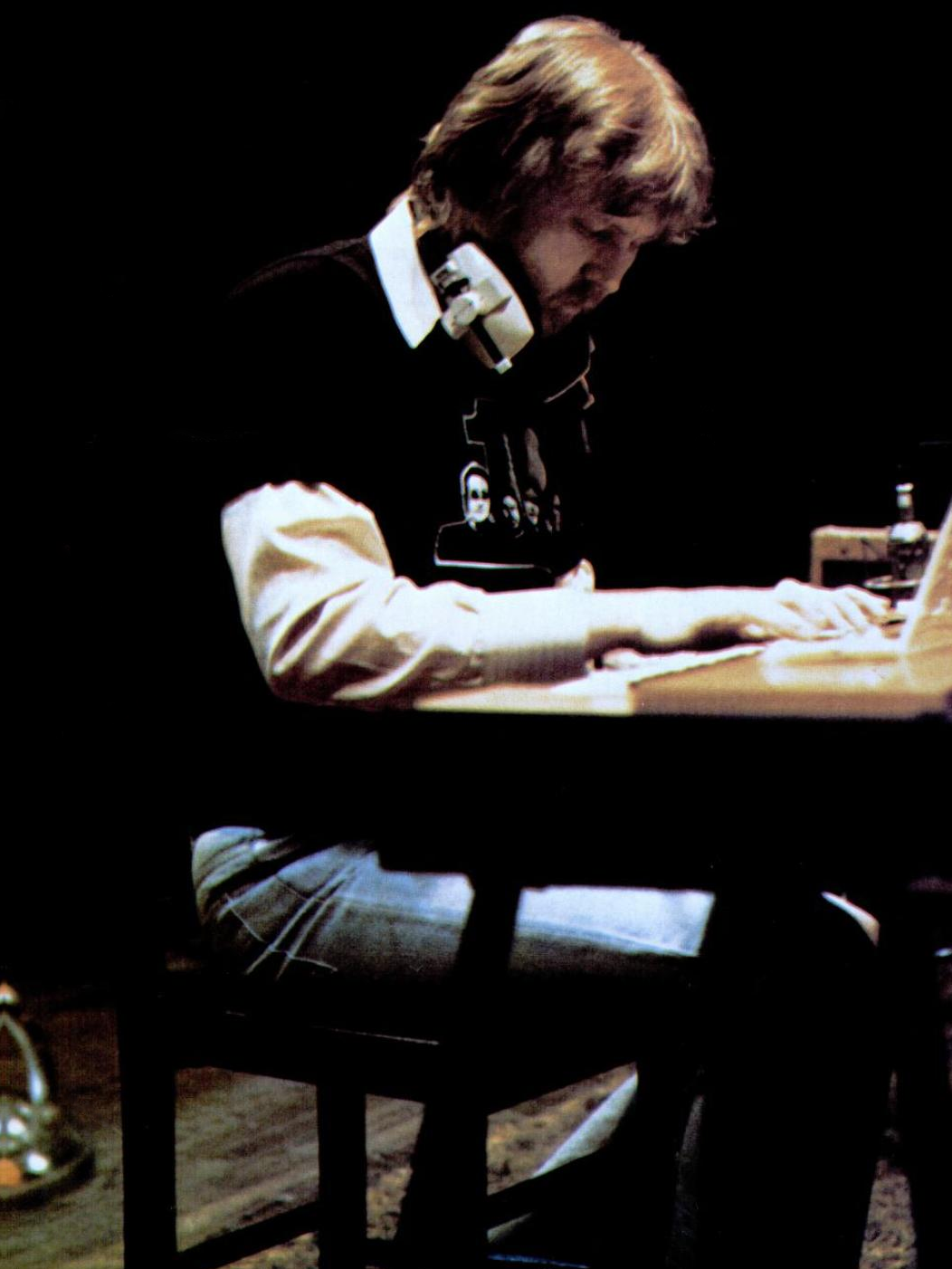


 photo: tore sætre · cc by-sa 4.0 ↗
Father John Misty
Joshua Tillman spent years releasing spare solo records as J. Tillman and drumming in Fleet Foxes (through 2011's 'Helplessness Blues') before reinventing himself in 2012 as Father John Misty. The debut 'Fear Fun' traded folk earnestness for a Laurel Canyon sprawl of pedal steel, strings, and narcotic wit; 'I Love You, Honeybear' (2015) turned his own marriage into a lush, sardonic song cycle, and 'Pure Comedy' (2017) widened the lens to a bleak, orchestral survey of the species. Across 'God's Favorite Customer' (2018), the crooning 'Chloë and the Next 20th Century' (2022), and 'Mahashmashana' (2024), he pairs a rich baritone and old-fashioned melodic craft with a lyricist's taste for irony, self-deprecation, and the uncomfortable joke held a beat too long.
the sound in question
2016
Real Love BabyFather John Misty
walk the tributaries ↓
Harry Nilsson1970s · Pop rock / Baroque pop / Singer-songwriter
AllMusic describes 'Fear Fun' as 'Gram Parsons- and Harry Nilsson-informed,' and in interviews Tillman singled out Nilsson's orchestral standards album 'A Little Touch of Schmilsson in the Night' as a touchstone. The debt is in the way Misty wraps a rueful, sometimes absurd lyric in plush, old-Hollywood arrangement — sweeping strings and horns played as straight-faced beauty even when the words are winking.
listen: upstream & here
1968
Everybody's Talkin'Harry Nilsson
2015
Chateau Lobby #4 (in C for Two Virgins)Father John Misty
listen forPlay Nilsson's 'Everybody's Talkin'' against 'Chateau Lobby #4' — both float an aching, close-miked vocal over warm, string-cushioned pop, the arrangement lavished on the song as if the sentiment were entirely sincere.
Neil Young1970s · Folk rock / Country rock / Rock
'Fear Fun''s country-rock palette — pedal steel, loose acoustic strum, harmonica — draws on the Laurel Canyon idiom Neil Young defined on 'Harvest,' and critics have kept hearing Young in Misty's plainer moments across later records. It shows up as a willingness to let a melancholy folk-rock tune amble rather than build.
listen: upstream & here
1972
Heart of GoldNeil Young
2012
Nancy From Now OnFather John Misty
listen forSet 'Heart of Gold' beside 'Nancy From Now On' — both ride a gentle, harmonica-and-strum shuffle under a high, weary vocal, the kind of unhurried mid-tempo lope that never quite hardens into a hook.
Leonard Cohen1960s–70s · Folk / Singer-songwriter
AllMusic hears 'the lyrical flourish of rock poets like Bob Dylan and Leonard Cohen' in Misty's wordier songs, and reviewers regularly reach for Cohen to describe his sermonizing baritone and mordant, novelistic verse. The influence is one of tone: the literate, world-weary narrator who delivers a punchline and an elegy in the same breath.
listen: upstream & here
1971
Famous Blue RaincoatLeonard Cohen
2017
Pure ComedyFather John Misty
listen forFollow Cohen's 'Famous Blue Raincoat' into 'Pure Comedy' — both are low, conversational recitations that unspool long, essayistic lines over spare backing, trusting the words to carry the melody.