walking upstream…
Harry Nilsson


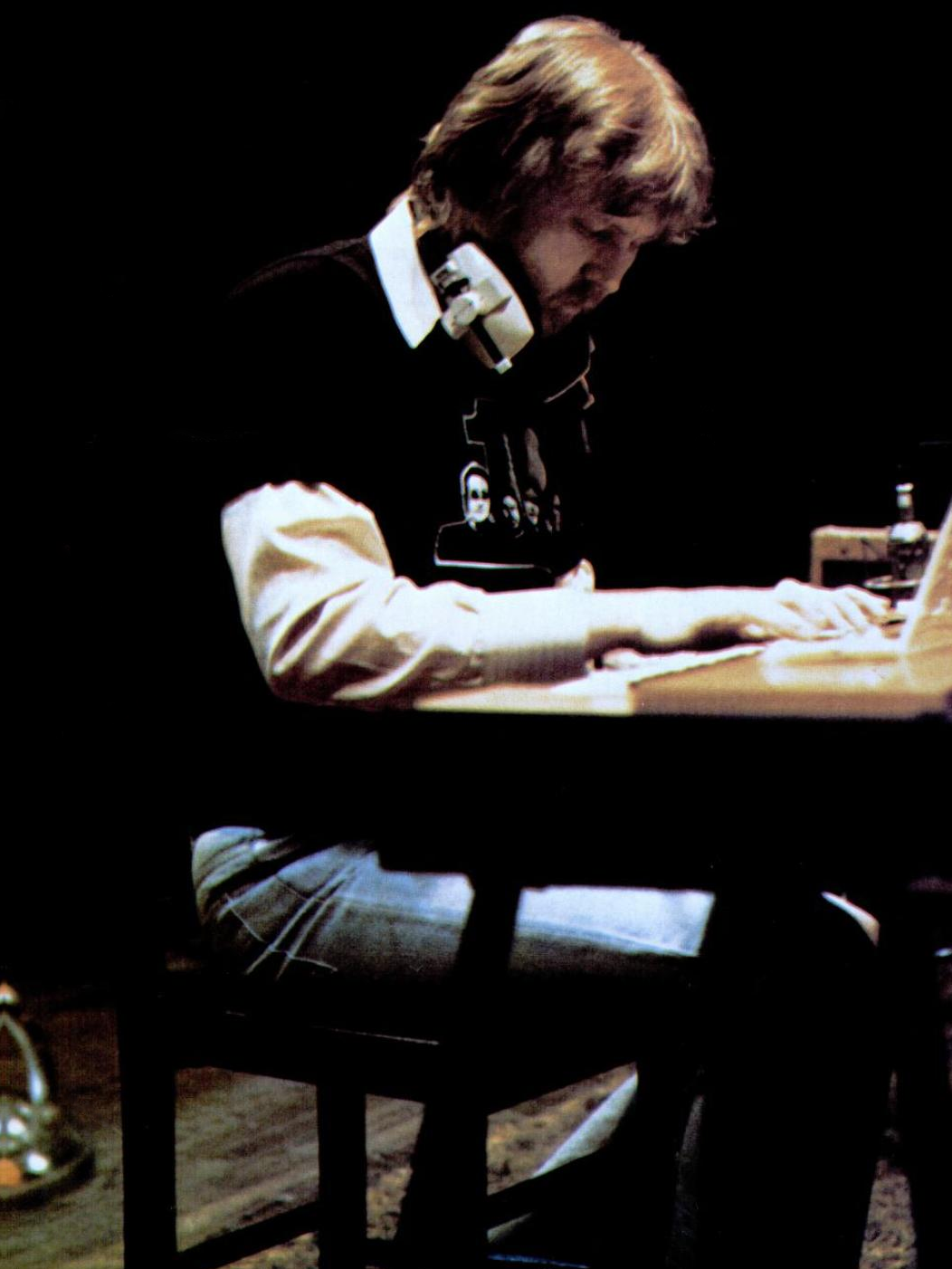 photo: rca records · public domain ↗
Harry Nilsson
Harry Nilsson was the great studio miniaturist of American pop — a Brooklyn-born, California-raised singer who rarely performed live yet became, for a stretch, the Beatles' favorite American act. Working closely with arranger George Tipton, he built his late-'60s albums ('Pandemonium Shadow Show,' 'Aerial Ballet') around a soaring, multi-tracked voice and songs that were tender and sardonic at once. He won Grammys for two covers he made his own — Fred Neil's 'Everybody's Talkin'' and Badfinger's 'Without You' — and reached a ragged, boozy peak with 'Nilsson Schmilsson' (1971). A notorious 'lost weekend' with John Lennon and years of vocal-cord damage clouded his later career, but his craft — melody, harmony, and wit in equal measure — proved lastingly influential.
the sound in question
1971
Without YouHarry Nilsson
walk the tributaries ↓
The Beatles1960s · Rock / Pop / Rock and roll
Nilsson's melodic sophistication and love of studio harmony-stacking made him a Beatles favorite — Lennon and McCartney named him their favorite American artist in 1968 — and he returned the admiration openly, even building his track 'You Can't Do That' as a medley threading together dozens of Beatles songs. The mark is McCartney-esque: rounded, chromatic melodies and lush vocal overdubs.
listen: upstream & here
1966
Here, There and EverywhereThe Beatles
1967
1941Harry Nilsson
listen forCompare McCartney's 'Here, There and Everywhere' with Nilsson's '1941' — both glide through unexpected key turns on a bed of soft, close-stacked harmony, melody prized above beat.
Randy Newman1970s · Baroque pop / Singer-songwriter / Americana / Film score
Nilsson was so taken with Randy Newman's songwriting that in 1970 he devoted an entire album, 'Nilsson Sings Newman,' to his catalog, with Newman himself at the piano. Newman's model — the wry, orchestrally framed character sketch — echoes in Nilsson's own vignettes of small, faintly ridiculous lives.
listen: upstream & here
1968
Love Story (You and Me)Randy Newman
1971
Gotta Get UpHarry Nilsson
listen forSet Newman's 'Love Story (You and Me)' beside Nilsson's 'Gotta Get Up' — both are jaunty, piano-driven vaudevillian tales whose bouncy tune sits at odds with a rueful lyric about time running out.
Ray Charles1950s–60s · Soul / R&B / Gospel
By his teens Nilsson was steeped in rhythm and blues, especially Ray Charles, whose phrasing shaped how he bent and caressed a vocal line. It surfaces less as genre than as delivery — the way he leans behind the beat and lets a note fray with feeling rather than sing it clean.
listen: upstream & heresource: AllMusic ↗
1960
Georgia on My MindRay Charles
1968
Everybody's Talkin'Harry Nilsson
listen forHear Charles's 'Georgia on My Mind' next to Nilsson's 'Everybody's Talkin'' — both take a slow melody and worry it with small slides and dynamic swells, the singer inhabiting the tune rather than merely hitting it.