Kuldeep Manak
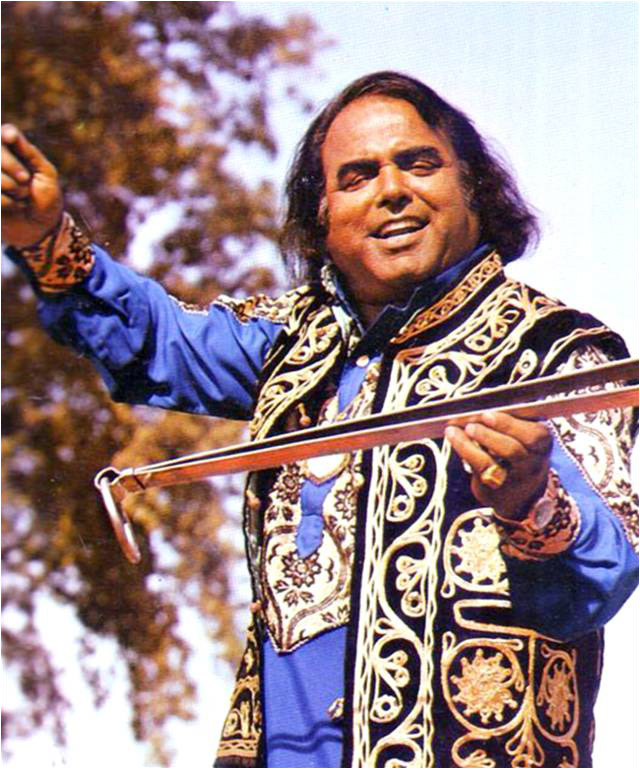

Born Latif Mohammed Khan in 1951 in Jalal village, Bathinda, Kuldeep Manak became 'Kalian Da Badshah' (King of Kalis) after his 1976 debut LP Ik Tara, reviving a near-forgotten Punjabi folk form built on the region's oral epics and turning centuries-old qisse into radio anthems. Trained in his youth by the qawwali-schooled Ustad Khushi Muhammad Qawwal, he carried that vocal intensity into folk story-songs until his death in 2011. Diljit Dosanjh has said his first-ever cassette was a Kuldeep Manak recording.
Yamla Jatt's tumbi-and-voice folk style was the baseline sound of Punjabi music by the time Manak started performing in 1968, and his plain, direct delivery is part of the folk vocabulary Manak's kali singing draws from.
listen forYamla Jatt's 'Das Main Ki Pyar Wichon Khattya' and Manak's signature 'Tere Tille Ton' both keep the vocal right up front, folk instrumentation kept sparse and supportive.
Manak came up 'learning by listening' to the qisse and oral epics passed through Punjabi village gatherings — the same heroic-ballad repertoire Alam Lohar had already turned into hit records, including his own version of the Dulla Bhatti legend.
listen forAlam Lohar's 1965 'Jugni' and Manak's 1973 'Dulla Bhatti' both work the same qissa storytelling engine: a single voice pushing a centuries-old folk tale forward over insistent hand percussion.
Surinder Kaur's radio-era recordings were part of the same Punjabi folk soundscape Manak grew up inside, and her clear, unornamented delivery is echoed in Manak's own insistence on clarity over vocal flash.
listen forSurinder Kaur's 'Maavan Te Dhiyan' and Manak's 'Chheti Kar Sarwan Bacha' both put a plainly sung story ahead of the arrangement.