walking upstream…
John Prine


John Prine was born October 10, 1946, in Maywood, Illinois, to Kentucky transplants who filled the house with Roy Acuff and Hank Williams 78s; summers spent near Paradise, Kentucky later gave one of his songs its title. He learned guitar at fourteen from his brother David, then discovered he wrote better originals than covers -- "anything I made up came out sounding like a folk song." Delivering mail on Chicago's routes, he composed as he walked, then tested the songs at the Fifth Peg's open mike, where a stunned room forgot to clap before catching itself. A Chicago Sun-Times review and Kris Kristofferson's patronage carried him to a 1971 debut -- "Angel from Montgomery," "Sam Stone," "Donald & Lydia" -- that made him, before he turned twenty-five, the songwriter other songwriters studied. He died in April 2020, five decades into proving a mailman's route could hold a novel.
the sound in question
1971
Angel from MontgomeryJohn Prine
walk the tributaries ↓
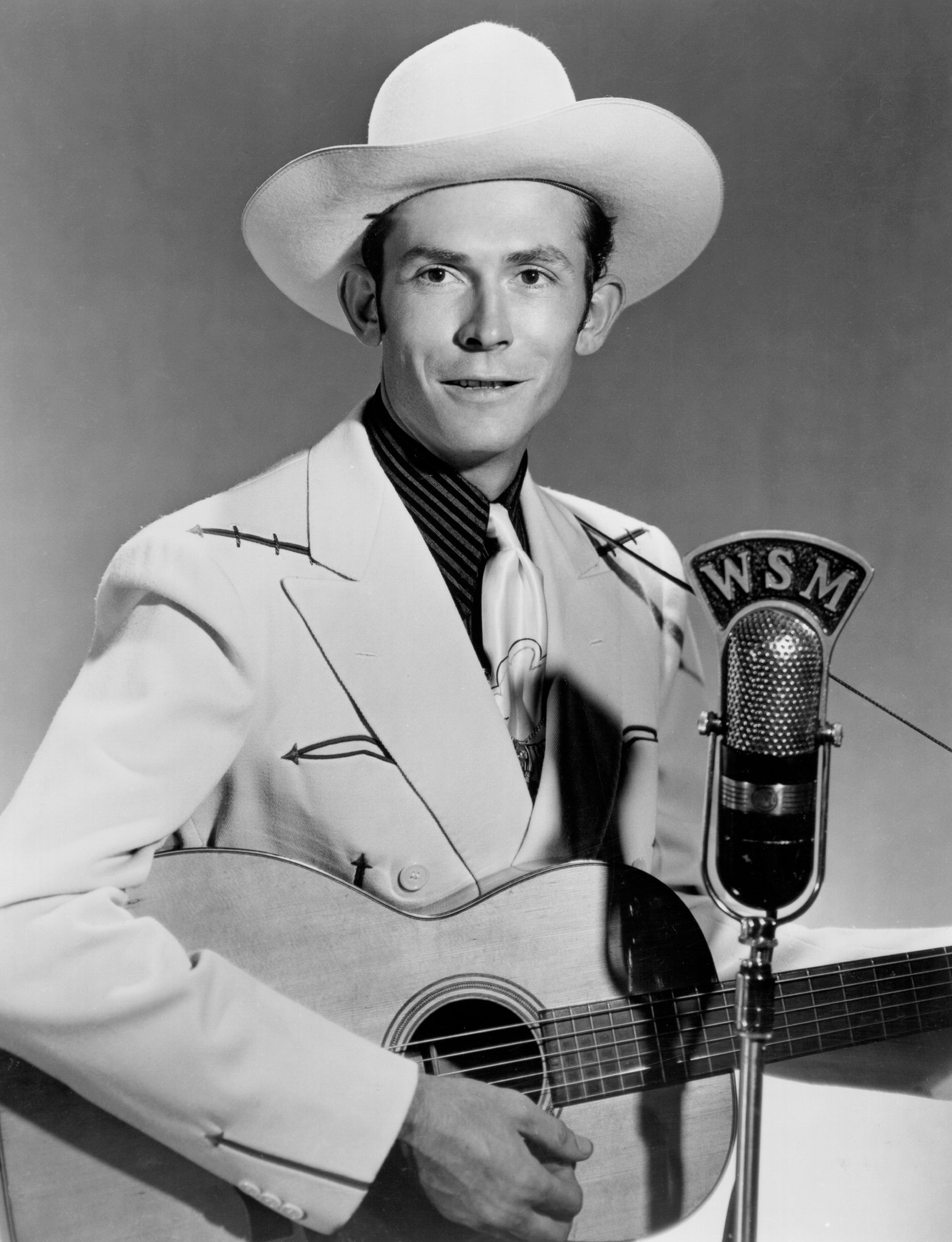
Hank Williams1940s-50s · Country / Honky-tonk
Prine's father spun Roy Acuff and Hank Williams 78s so often the songs became furniture in the house, and when Prine went looking for a name for the woman in 1971's "Angel from Montgomery," he reached for Williams' Alabama hometown almost without deciding to. Four decades later, closing his 2016 covers record For Better, Or Worse, he made the tribute literal, singing Williams' spoken-word alter ego Luke the Drifter's "Just Waitin'" alone -- the album's only solo track. "I cut my teeth on Hank Williams songs," he said. "When I sing these songs there is a small pipeline straight from my heart to my lips."
listen: upstream & heresource: American Songwriter — John Prine ↗
1951
Just Waitin'Hank Williams
2016
Just Waitin'John Prine
listen forPlay the two solo takes back to back. Luke the Drifter's original is barely sung at all -- a plainspoken guitar-and-steel recitation that lets the moral of the story do the work a melody usually would. Prine's 2016 cut matches that stripped delivery, his only unaccompanied vocal on an album otherwise built around duet partners, talking the verses through in the same unhurried, conversational cadence he'd later use on his own recitation passages, rather than singing over them.
Bob Dylan1960s · Folk / Folk rock / Rock
Sitting for a 2009 interview, Prine explained exactly how he built "Donald & Lydia" for his 1971 debut: "I was a big fan of Bob Dylan early on, and his song 'The Lonesome Death of Hattie Carroll' was a big model for me. I modeled 'Donald & Lydia' after that song." The two had already met -- introduced by their mutual champion Kris Kristofferson -- and at a 1971 club date, Dylan himself sat in on harmonica behind Prine playing "Donald & Lydia." "It was like a dream," Prine said.
listen: upstream & heresource: American Songwriter — John Prine ↗
1964
The Lonesome Death of Hattie CarrollBob Dylan
1971
Donald & LydiaJohn Prine
listen forListen for where each chorus pulls back from its story. Dylan spends three verses on the specific, ugly facts of Hattie Carroll's death before a final refrain turns them into judgment. Prine builds "Donald & Lydia" the same way: verses of two lonely people's private details, then a chorus that steps outside the story entirely. It's the structure Prine named himself -- "telling a story and having the chorus be the morale to the story... a wider morale than what the story's saying."
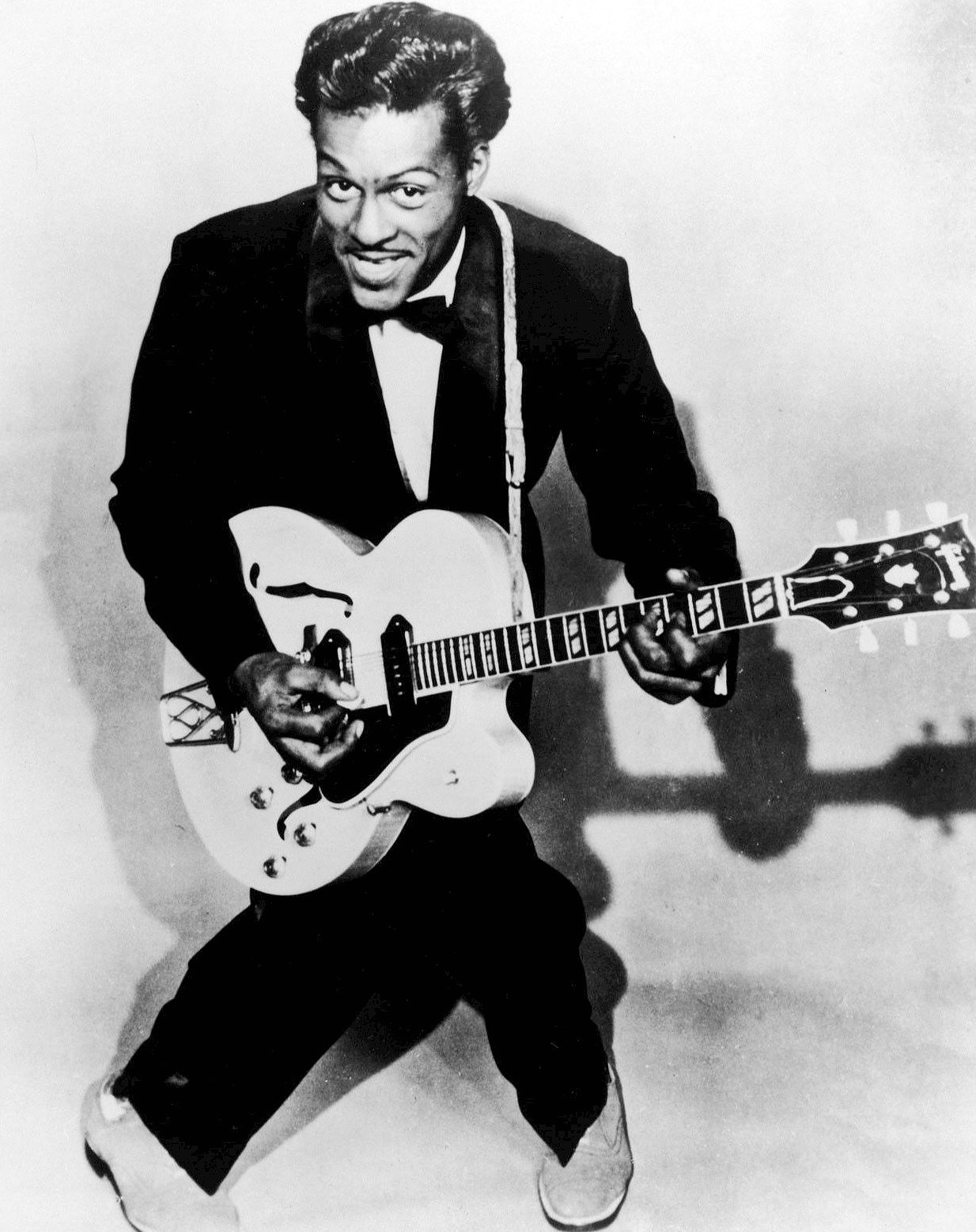
Chuck Berry1950s · Rock and roll / Rhythm and blues
Of all the rock and roll that reached him young -- Elvis, Little Richard, Fats Domino -- it was Chuck Berry, by his own account, that Prine loved most, for one reason: "He told a story in less than three minutes. And he had a syllable for every beat... guys who are really good lyricists have a meter so that the melody is almost already there." Two decades later he put the debt on record outright, closing 1975's Common Sense with a studio cover of Berry's "You Never Can Tell" -- the track Rolling Stone called the one that stood "head and shoulders above anything else" on the album.
listen: upstream & heresource: American Songwriter — John Prine ↗
1964
You Never Can TellChuck Berry
1975
You Never Can TellJohn Prine
listen forTime Berry's original: every line lands its syllables squarely on the beat, the story of a teenage wedding told in verses that never waste a word getting to the next rhyme. Prine's cover keeps that same clipped, syllable-for-syllable pocket rather than loosening it into his own drawlier phrasing -- the closest he ever came, on record, to singing inside someone else's meter instead of the folk cadence he'd built his own songs from.