walking upstream…
Fats Domino
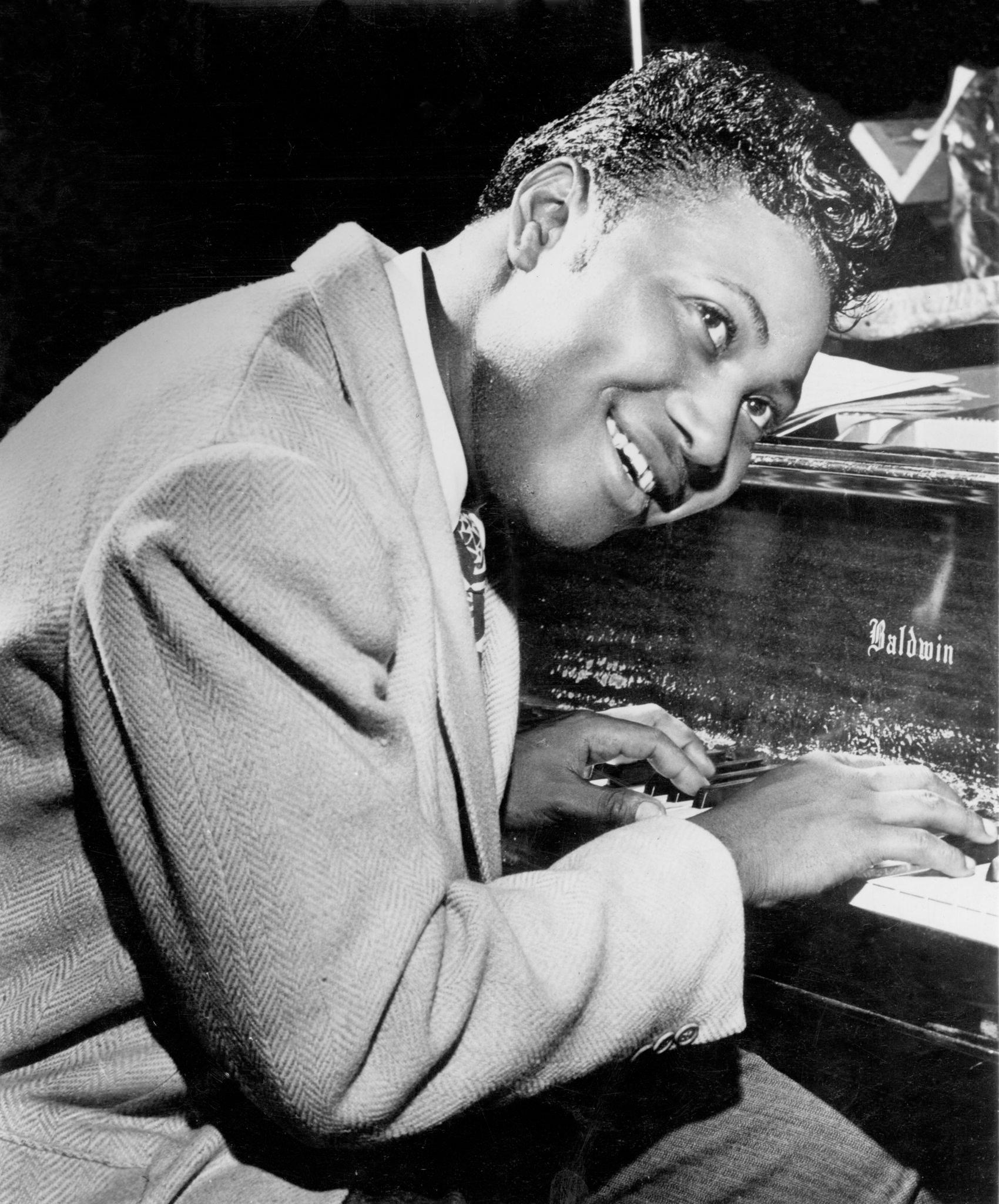

 photo: hugo van gelderen / anefo · cc0 ↗
Fats Domino
sourcesRock Portraits — Fats Domino (profile essay; Milburn triplet quote, Verrett upbringing quote, Blueberry Hill/Armstrong quote) · NPR — Playlist · Robert Christgau — Consumer Guide, "My Blue Heaven" (closing critical assessment) · Wikipedia — Blueberry Hill (song) (Louis Armstrong's 1949 Decca recording and its influence on Domino's cover) · Wikipedia
In 1949, bandleader Dave Bartholomew wandered into The Hideaway, a Ninth Ward nightclub, and caught a heavyset, shy piano player working through boogie he'd been playing around New Orleans for years. Bartholomew brought him to Imperial Records within weeks; together they turned barrelhouse chords his brother-in-law had taught him as a boy and blues 78s he'd worn out on a bar jukebox into a run of hits that outsold every rock and roller of the 1950s but Elvis — 'The Fat Man,' 'Ain't That a Shame,' 'Blueberry Hill.' Domino never claimed credit for a new sound. 'What they call rock 'n' roll,' he said, 'is rhythm and blues that I've been playing for fifteen years in New Orleans.' Critic Robert Christgau put it plainer still: this shy, uncharismatic man had invented New Orleans rock and roll.
the sound in question
1956
Blueberry HillFats Domino
walk the tributaries ↓
Amos Milburn1940s–50s · Rhythm and blues / Jump blues / Boogie-woogie
Domino's whole style turns on the piano triplet — three notes stuffed into a beat that's normally split in two — and he was specific about where he got it. Asked about the trick that would define his rolling, dance-floor sound, he didn't credit study or invention: 'I heard that one time on an Amos Milburn record,' he confessed. Milburn, a jump-blues pianist out of Houston who'd already crossed to national R&B stardom, had built hit after hit on that same rolling triplet feel, and Domino simply kept it, slower and warmer, for the rest of his career.
listen: upstream & here
1948
Chicken Shack BoogieAmos Milburn
1955
Ain't That a ShameFats Domino
listen forListen to the rolling three-against-two fills Milburn stacks under his own vocal on 'Chicken Shack Boogie' — that bounce, not a straight boogie shuffle, is the whole triplet trick. Then cue Domino's 'Ain't That a Shame': the same triplet pattern opens the record, right hand skipping across the beat before he even starts singing, slowed down and smoothed into the sound that would carry him onto pop radio.
Champion Jack Dupree1940s · Blues / Piano blues / Boogie-woogie
Domino's calling card, 'The Fat Man,' rides on a tune that wasn't his. Champion Jack Dupree — an orphaned New Orleans piano player turned professional boxer turned barrelhouse recording artist — cut 'Junker Blues' in 1941, a strutting, druggy blues about a hustler on the nod. Domino's biographer Rick Coleman traces 'The Fat Man' directly to that record: he and Bartholomew kept Dupree's melody, cleaned up the drug lyrics, and bolted on the pounding backbeat that made critics argue over whether the result was the first rock and roll record.
listen: upstream & here
1941
Junker BluesChampion Jack Dupree
1949
The Fat ManFats Domino
listen forHear the loping, repetitive left-hand figure Dupree rides through 'Junker Blues' — a slow, rolling barrelhouse vamp under his weary, talking-blues vocal about a hustler on the nod. Then play 'The Fat Man' and catch Domino running almost the same melodic shape through his falsetto 'wa-wa-wa' hook, except now it's pushed by a hard backbeat and honking horns, the loping blues turned into a dance record built for a jukebox, not a barroom.
Harrison Verrett1940s-50s · Jazz / Rhythm and blues
Verrett, a working New Orleans jazz guitarist twenty years Domino's senior and married to his sister, taught him to play at all — labeling the keys on the family piano when Domino was nine and walking him through his first chords. 'He was the one that taught me the foundations,' Domino said. 'Once he showed me the chords, I could play with just about any band.' Years later, it was Verrett who steered him toward a Louis Armstrong record. 'I liked that record 'cause I heard it by Louis Armstrong,' Domino said, 'and I said, that number's gonna fit me fine.'
listen: upstream & heresource: Wikipedia — Harrison Verrett (foundations quote and Blueberry Hill teaching claim, citing Hannusch and DeWitt) ↗
1949
Blueberry HillHarrison Verrett
1956
Blueberry HillFats Domino
listen forPlay Armstrong's 1949 'Blueberry Hill' first: a big-band pop ballad, all crooning warmth and lush strings, closer to Bing Crosby than to blues. Then drop the needle on Domino's 1956 version and hear him strip that arrangement down to piano, sax, and a rolling triplet backbeat — the same melody Verrett handed him, remade in the Ninth Ward sound he'd spent his whole life absorbing.