walking upstream…
Duke Reid

Duke Reid
sourcesRecord Collector — Over and Over (Bunny 'Striker' Lee testimony on Reid's imports and theme tune) · Trojan Records — Duke Reid artist bio, by Laurence Cane-Honeysett (theme tune, career overview) · KUOW — 'My Mother's Eyes' · Brian Keyo, liner notes for Treasure Isle Ska Rarities (Trojan, 2017) — widow Lucille Reid and musician interviews · Wikipedia — Duke Reid (overview; Colin Larkin 'absolute peak of the style' citation)
Arthur Reid spent ten years as a Kingston police officer before a severance payout bought him two speaker boxes; parked outside his family's grocery store, they grew into "Duke Reid the Trojan," a sound system named for the van that hauled his rig to dances behind shouts of "Here comes The Trojan!" By the late 1950s he'd beaten Kingston's reigning champion off his own turf and been crowned "King of Sounds and Blues" three years running, building the reputation on 78s he hunted down in American record shops with their labels scratched off. In the 1960s he turned that same restless ear on his own liquor store's upstairs studio, producing the ska and rocksteady that reggae historian Colin Larkin called "the absolute peak of the style" — before he died, still producing, in 1975.
the sound in question
1975
De Pauper A DubDuke Reid
walk the tributaries ↓
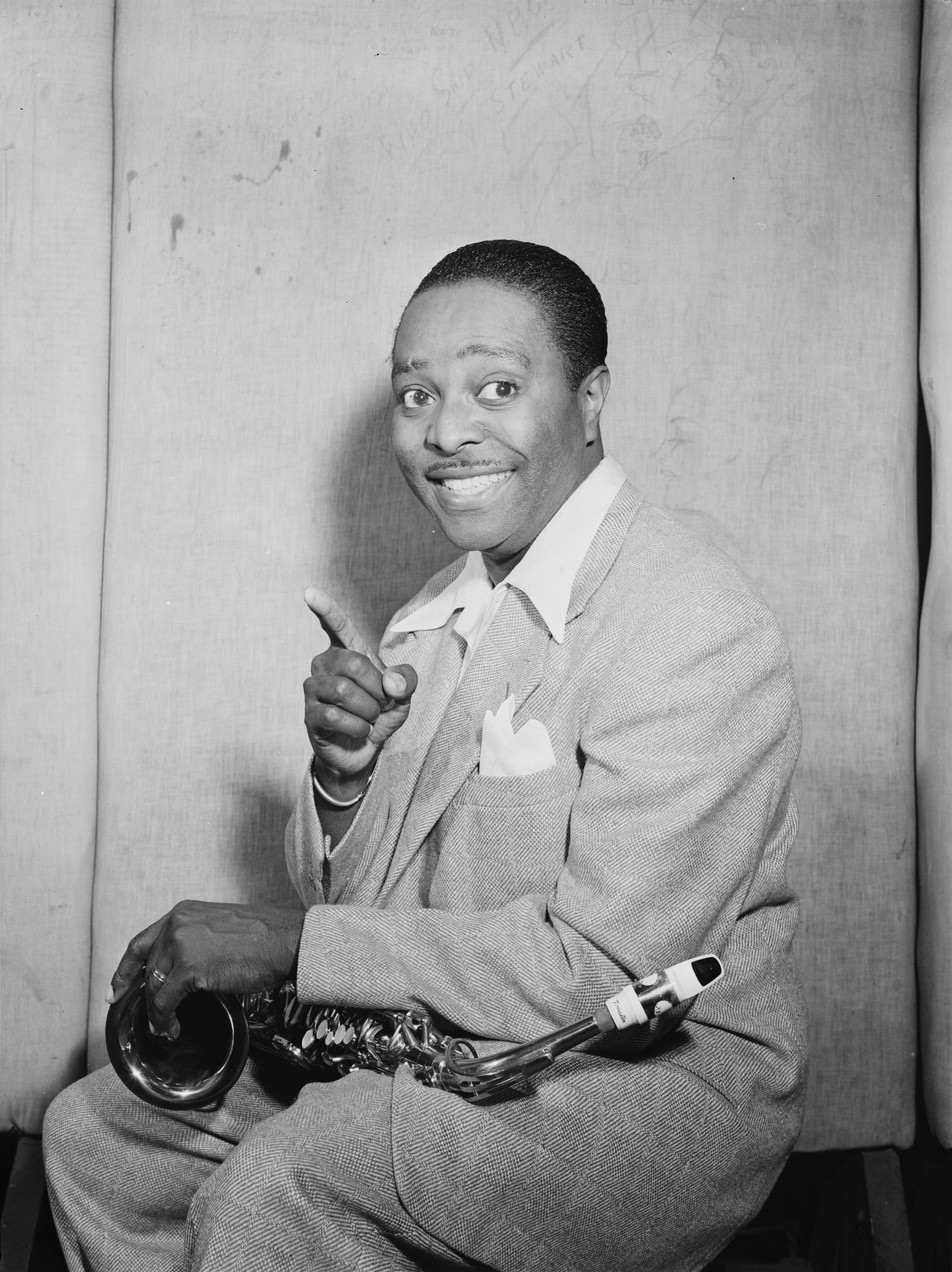
Louis Jordan1940s · Jump blues / R&B / Swing
Stocking his sound system meant flying to the American South and combing through 78s with the labels scratched off — a trick sound men used so rivals couldn't trace their sources. Of the jump-blues and R&B singles Reid hauled home, one name got singled out above a half-dozen others in the same breath. "Duke Reid used to go abroad and bring in R&B records like Fats Waller, Lester Williams, Rosco Gordon, Smiley Lewis, Fats Domino, Louis Jordan," Bunny "Striker" Lee recalled. "Louis Jordan was the king... All them cats!" Jordan's shuffling combo records were packing Kingston dances years before Reid produced a single of his own.
listen: upstream & here
1945
CaldoniaLouis Jordan
1975
Willow Tree DubDuke Reid
listen forJordan's 1945 "Caldonia" struts on a call-and-response horn riff landing just behind the beat — the jump-blues lean that Jamaican musicians would later exaggerate into ska's offbeat guitar chop. Play Reid's own 1975 dub side "Willow Tree Dub" after it: the setting is unrecognizable, all tape echo and empty space, but the horns still carry the tune's whole personality, riffing and answering each other the way Jordan's band once did for a room full of dancers.
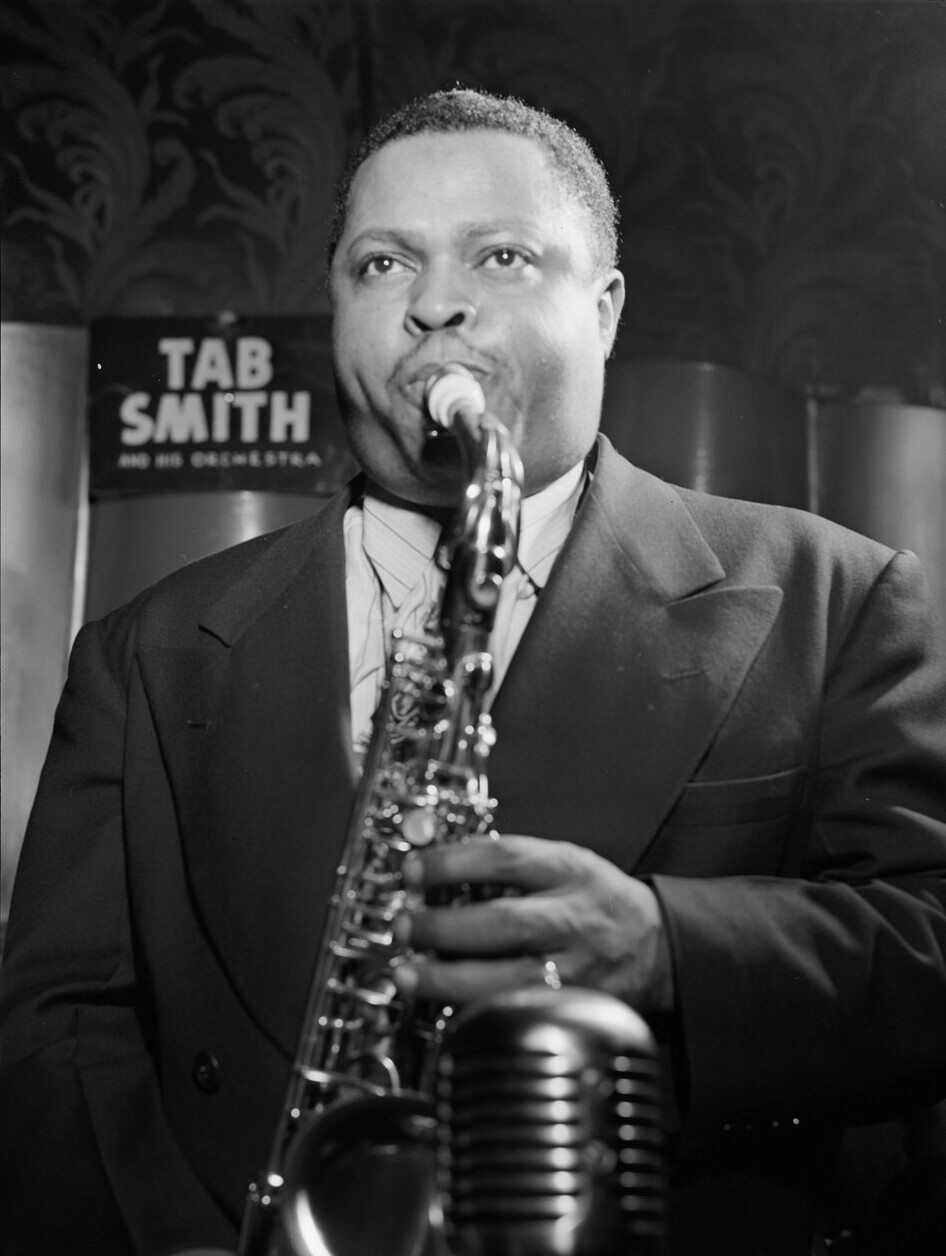
Tab Smith1950s · Rhythm and Blues / Swing / Jazz
Reid didn't just spin American 78s at his dances — one record became his own. "Duke Reid's sign-on tune was My Mother's Eyes by Tab Smith," the Kingston producer Bunny "Striker" Lee remembered years later. "Those guys could have run Jamaica." Reid's widow, his sound-system rivals and even Trojan Records' own label historian tell the same story: of every American disc circulating on 1950s Kingston turntables, this one tenor-sax ballad was the tune Reid chose as his personal signature, played at the top of his dances and his radio show alike, for years.
listen: upstream & here
1952
My Mother's EyesTab Smith
1964
Use Your HeadDuke Reid
listen forSmith's 1952 "My Mother's Eyes" is a jazz man's idea of a ballad — no vocal, just his alto sax singing the melody over a slow, unhurried sway. There's no cover or sample tying it to Reid's own catalog; the connection is that he played it, again and again, as his calling card. Cue "Use Your Head," the horn instrumental Reid's own Baba Brooks Band cut at Treasure Isle a decade later, and hear the same conviction: a saxophone-led band can carry a whole record without anybody singing a word.
Fats Domino1950s · Rock and roll / Rhythm and blues / Boogie-woogie
Domino wasn't just a name in Reid's import crates — he showed up in person. The 2014 Jamaica Gleaner profile of Reid records "another mention... of him being crowned by the rock and roll giant Fats Domino at Kings Lawn, along North Street, in Kingston in the early 1960s" — an actual encounter, not just shared vinyl. Bunny Lee's own list of what Reid imported puts Domino's records in the same breath as Louis Jordan's, but it's the image of the New Orleans star personally topping Reid with a crown that survives as the era's most vivid story.
listen: upstream & heresource: Jamaica Gleaner — Duke Reid 'The Trojan' (2014 profile; Fats Domino crowning anecdote, career overview) ↗
1949
The Fat ManFats Domino
1975
GuidanceDuke Reid
listen forDomino's 1949 "The Fat Man" rides a loping, piano-driven backbeat under his falsetto "wa-wa-wa" hook — the New Orleans shuffle that jukeboxes across the Caribbean wore thin. Cue "Guidance," the Treasure Isle dub side stripped from Reid's own "I Can't Stop Now" backing track: swap the piano triplets for horn stabs bathed in echo, and the same rolling, unhurried groove is still doing the work, carrying the record the way Domino's did a quarter-century before.