walking upstream…
Dusty Springfield

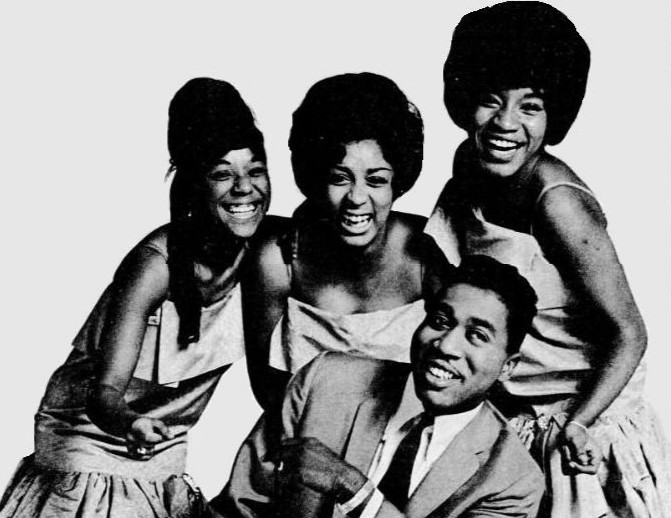
 photo: dezo hoffman · public domain ↗
Dusty Springfield
In 1966, BBC sound engineers watched their meters redline as Dusty Springfield told them to keep turning her up. "I was testing myself to see where my threshold of pain was for sound," she said of taping her own BBC series — the same restlessness that had carried Mary O'Brien, a London-Irish tomboy turned folk singer, out of her brother Tom's harmony trio The Springfields and into a solo career built on American R&B and girl-group records few white British singers touched. Cliff Richard nicknamed her the "White Negress," half as tribute; she used her platform on Ready Steady Go! to put Motown's own stars on British television. The obsession outlived the beehive: chasing a soul record raw enough to sit beside her American heroes, she went to Memphis in 1968 and got one, though she never quite believed she'd earned it.
the sound in question
1966
You Don't Have to Say You Love MeDusty Springfield
walk the tributaries ↓
Aretha Franklin1960s-70s · Soul / R&B / Gospel
Atlantic sent Springfield to cut Dusty in Memphis inside Aretha Franklin's own orbit — the same American Sound Studio session players, and "Son of a Preacher Man," a song Franklin had already turned down. Springfield never stopped feeling like a trespasser: "I hated it because I couldn't be Aretha Franklin," she admitted years later. "Otis Redding stood there. That's where Aretha sang. Whatever you do, it's not going to be good enough... It was a matter of ego, too: if I can't be as good as Aretha then I'm not gonna do it at all."
listen: upstream & heresource: MOJO (via Paul Du Noyer) — Dusty Springfield interview, July 1995 (backs the Aretha Franklin, Dionne Warwick, and Exciters influences) ↗
1967
I Never Loved a Man (The Way I Love You)Aretha Franklin
1968
Son of a Preacher ManDusty Springfield
listen forThe Sweet Inspirations — Franklin's regular Atlantic backing singers — are the ones answering Springfield's lead on "Son of a Preacher Man," filling out the chorus alongside veterans of Franklin's own session band. Where Franklin drives "I Never Loved a Man" with an urgent gospel push, Springfield holds back, letting a spare guitar riff and a whispered vocal carry the verses before the bridge finally opens her voice up. She never forgave the gap: "to this day I listen to her phrasing and go, Goddamit! That's the way I should have done it."
Dionne Warwick1960s · Pop / R&B / Soul
Springfield named the exact moment her direction changed: alone in a Nashville hotel room, still touring with her brother's folk trio, she heard Dionne Warwick's "Don't Make Me Over" on the radio. "I had to sit down on the bed, fast," she remembered, "because I thought, Pop music's never going to be the same again. I want to do that!" Within months she'd left the group for a solo career built on the same Bacharach-David songbook, opening her 1964 debut album with a close run at Warwick's own arrangement of "Wishin' and Hopin'."
listen: upstream & heresource: MOJO (via Paul Du Noyer) — Dusty Springfield interview, July 1995 (backs the Aretha Franklin, Dionne Warwick, and Exciters influences) ↗
1963
Wishin' and Hopin'Dionne Warwick
1964
Wishin' and Hopin'Dusty Springfield
listen forSet Warwick's 1963 "Wishin' and Hopin'" beside Springfield's 1964 cover and the debt is structural, not just vocal: the same stop-start Bacharach-David patter, the same call-and-response backing chorus urging the singer to "show him that you care just for him." Springfield tracks Warwick's phrasing almost syllable for syllable, but pushes harder into the belted release on "wishin' and hopin' and prayin'" — the instincts of a former folk singer straining against a cool soul arrangement built for someone more restrained than she was.
The Exciters1960s · Girl Group / R&B
The second epiphany came outside a New York record shop. Passing the Colony Record Store on Broadway around 2am, Springfield heard The Exciters' "Tell Him" blaring out: "hearing that voice, 'I know — something — about love' and going Wow! How do I do this? I knew it could work if I could adapt them in some way." No recording ties Springfield directly to that song — no studio version of it by her survives, if one was ever made — but the borrowed nerve surfaces months later on her solo debut single, cut with a driving girl-group backbeat.
listen: upstream & here
1962
Tell HimThe Exciters
1963
I Only Want to Be with YouDusty Springfield
listen forThe Exciters build "Tell Him" on a hard, insistent backbeat and lead singer Brenda Reid's raw, belted delivery, urgency over polish. Springfield's "I Only Want to Be with You" keeps that same forward-driving pulse and handclap urgency, but rounds Reid's rasp into a smoother, more pop-friendly attack — a British singer translating New York girl-group grit for a different audience, exactly as she described trying to do outside that record store at 2am.