walking upstream…
Aretha Franklin
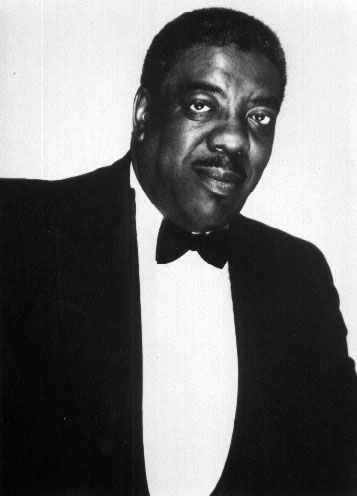

 photo: atlantic records · public domain ↗
Aretha Franklin
sourcesDetroit Historical Society — Franklin, Aretha (birth, family, career facts) · Malaco Music Group — Clara Ward & The Famous Ward Singers (backs Ward Singers touring with Rev. C.L. Franklin) · TheWrap — 4 Key Facts the Mahalia Lifetime Biopic Missed (backs Jackson helping raise the Franklin children) · 365 Days of Aretha — Surely God Is Able (backs the Ward Singers' landmark recording)
Aretha Franklin was born in Memphis on March 25, 1942, to a piano-playing mother and the Detroit preacher Rev. C.L. Franklin, whose New Bethel Baptist parish house drew touring musicians like Art Tatum and Nat King Cole. She never took a lesson; she worked out the piano by ear, singing her first solo in her father's church at nine or ten. By seventeen — after five years on her father's traveling gospel show, and with Clara Ward named alongside her father as one of the two influences she credited most — he judged her ready for New York. R&B stardom came slower than gospel had promised, until Atlantic and "Respect" made her the Queen of Soul in 1967. She sang at Martin Luther King's funeral the next spring, then in 1972 walked back into a church to record Amazing Grace, proof the gospel voice had never actually left.
the sound in question
1967
RespectAretha Franklin
walk the tributaries ↓
James Cleveland1960s–70s · Gospel
James Cleveland had been part of the Franklin household since Aretha was a girl, a family friend who taught her to find chords by ear rather than off a page. When he died in 1991, she didn't reach for a tribute; she reached for the plainest possible truth: "James was probably the most significant factor on me musically in terms of my early piano stylings," she said. "He was a motivator, an innovator." Two decades earlier he had proved it, returning to direct her through two nights of recording in a Los Angeles church — the sessions that became Amazing Grace, the best-selling record of her career.
listen: upstream & heresource: Ultimate Classic Rock — How Aretha Franklin Made Gospel History in Two Days (backs the James Cleveland quote and Amazing Grace sessions) ↗
1963
Peace Be StillJames Cleveland
1972
Amazing GraceAretha Franklin
listen forCleveland's 1963 recording of "Peace Be Still" builds off his own piano, rolling from a murmur into a shouted, choir-answered climax that made the record a gospel landmark. On "Amazing Grace," recorded with Cleveland himself at the keys, Franklin stretches the opening word across nearly half a minute, the same patient, piano-anchored build toward release — the harmonic freedom he taught her, now carrying a congregation instead of a childhood friend at a piano.
Mahalia Jackson1950s · Gospel / Spiritual
When Aretha's mother died in 1952, her father enlisted several women to help raise his children while he worked the revival circuit — among them Mahalia Jackson, who lived nearby in Detroit. Franklin later credited her as one of her biggest musical inspirations, the singer whose gospel authority filled a gap a record collection alone couldn't. Two decades on, at Jackson's own funeral in Chicago in 1972, Franklin repaid the debt in kind, standing to sing "Precious Lord, Take My Hand" — the hymn Jackson had made her signature — for the woman who had once helped raise her.
listen: upstream & heresource: Smithsonian NMAAHC — Mahalia Jackson ↗
1956
Take My Hand, Precious LordMahalia Jackson
1972
Precious Lord, Take My HandAretha Franklin
listen forSet Jackson's 1956 recording of "Take My Hand, Precious Lord" beside Franklin's own version from Amazing Grace: both hold the opening phrase back like a held breath before releasing into the melody, one unhurried line at a time. Franklin doesn't rush past Jackson's phrasing so much as inhabit it — the same patience with silence, the same refusal to hurry toward comfort, carried from a contralto into her own instrument.
Clara Ward1950s · Gospel
The Famous Ward Singers toured constantly with Rev. C.L. Franklin through the 1950s, which meant Clara Ward's flair — the vamps, the held notes, the theatrical runs — was the first vocal style close enough for a teenage Aretha to actually copy. She copied it, and Sam Cooke's smoothness too, so faithfully that her father finally told her to stop imitating and find her own voice. Ward, who had watched her grow up on the road, put it in writing: "My baby Aretha doesn't know how good she is. Doubts self. Some day — to the moon! I love that girl."
listen: upstream & heresource: Musician Guide — Child of the Gospel ↗
1950
Surely God Is AbleClara Ward
1956
Never Grow OldAretha Franklin
listen forWard's 1950 "Surely God Is Able" hands its lead vocal back and forth mid-phrase, each singer taking a turn at ornament and vamp over a plain, waltzing melody. Franklin's "Never Grow Old," cut in her father's church at fourteen, years before Cleveland deepened her harmonic vocabulary, carries the same instinct for vocal flourish laid over a simple tune — a teenager rehearsing the only virtuosity she'd seen up close.