walking upstream…
Carole King
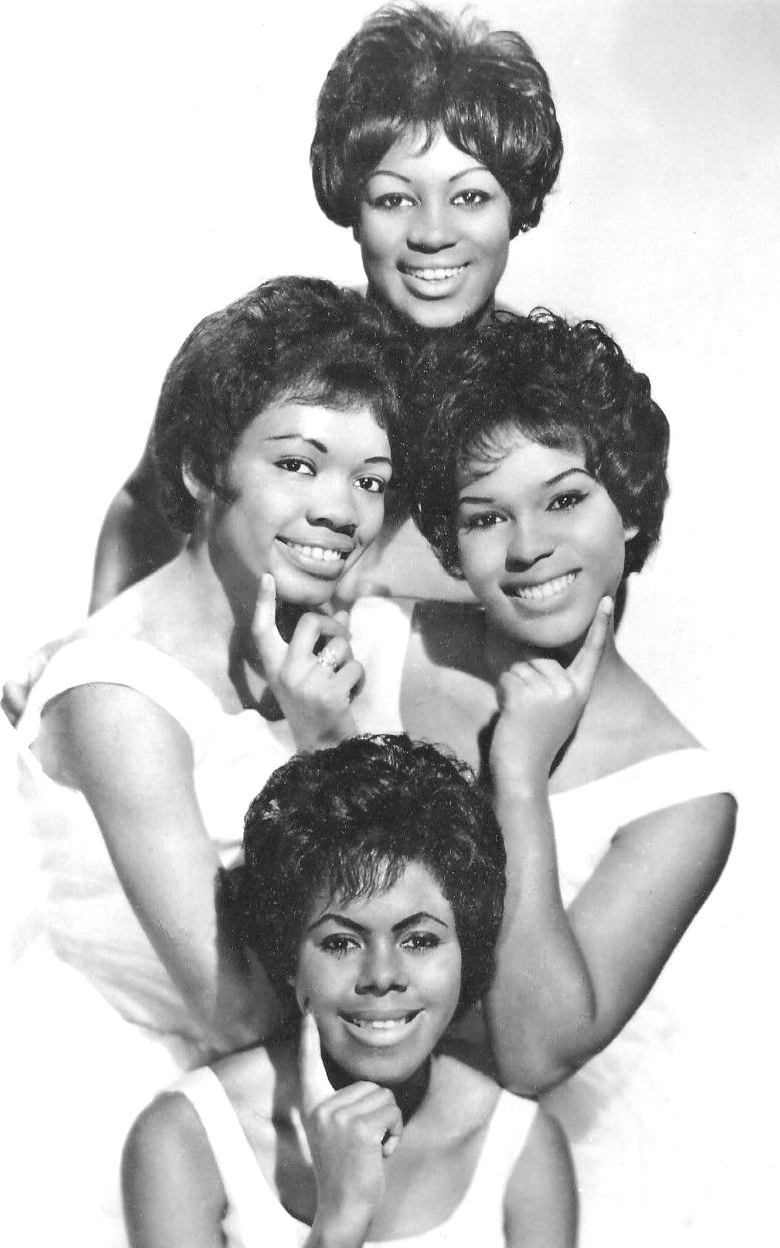


 photo: angela george · cc by-sa 3.0 ↗
Carole King
Carole Klein grew up in Brooklyn playing piano and cutting demos with a high-school classmate named Paul Simon before her life split into two careers that turned out to be the same one. As half of Brill Building duo Goffin-King, she spent the early 1960s writing hit after hit for other people's voices — the Shirelles, the Drifters, Aretha Franklin — schooling herself in melody, hook, and heartbreak from the outside. Then in 1971, with 'Tapestry,' she stepped in front of the microphone and rewrote her own catalogue in a plainer, more intimate register: hushed, piano-led, unmistakably a woman singing rather than a girl-group arrangement singing for her. The album spent fifteen weeks at No. 1 and became a founding document of the singer-songwriter era.
the sound in question
1971
It's Too LateCarole King
walk the tributaries ↓
The Shirelles1960s · Girl group / R&B / Pop / Doo-wop
King and Gerry Goffin wrote 'Will You Love Me Tomorrow' for the Shirelles in 1960; it became the first No. 1 pop hit by a Black girl group, and its bright, string-swept teenage ache helped define the girl-group sound King would spend the decade writing inside of. A decade later she recorded her own version on 'Tapestry,' and musicians who grew up on the original have described the difference precisely: the Shirelles sang it like girls asking a real question; King, singing it herself at 29, sang it as a woman who already knew some of the answers.
listen: upstream & here
1960
Will You Love Me TomorrowThe Shirelles
1971
Will You Love Me TomorrowCarole King
listen forCompare the Shirelles' brisk, orchestrated 1960 single to King's slower, sparer 'Tapestry' recording — same melody and lyric, but the tempo drops, the strings disappear, and what was a plea sung over a shuffling beat becomes a quiet piano confession.
Little Richard1950s · Rock and roll / Rhythm and blues / Gospel
King has said 'the coming of Rock & Roll came with the coming of age of me' — the music's arrival in the mid-1950s was what first convinced a classically trained teenager that pop songwriting could be a life's work, not just a hobby. That debt surfaces literally on 'Tapestry': the driving, insistent piano vamp that opens 'I Feel the Earth Move' has been widely described as drawing on Little Richard's pounding, percussive rock and roll piano style.
listen: upstream & here
1955
Tutti FruttiLittle Richard
1971
I Feel the Earth MoveCarole King
listen forCue up 'Tutti Frutti' next to 'I Feel the Earth Move' — both ride a relentless, low-register piano pulse that barely lets up, the instrument used as a rhythm section in its own right rather than a backing accompaniment.
Aretha Franklin1960s-70s · Soul / R&B / Gospel
King wrote '(You Make Me Feel Like) A Natural Woman' with Goffin and producer Jerry Wexler for Aretha Franklin in 1967, but it was Franklin's gospel-trained, melismatic performance that turned a mid-tempo pop song into a soul landmark. When King recorded her own version on 'Tapestry' four years later, she didn't try to match Franklin's power — she answered it with restraint, a hushed, plainspoken reading over piano and bass that trades the sermon for a private admission.
listen: upstream & here
1967
(You Make Me Feel Like) A Natural WomanAretha Franklin
1971
(You Make Me Feel Like) A Natural WomanCarole King
listen forSet Franklin's 1967 single beside King's 'Tapestry' cut — Franklin builds the chorus into a church-sized release, while King keeps the same melody close and quiet, the church still audible underneath but scaled down to a living room.