walking upstream…
The Shirelles
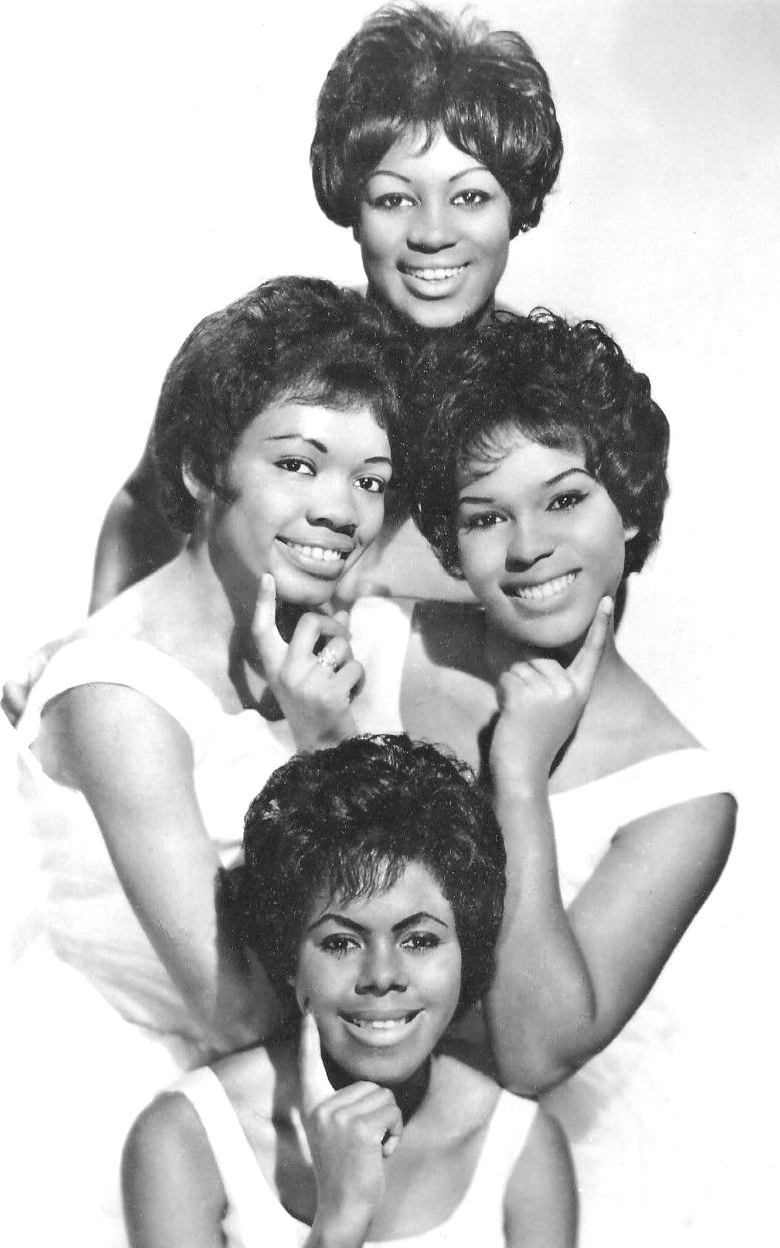
sourcesAce Records — The Shirelles (interview with Shirley Alston-Reeves by Charlotte Greig) · Perfect Sound Forever — "The Shirelles · History-of-Rock.com — The Shirelles (artist profile) · Wikipedia — The Shirelles (career facts, Rock and Roll Hall of Fame induction, Beatles covers) · Wikipedia — Dedicated to the One I Love (songwriting credit, chart history)
In 1957, four Passaic, New Jersey classmates — Shirley Owens, Doris Coley, Addie "Micki" Harris, and Beverly Lee — wrote an a cappella tune about the days of the week for a school talent show and brought the house down. A classmate's mother, Florence Greenberg, signed them, and by 1960 producer Luther Dixon had built them into hitmakers: "Will You Love Me Tomorrow," a Goffin-King demo Shirley Owens initially dismissed as "too country," became the first Billboard number-one single by a Black girl group. "He created our sound," she said of Dixon. Hits like "Mama Said," "Baby It's You," and "Soldier Boy" followed before the group's commercial run cooled by the mid-1960s. Inducted into the Rock and Roll Hall of Fame in 1996, the Shirelles gave an entire genre its blueprint — and gave the Beatles, who covered two of their songs, a vocal model for their own harmonies.
the sound in question
1960
Will You Love Me TomorrowThe Shirelles
walk the tributaries ↓
The Chantels1950s · Doo-wop / Girl group / R&B
Before there was a Shirelles, there was a name problem: Shirley Owens and her friends wanted to sound like the group they idolized, Arlene Smith and the Chantels. "We tried to find a name as close as we possibly could to theirs because it was so pretty," Owens (later Alston-Reeves) said. They landed on Shanels, got told it was too close, and settled on Shirelles — literally her own first name grafted onto the Chantels'. It wasn't just admiration; music historian Alan Betrock credits the Chantels as the first true girl group, and Owens's crew had modeled their basement a cappella harmonizing after them long before any record deal existed.
listen: upstream & here
1957
MaybeThe Chantels
1958
I Met Him on a SundayThe Shirelles
listen forPlay the Chantels' "Maybe" against the Shirelles' "I Met Him on a Sunday," cut within months of each other in 1957–58: both lean on a single confident lead voice pushed forward over close, echo-drenched group harmony, the arrangement built around vocal call-and-response rather than instruments. One critic paired the two singles as the moment "the girl group style was nearly set in stone" — hear it in how little either recording needs beyond the voices themselves.
The "5" Royales1950s · Rhythm and blues / Gospel / Doo-wop
The Shirelles' first single for Florence Greenberg's new label, Scepter Records, wasn't written for them — they fell for it live, on a shared bill with the "5" Royales, whose guitarist Lowman Pauling had co-written the song. "Every time they sang it we would run down the stairs so that we could listen, because we liked it so much," Alston-Reeves recalled. Doris Coley loved the tune most, so the others told her: learn the lead, and we'll sing behind you. The cover stalled at #83 in 1959, but its 1961 reissue reached #3 — a song borrowed whole off another act's stage set, outperforming the original's own chart run.
listen: upstream & here
1957
Dedicated to the One I LoveThe "5" Royales
1959
Dedicated to the One I LoveThe Shirelles
listen forCompare the "5" Royales' 1957 original to the Shirelles' remake: Pauling's group drives the song with tight, gospel-inflected male harmony under a pleading lead, while the Shirelles slow it down and let Coley's lead float over softer, close-harmony backing — the same melody and structure, reworked from a hard R&B stage number into the aching, string-touched girl-group ballad the label would build the whole Scepter sound around.
The FlamingosDoo-wop / R&B
The group didn't start as the Shirelles at all — it started as two Passaic High School friends, Beverly Lee and Shirley Owens, killing time. "High school students, Beverly Lee and Shirley Owens began singing doo-wop songs together while they were babysitting," one profile records. "Imitating artists like the Flamingos, the two eventually recruited fellow classmates" Doris Coley and Micki Harris, forming a quartet they first called the Poquellos. The group also credited New York R&B station WWRL, where the Flamingos' smooth vocal-group sound was in heavy rotation, with a large part of their musical education before they'd written a note of their own.
listen: upstream & here
1956
I'll Be HomeThe Flamingos
1960
Tonight's the NightThe Shirelles
listen forListen to the Flamingos' 1956 hit "I'll Be Home" alongside the Shirelles' first Luther Dixon production, "Tonight's the Night": both rest a plaintive lead atop softly layered backing vocals and a slow, unhurried tempo built for close harmony rather than rhythm — the doo-wop vocal blend Lee and Owens were chasing years before they had a producer or a label to shape it for them.