walking upstream…
Dire Straits



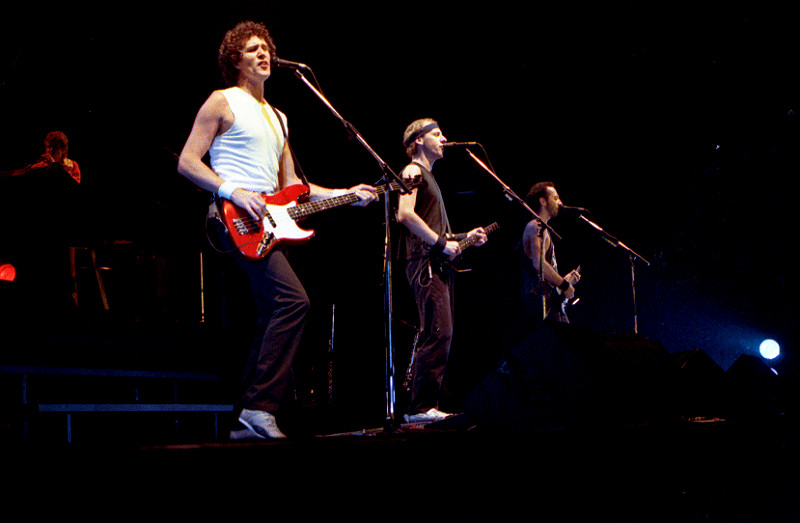 photo: helge øverås · cc by-sa 4.0 ↗
Dire Straits
sourcesLouder/Classic Rock — The song that transformed Dire Straits' fortunes (bio, origin of Sultans of Swing) · DireStraits.com — Timeline (band formation and career dates) · GuitarPlayer.com — Mark Knopfler on fingerpicking (bio, corroborates Hank Marvin influence) · Guitar World — Mark Knopfler on the lack of an amp shaping his fingerpicking (bio) · Far Out Magazine — The musician who made Mark Knopfler and Eric Clapton fall in love with the guitar (J.J. Cale) · Mark Knopfler Guitar Site — Knopfler on the J.J. Cale tribute album The Breeze (J.J. Cale) · American Blues Scene — 10 Things You Didn't Know About J.J. Cale (J.J. Cale) · DireStraitsBlog.com — An Interview with Mark Knopfler · GuitarPlayer.com — Mark Knopfler on his collaboration with Bob Dylan (Bob Dylan) · DireStraitsBlog.com — Mark Knopfler on Bob Dylan being a major songwriting influence (Bob Dylan)
In July 1977, broke and behind on the gas bill in a Deptford council flat, Mark Knopfler played bassist John Illsley an early stab at a song about a lousy jazz band he'd watched from a rainy pub doorway. Reworked around a secondhand 1961 Stratocaster, it became "Sultans of Swing" and put the newly formed Dire Straits on the radio on both sides of the Atlantic within two years. Knopfler's clean, thumb-and-fingers guitar style, developed because he never had the nerve to ask his father for an amplifier, became the band's whole identity: unhurried, articulate, at odds with punk's roar. By the time they closed the afternoon bill at Live Aid in July 1985, that same understated picking had carried them from pub-rock also-rans to one of the biggest bands on earth. Dire Straits disbanded in 1995; Knopfler's restraint remained the point.
the sound in question
1985
Money for NothingDire Straits
walk the tributaries ↓
J.J. Cale1970s · Tulsa sound / Roots rock / Blues rock
J.J. Cale reportedly wasn't flattered. Session guitarist Mac Gayden recalled Cale privately grumbling that the Brit had "ripped off" both his guitar playing and his singing — a grudge mild enough that Cale later opened for Knopfler on a U.S. tour anyway. Knopfler never denied it. "JJ Cale kept me falling in love with guitar, kept me wanting to play the instrument," he said. "But most important for me, I think, is the songwriter in him, the deep well of creativity that has given us so many bewitching songs to treasure." Early reviews of Dire Straits heard the band's whole rhythmic feel as descended from Cale's laid-back Tulsa sound.
listen: upstream & heresource: Rolling Stone — Dire Straits ↗
1972
Call Me the BreezeJ.J. Cale
1978
Down to the WaterlineDire Straits
listen forCue Cale's "Call Me the Breeze": the notes land just behind the beat, nothing rushed, the vocal almost spoken rather than sung. Then play Dire Straits' "Down to the Waterline," the song early reviewers singled out as evidence of the debt — the rhythm section holds back the same way, leaving space for Knopfler's clipped guitar fills instead of crowding the beat. It's a quieter, more patient groove than most guitar bands attempted in 1978, and it's the one Cale is said to have recognized as his own.
The Shadows1960s · Instrumental rock / Rock and roll
As a teenager in Blyth, Northumberland, Mark Knopfler stood outside music shops to look at electric guitars, and the one he wanted was red — because of Hank Marvin. Bringing his hero onstage at Wembley Arena in 1985, he explained why: "All I wanted was a red electric guitar, and the only reason I wanted a red electric guitar was because of the sound made by one of my all-time favourite guitar players. And I still wish I could get a guitar to sound the way he gets it to sound." The Shadows' clean, vibrato-heavy lead lines were among the earliest things Knopfler absorbed, years before blues records reached him.
listen: upstream & heresource: Far Out Magazine — The story behind Mark Knopfler's first guitar and hero (The Shadows) ↗
1960
ApacheThe Shadows
1980
Tunnel of LoveDire Straits
listen forPlay The Shadows' "Apache" first: Marvin's tone is clean and reverbed, and the melody itself does the storytelling, no singer needed. Knopfler's most direct tribute to that sound turned up later, on his solo records rather than a Dire Straits one; inside the band it surfaces instead in the extended instrumental stretch of "Tunnel of Love," where the guitar drops the words entirely and just sings the tune — clean-toned, unhurried, letting a melody carry a song the way Marvin's always did.
Bob Dylan1960s · Folk / Folk rock / Rock
Mark Knopfler was twelve when Bob Dylan became the songwriter he measured himself against, and by his own account it never really changed. "The most important songwriter for me growing up was Bob Dylan," he said on his own radio show decades later. "From the age of 12, really, it hasn't changed that much." The admiration became a working relationship: Dylan invited him to play guitar on 1979's "Slow Train Coming" after catching a Dire Straits show, and by 1983 Knopfler was producing "Infidels." What stuck wasn't Dylan's guitar playing, which Knopfler considered "rudimentary," but his talking-blues cadence — verses that unspool like a story being told rather than sung.
listen: upstream & heresource: Rolling Stone — Dire Straits ↗
1975
Tangled Up in BlueBob Dylan
1978
Wild West EndDire Straits
listen forStart with "Tangled Up in Blue," from the Dylan album Knopfler named one of his favorites — a long, tumbling story delivered almost conversationally, more talked than sung. Then play Dire Straits' "Wild West End," the song critics flagged for carrying that same flavor hardest: a narrative crawl through a London street scene, Knopfler's voice staying just on the right side of singing, prizing the details of the story over the tune underneath it.