walking upstream…
Count Basie
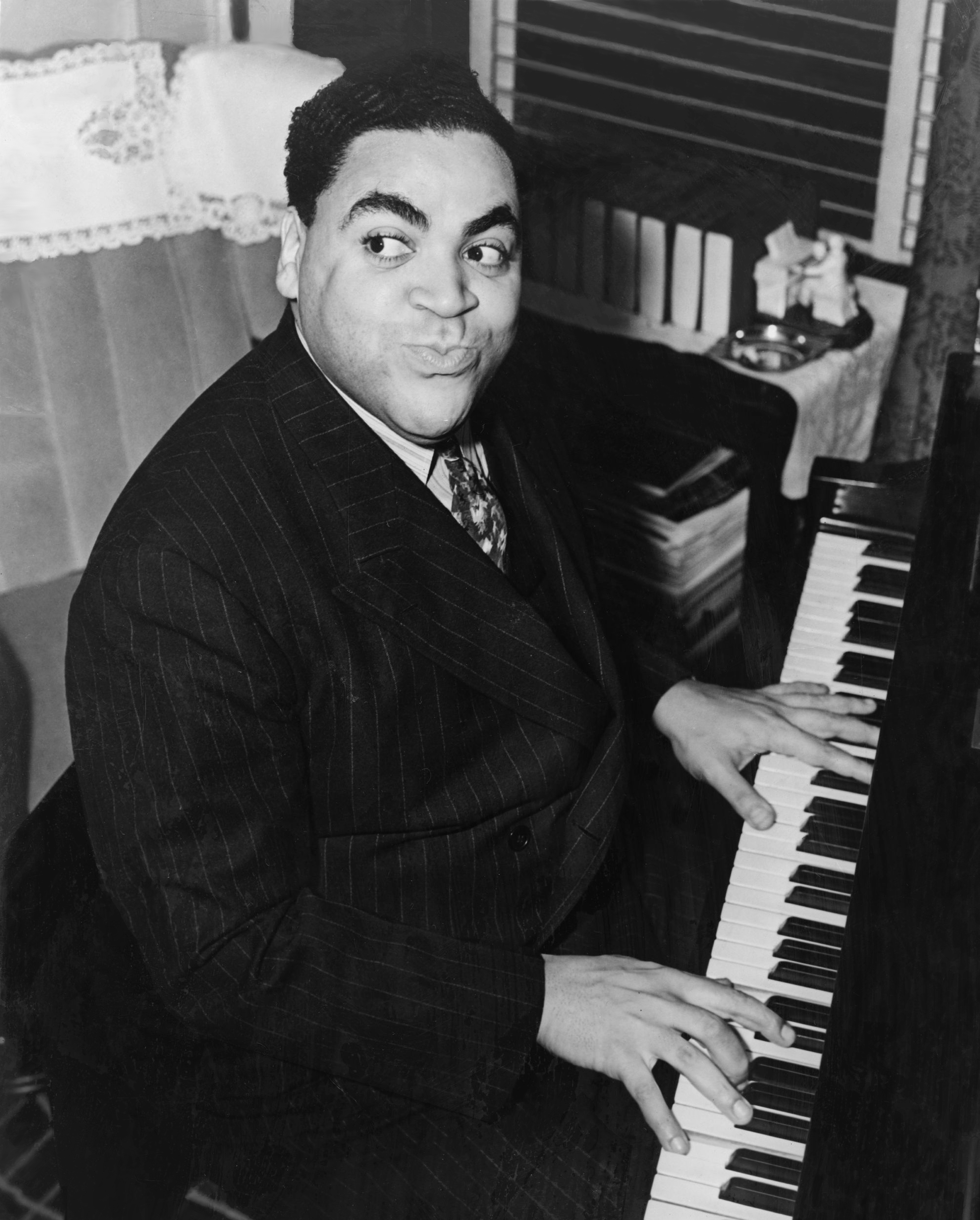

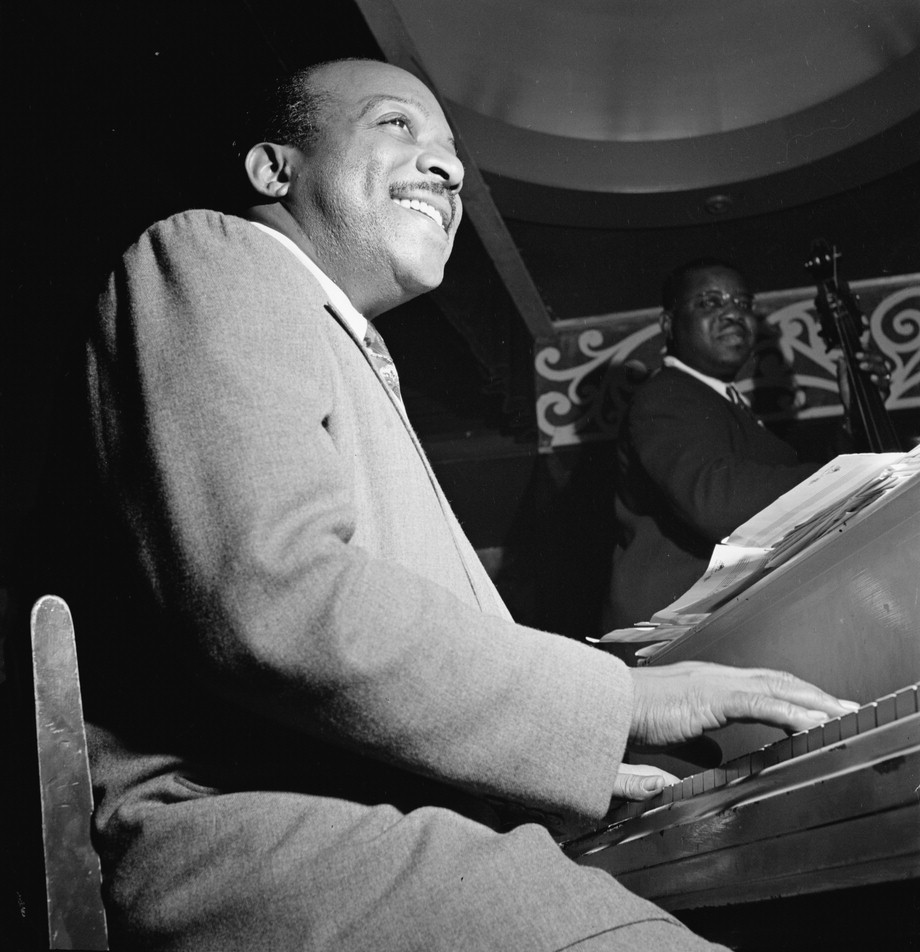 photo: william p. gottlieb · public domain ↗
Count Basie
sourcesCount Basie Center for the Arts — William J. "Count" Basie Biography (mother Lillian "Lilly Ann" Childs Basie, 25-cent lessons) · National Endowment for the Arts — NEA Jazz Masters · BlackPast.org — William Allen (Count) Basie (mother as childhood piano teacher, Waller's organ tutelage) · NPR — Jazz Profiles
Born in Red Bank, New Jersey, in 1904, Basie learned piano from his mother before he ever set foot in a theater pit. Harlem finished the job: in his teens he fell in with the Lincoln Theatre's stride pianists, and Fats Waller taught him organ technique firsthand — the training that got him his first steady work accompanying silent films. A canceled tour stranded him in Kansas City in 1927; by 1929 he had the piano chair in Bennie Moten's band, and when Moten died suddenly in 1935, Basie inherited the sidemen outright, not the older man's musical approach. What he built from them — riffing horns over a rhythm section light enough to float, his own piano paring every phrase down to what mattered — became the definition of big-band swing.
the sound in question
1937
One O'Clock JumpCount Basie
walk the tributaries ↓
Fats Waller1920s–30s · Stride piano / Jazz
Rutgers University's biography of Basie puts the debt in one plain sentence: once the teenage Basie was back in Harlem, "Fats Waller showed him how to play the organ." The lesson happened in the pit of the Lincoln Theatre, where Waller was already the house organist for silent pictures; the jazz-history site The Syncopated Times reports that Waller "found time to give a young Count Basie organ lessons during the shows." That tutoring is what got Basie his first steady professional work — playing the same silent-film accompaniment Waller had just taught him at the keyboard.
listen: upstream & heresource: The Syncopated Times — Fats Waller ↗
1934
Honeysuckle RoseFats Waller
1937
Honeysuckle RoseCount Basie
listen forWaller's 1934 solo recording of his own "Honeysuckle Rose" states the stride left hand plainly: rolling octaves and offbeat chords carry the entire rhythmic weight alone, with nobody else in the room. Basie's Orchestra recorded the same tune at the January 1937 Decca session that introduced the band to the nation — the melody is intact, but the stride pulse Waller played with one hand is now a whole rhythm section's job, riffing horns standing in for the right-hand lines Waller once played solo.
Every institutional account of Basie's childhood in Red Bank agrees on the specifics: the family kept a piano, and his mother, a laundress named Lillian — "Lilly Ann" to the family — paid twenty-five cents a lesson to have someone teach her son to play, according to the Count Basie Center for the Arts. Rutgers' biography adds that "he had an incredible ear, and could repeat any tune he heard" even then. That paid-for literacy at the keyboard came years before Basie ever reached Harlem or heard a professional stride pianist — the foundation everything else in his playing was built on.
listen: upstream & here
No known recordingLillian Childs Basie
1937
One O'Clock JumpCount Basie
listen forLillian Basie left no recordings — there is no disc of a Red Bank laundress giving 25-cent piano lessons to hold up against anything. What her teaching left behind is a kind of negative space: on "One O'Clock Jump," listen for how little decoration Basie's own piano needs to drive a thirteen-piece band — a few notes, precisely placed, functioning as literacy rather than flash. That spareness, the trait critics single out as his signature, starts wherever a musician first learns where the beat actually falls, which for Basie was his mother's living room, not Harlem.
Willie "The Lion" Smith1920s-30s · Stride piano / Jazz / Ragtime
Rutgers' biography of Basie draws a sharper line than most sources about his Harlem years: where NPR's Jazz Profiles documentary series says only that he "absorbed the styles of stride piano pioneers," Rutgers names Willie "the Lion" Smith specifically, recording that Smith "took him under his wing." Smith was already Harlem's self-declared stride king, a fixture of the same rent-party and cutting-contest circuit where the teenage Basie was finding his footing alongside Fats Waller. A personal claim like that — mentorship, not just proximity — is rarer in what survives about Basie's early years than it looks.
listen: upstream & heresource: Rutgers University Libraries — Biography ↗
1939
Echo of SpringWillie "The Lion" Smith
1938
How Long BluesCount Basie
listen forSmith didn't record his own signature piece until 1939 — years after this mentorship happened live at Harlem's rent parties, not on wax, so the dates run backward from teacher to disc. On "Echo of Spring," listen past the rolling stride bass to the unhurried, almost lyrical right-hand line, a register apart from the cutting-contest showpieces stride pianists usually got judged on. Basie's own November 1938 small-group side "How Long Blues" works a related move at band scale: the tempo eases off and the blues shape itself, not any flourish, carries the performance.