walking upstream…
Cabaret Voltaire
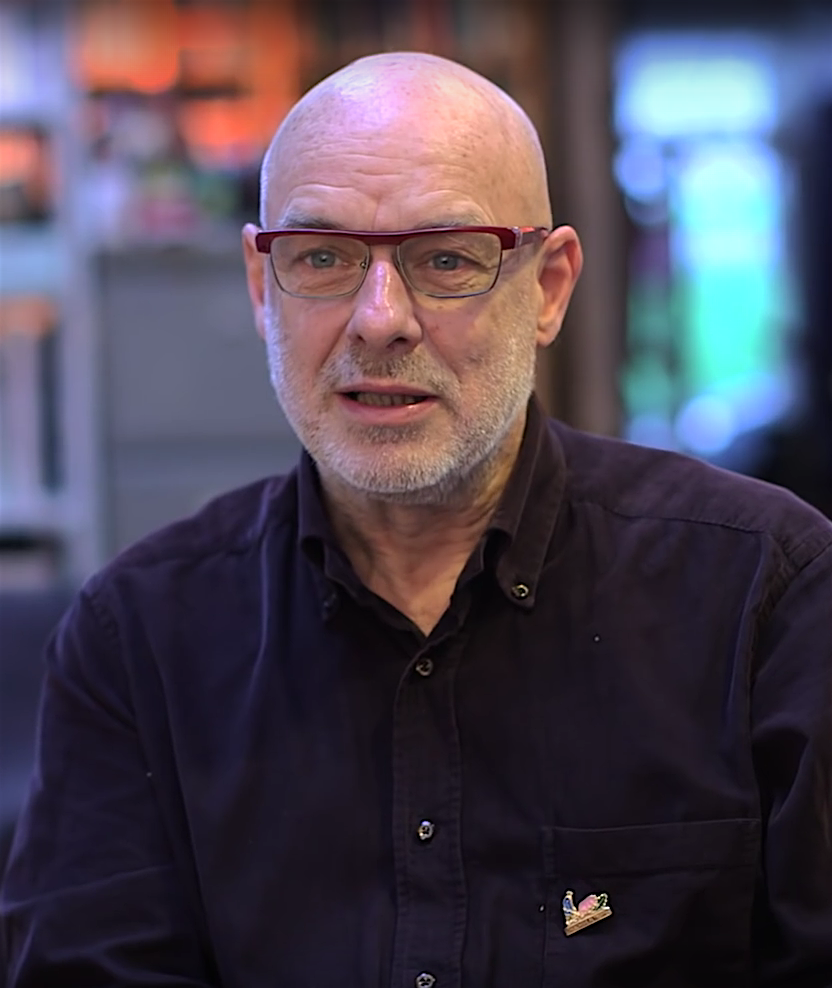


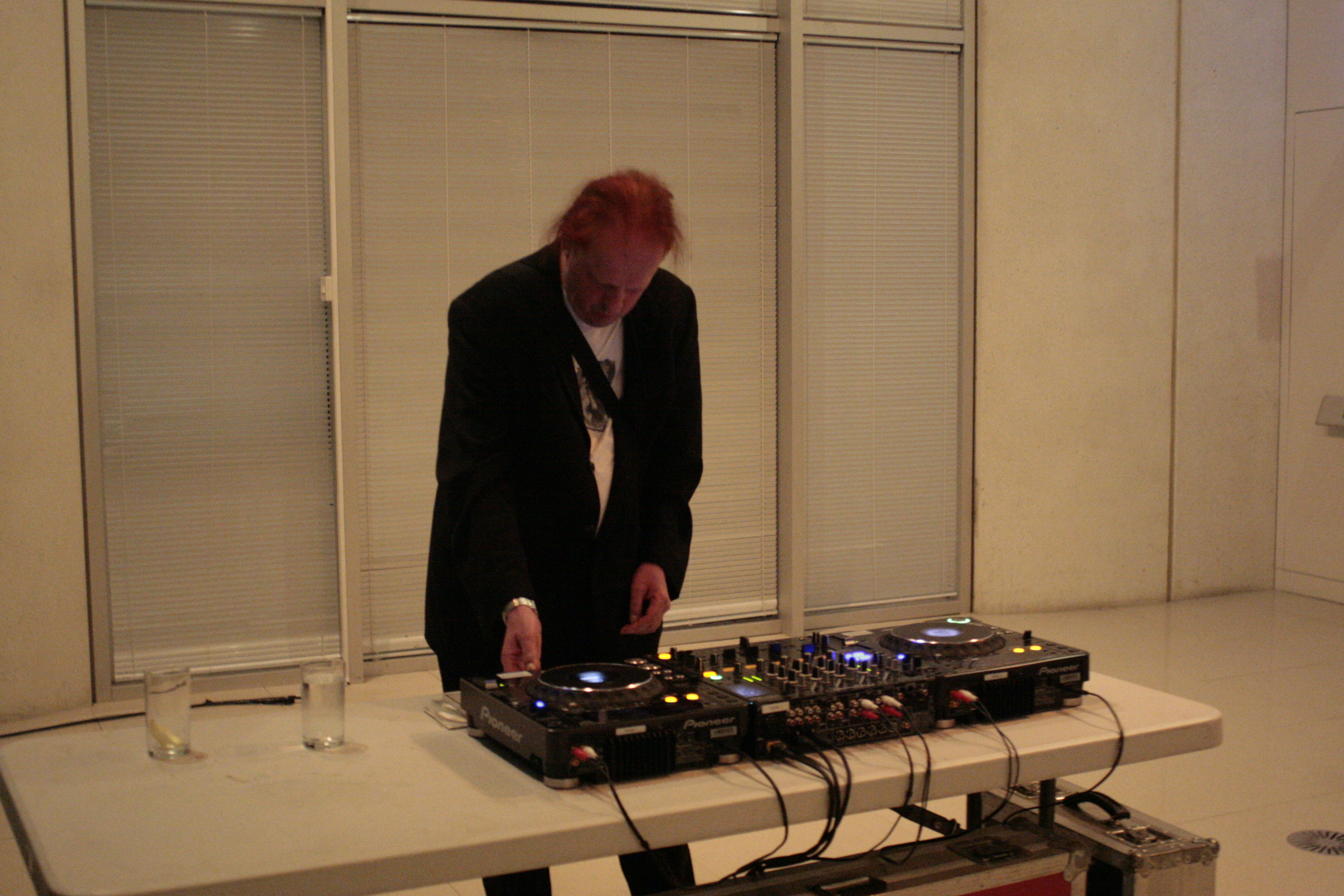 photo: flickr user underclassrising.net · cc by-sa 2.0 ↗
Cabaret Voltaire
sourcesThe Quietus — Richard H Kirk's Baker's Dozen, p.4 (Kraftwerk's Trans-Europe Express) · The Quietus — Richard H Kirk's Baker's Dozen, p.5 (Roxy Music / Eno's 'non-music') · FACT — Richard H. Kirk on why Cabaret Voltaire were like the Velvet Underground (studio collage practice) · Wikipedia — Cabaret Voltaire (formation, members, name origin, discography)
In a Sheffield attic around 1973, three teenage soul boys turned skinheads turned art students bought decommissioned wartime tape recorders by the crate and started building loops with them — Stephen Mallinder, Richard H. Kirk, and Chris Watson, who took the band's name from a Dada nightclub in wartime Zurich because, as Mallinder put it, plagiarizing the idea "seemed quite appropriate." What began as noise experiments and a sledgehammered piano became the first domestic release on Rough Trade in 1978, then, through connections to New York's electro scene and Chicago's house producers, a genuinely danceable strain of industrial music. By 1984's "Sensoria" the machine hum that once terrorized bus-stop crowds had become a groove. Cabaret Voltaire didn't trade confrontation for the dancefloor — they proved the two were never separate.
the sound in question
1979
Nag Nag NagCabaret Voltaire
walk the tributaries ↓
Brian Eno1970s · Ambient / Art rock / Electronic / Experimental
Cabaret Voltaire's two surviving members rarely agreed on much, but they agreed on this. Stephen Mallinder, recalling the band's early days, told Red Bull Music Academy that Brian Eno "were a massive influence on us, because he was actually integrating things that were non-musical and that appealed to us" — the idea that a non-musician could out-experiment a trained player. Richard H. Kirk traced the same debt to Roxy Music's 1972 debut, which carried Eno's thinking to him first. Neither man describes a song they covered — they describe the method that let three teenagers who couldn't play instruments start a band anyway.
listen: upstream & here
1973
Baby's on FireBrian Eno
1979
Nag Nag NagCabaret Voltaire
listen forOn "Baby's on Fire," the showpiece is Robert Fripp's guitar solo pushed through treatment until it barely resembles a guitar — texture standing in for technique, exactly the swap Eno's non-musician ethos proposed. Cabaret Voltaire heard the invitation literally: "Nag Nag Nag" rides a single, shrieking, atonal noise-line over a motorik pulse where a conventional lead break would go, made by three men who by their own account had never learned an instrument. Listen for the same trade in both tracks — a scream standing in for a solo.
Kraftwerk1970s–80s · Electronic / Krautrock / Synth-pop
Richard H. Kirk had followed Kraftwerk since Autobahn, but 1977's Trans-Europe Express reset his sense of what the band could be: "Trans Europe Express was the first one where they became what they are now... Kraftwerk tore up the rulebook," he told the Quietus, recalling it as the first time he'd seen people dance to electronic music. Stephen Mallinder backs the same debt from the studio side — Cabaret Voltaire sought out the New York engineer François Kevorkian specifically because "Kraftwerk worked with him and we were big Kraftwerk fans." The pulse Kirk heard in 1977 became the chassis their own noise was built on.
listen: upstream & heresource: Red Bull Music Academy — Stephen Mallinder ↗
1977
Trans-Europe ExpressKraftwerk
1984
SensoriaCabaret Voltaire
listen for"Trans-Europe Express" runs on an unwavering machine pulse that never flinches, with melody and texture arranged around it rather than driving it. "Sensoria," recorded seven years later with Kevorkian in the mix, keeps that same unbending foundation but roughs it up — tape-cut vocals, cascading noise, and a looped voice crowd the mechanical beat without ever displacing it. Listen for the pulse holding steady under the chaos in both — Kraftwerk's rulebook, still intact under Cabaret Voltaire's mess.
The Velvet Underground1960s · Art rock / Proto-punk / Experimental rock
Richard H. Kirk was ten when The Velvet Underground & Nico came out, too young, he admitted, to "get it at the time" — but the record reached him a few years later by way of Bowie and Roxy Music, and it stuck. "The lyrics and the album had a massive bearing on Cabaret Voltaire," he told the Quietus in 2016, choosing it over the noisier White Light/White Heat only because he preferred this one's decadence. The debt he describes isn't nostalgia for a sound — Kirk elsewhere compared his amphetamine-fuelled tape-collage sessions to "the Velvets being with Andy Warhol," the same instinct to keep cutting and reassembling.
listen: upstream & heresource: The Quietus — Richard H Kirk's Baker's Dozen, p.9 (The Velvet Underground & Nico) ↗
1968
Sister RayThe Velvet Underground
1978
Do the Mussolini (Headkick)Cabaret Voltaire
listen for"Sister Ray" rides one distorted, near-atonal groove for seventeen minutes, pushing repetition until it curdles into noise. "Do the Mussolini (Headkick)" compresses the same trick: a single throbbing bassline and shredded guitar noise repeated past the point of comfort, never resolving into a chorus or a hook. Listen for the refusal to let a groove become a song in both — repetition used as aggression, not as a chorus you're meant to enjoy.