walking upstream…
Bone Thugs-n-Harmony
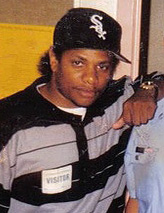

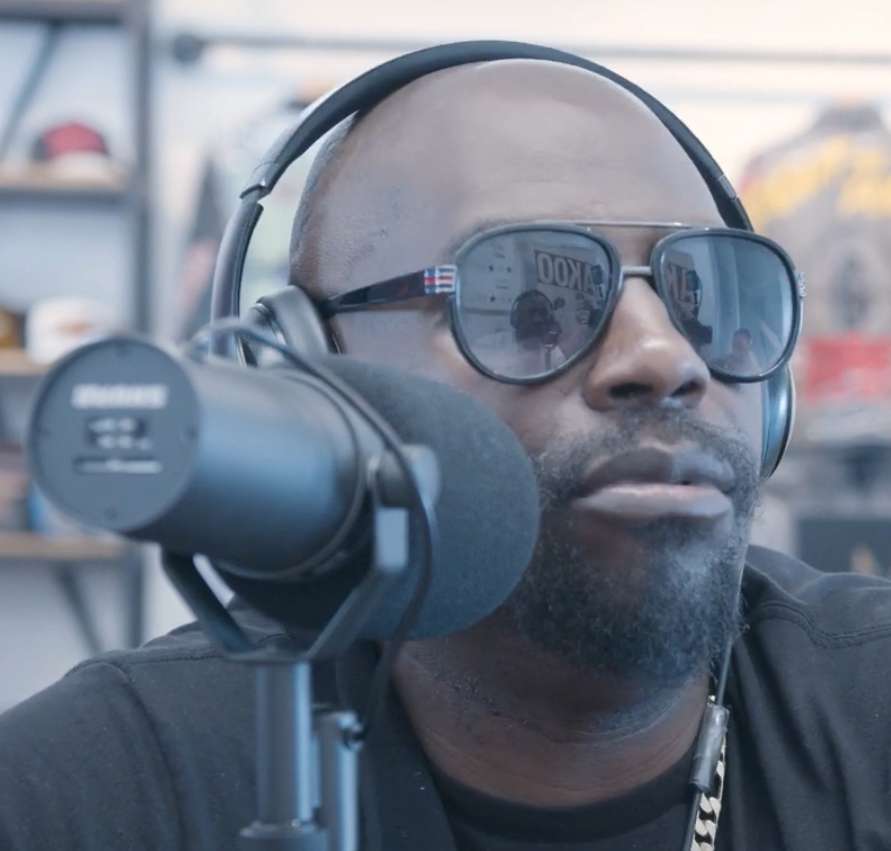
 photo: kmilo from ny/tx · cc by 2.0 ↗
Bone Thugs-n-Harmony
sourcesVice — "I Know There's a Devil" · Grammy.com — Bone Thugs-n-Harmony's E. 1999 Eternal Transformed Rap (Eazy-E's role, DJ U-Neek's G-funk production) · Shatter the Standards — Milestones · Thrasher Magazine — Bone Thugs-N-Harmony Interview (doo-wop comparison, harmony origin story) · Wikipedia — The Whispers (formation, doo-wop origins, career) · Wikipedia — Bone Thugs-n-Harmony (general biography)
In November 1993, five rappers from Cleveland's East Side tracked down Eazy-E after a Compton concert, and when Krayzie Bone spit a verse on the spot, the N.W.A. founder signed the group before the night was over. Eazy renamed them Bone Thugs-n-Harmony and rushed them onto Ruthless Records just as his own career and health were failing. Their innovation was singing while rapping — five voices locking into call-and-response harmony over tongue-twisting, rapid-fire verses, a style MTV later called the most melodic in hip-hop. "Thuggish Ruggish Bone" broke first, an unlikely regional hit that silenced one-hit-wonder doubters. The debut album, E. 1999 Eternal, arrived four months after Eazy's death from AIDS-related complications, doubling as both his memorial and the group's coronation: it entered the Billboard 200 at No. 1.
the sound in question
1996
Tha CrossroadsBone Thugs-n-Harmony
walk the tributaries ↓
Eazy-E1980s · Gangsta rap / West Coast hip hop
Eazy-E discovered the group when Krayzie Bone rapped a verse for him outside a Compton show in November 1993; within weeks he had signed them to Ruthless Records, renamed them, and installed himself as executive producer on their debut. Krayzie later put the debt plainly: "Man, it was everything," he told HipHopDX. "If it wasn't for him, the world would have never heard us in the way that they heard us. Eazy was a visionary." He didn't just open doors — he spent the two years before his death teaching five Cleveland teenagers the music business he had built himself.
listen: upstream & heresource: HipHopDX — Bone Thugs-n-Harmony Detail Eazy-E's Impact & Remember His Death (Krayzie Bone and Flesh-n-Bone on Eazy-E's mentorship) ↗
1993
Real Muthaphuckkin G'sEazy-E
1994
Thuggish Ruggish BoneBone Thugs-n-Harmony
listen forThe lineage is in the bounce: Eazy's "Real Muthaphuckkin G's" rides a stripped-down, bass-heavy G-funk pocket with a nasal, unhurried sneer, leaving space around every line. "Thuggish Ruggish Bone" takes that same low end and doubles the speed, stacking five voices into tongue-twisting, harmonized runs where Eazy left one voice alone. The mentorship surfaces less as mimicry than transformation — Ruthless swagger compressed into something faster, sung, and entirely Bone's own.
The Whispers1970s–80s · Soul / R&B / Quiet storm
Wish Bone has named the Whispers and fellow Ohio act the O'Jays among the group's earliest influences — the sophisticated vocal-group harmony he grew up on before he ever rapped. When Bone Thugs started stacking voices over rhymes, the resemblance wasn't lost on anyone: "People thought we sounded like some old doo-wop group — like the Temptations or something," Krayzie recalled, "but we were rapping." The five had simply learned each other's verses so completely that the ad-libs locked into harmony, the same interlocking-voice principle the Whispers carried out of doo-wop and into soul two decades earlier.
listen: upstream & heresource: WiLD 94.1 — Bone Thugs-N-Harmony Earn Hollywood Walk of Fame Star (Wish on the Whispers and the O'Jays) ↗
1979
And the Beat Goes OnThe Whispers
1995
1st of tha MonthBone Thugs-n-Harmony
listen forThe Whispers' "And the Beat Goes On" is built on the Scott twins trading lines until their voices braid into one — doo-wop's street-corner blend polished into disco-era soul. "1st of tha Month" does the same braiding at hip-hop's speed: five voices stacking into a sung hook between verses, harmony doing work a single rapper's voice couldn't. Strip away the tempo and the genre and the vocal architecture matches — interlocking harmony carrying the hook the way it once carried a dance floor.
Above the Law1990s · G-funk / Gangsta rap / West Coast hip hop
Above the Law's Cold 187um grew up in a Motown family — his father wrote for the label, his uncle Willie Hutch penned hits for the Jackson 5 — and built G-funk from that same soul-and-funk education. "I started incorporating the stuff I learned from my pops and my uncle," he said. "Things started getting really dark and funky. Isaac Hayes. Parliament-Funkadelic." He insisted the sound stay hard: "It had to have a slap that was hardcore. It couldn't just be smooth." That template — melodic but street, funk-sourced and synthesizer-heavy — was the sonic ecosystem DJ U-Neek worked in when he built E. 1999 Eternal around Bone's Cleveland narratives.
listen: upstream & heresource: OkayPlayer — G Funk Is Credited to Dr. Dre. Above The Law Came First (Cold 187um on building the G-funk sound) ↗
1990
Livin' Like HustlersAbove the Law
1995
East 1999Bone Thugs-n-Harmony
listen forAbove the Law's "Livin' Like Hustlers" sets the G-funk blueprint Cold 187um described: whined synth leads, a rolling bassline, funk-sourced grooves smoothed just enough to still sound dangerous. "East 1999," named for the Cleveland street corner Bone called home, runs on the same ingredients — synthesizer melody, deep bass, a laid-back pocket — but stacks five rappers deep instead of one. The G-funk architecture is identical; Bone Thugs' innovation was pouring vocal harmony into a mold built for solo swagger.