walking upstream…
Tego Calderón

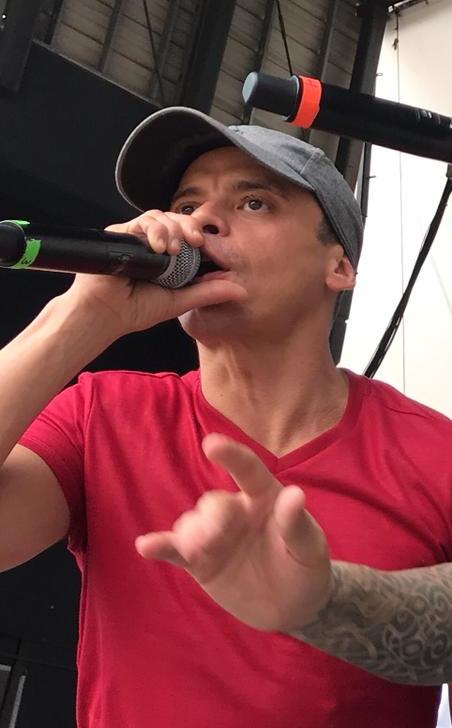
 photo: ventura mendoza · cc by 2.0 ↗
Tego Calderón
Tego Calderón grew up in Río Grande, near Loíza, on Puerto Rico's Afro-Caribbean east coast, the son of a schoolteacher and a salsa percussionist father who filled the house with records. He trained on bongo and timbales at the Escuela Libre de Música, then followed his family to Florida as a teenager, where American hip-hop rewired him. Back home he cut guest verses through the late 1990s before his 2002 debut, "El Abayarde," sold 50,000 copies in a single day and made him reggaetón's most unlikely commercial force: a gravel-voiced street poet who wore his Blackness and his politics on every track. "I started to do music from a Black beat," he told NPR's All Songs Considered, "so that Blacks can feel proud being Black." He turned party music into an argument for dignity.
the sound in question
2002
Pa' Que RetozenTego Calderón
walk the tributaries ↓
Ismael Rivera1950s · Bomba / Plena / Salsa
Rivera's music was already in the house before Tego could talk: his father directed a vaccination clinic by day and kept salsa and Latin jazz records by night, and sang and played percussion in a salsa band himself. Ismael Rivera — a fellow product of the Afro-Puerto Rican corner of the island near Loíza — was among the loudest voices on those records. Rivera never softened his own Blackness for the radio, and Calderón said as much later: "I always liked him 'cause he was keeping it real in terms of racial stuff that happens down there," he told Fader magazine. That refusal to soften became the blueprint.
listen: upstream & heresource: Latinolife — Reggaeton Legends ↗
1978
Las Caras Lindas (De Mi Gente Negra)Ismael Rivera
2002
LoízaTego Calderón
listen for"Las Caras Lindas (De Mi Gente Negra)" opens on horns and a swaying son montuno before Rivera's soneo settles into a plainspoken tribute — "the beautiful faces of my Black people" — sung, not shouted, over a call-and-response chorus. "Loíza" trades that horn section for a stripped-down dembow, but the trick is the same: a hometown, not a beat, gets top billing, and Calderón's gruff cadence answers itself the way Rivera's coro used to, both records turning a place-name into a chant of belonging.
Public Enemy1980s · Hip hop / Political hip hop / Conscious hip hop
Moved to Florida as a teenager and enrolled at Miami Beach Senior High School, Calderón discovered the socially conscious strand of American hip-hop, especially the group Public Enemy — records built to argue, not just to move a room. He carried that lesson back into reggaetón, a genre built purely for dancing, and found a way to keep both: "I've got to do reggaeton in order to make people listen to my social stuff," he told the New York Times. "I'm getting them to dance, and then I'm getting them to think a little bit."
listen: upstream & heresource: Encyclopedia.com — Calderón, Tego (Public Enemy and Vico C influences, the New York Times and Fader quotes) ↗
1989
Fight the PowerPublic Enemy
2002
AbayardeTego Calderón
listen for"Fight the Power" runs on Chuck D's blunt, percussive baritone stacked over the Bomb Squad's sampled chaos, built to be shouted back at a rally. "Abayarde," the title track that opens Calderón's debut, works a slower, jazzier groove — a growling trumpet over a boom-bap beat — but the same defiance sits in the hook: "Where does my flavor come from?" he asks in Spanish, then answers himself, crediting the culture "instilled in me" since the crib. Confrontation, not chorus, drives both records.
Vico C1990s · Hip-hop / Reggaeton / Christian hip-hop
Back in Puerto Rico, Calderón found the missing piece: Vico C, El Filósofo del Rap, had already proven mainland hip-hop could survive translation. Where his American heroes rapped in English, Vico C rhymed in Spanish and made it land just as hard, and Calderón followed him rather than mimic the English catchphrases circulating in Miami. Vico C's 1991 breakthrough, "Bomba Para Afincar," is often cited as reggaetón's founding single — a Spanish-language rap grafted onto a dancehall riddim — and it gave Calderón both a language and a genre to build inside.
listen: upstream & heresource: Encyclopedia.com — Calderón, Tego (Public Enemy and Vico C influences, the New York Times and Fader quotes) ↗
1991
Bomba Para AfincarVico C
2002
Pa' Que RetozenTego Calderón
listen for"Bomba Para Afincar" splices a stuttering reggae riddim under Vico C's unhurried Spanish flow, treating the rhythm as a launchpad for wordplay rather than the main event. "Pa' Que Retozen," a decade later, runs the same trick at double speed: a stripped dembow pattern under Calderón's raspier, faster delivery, the vocal still working ahead of and against the beat the way Vico C's did. The lineage is in the phrasing, not the production — two rappers refusing to let the riddim do the talking.