Tati Quebra-Barraco

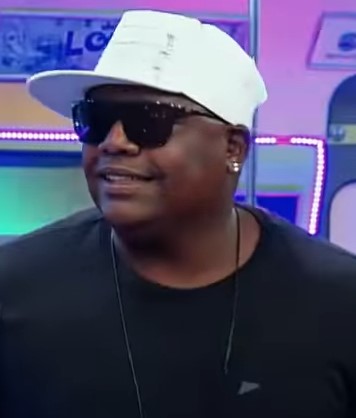

 photo: humor multishow · cc by-sa 4.0 ↗
Tatiana dos Santos Lourenço grew up in Rio's Cidade de Deus favela and became funk carioca's first major female star in the early 2000s, turning explicit, female-desire-centered lyrics into a form of commentary on class, race, and gender in the favelas. Her 2004 album Boladona made her one of the genre's best-selling artists and a feminist and LGBTQ+ icon within Brazilian funk. Two decades later, a teenage Anitta was already a devoted listener, and in 2024 Tati found herself credited on a Weeknd/Anitta single built around one of her own decades-old tracks.
enthusiast, ear-level
listen forDJ Marlboro is generally credited as the producer who invented funk carioca as a genre, and Tati came up inside the scene and sound system culture he built. His 1989 hit 'Melô da Mulher Feia' has the same chant-and-answer, party-MC structure you can still hear driving Tati's 'Cachorra Chapa Quente' more than a decade later, just with rawer, more explicitly favela-specific content.
enthusiast, genre-level
listen forMC Marcinho broke through in 1994 as funk carioca's biggest star just before Tati's own rise, proving the genre could carry a full song structure and a real hook, not just a chant. 'Rap do Solitário' and Tati's own 'Boladona' come from opposite ends of funk carioca's emotional range, romantic longing versus brash self-assertion, but both lean on the same drum-machine-driven, hook-forward funk carioca template he helped popularize.
enthusiast, genre-level
listen forBefore funk carioca existed, Tim Maia was the central figure of Rio's 1970s soul and funk dance scene, later dubbed 'Black Rio,' where DJs spun American soul and funk records at bailes in the city's Black neighborhoods, exactly the party culture funk carioca eventually grew out of. His booming, unapologetic voice on 'Azul da Cor do Mar' comes from a very different place than Tati's raunchy chant style on 'Bota na Boca, Bota na Cara,' but both are rooted in the same lineage of loud, communal Rio dance-party music made for and by working-class Black and mixed-race cariocas.