walking upstream…
Sunny Day Real Estate


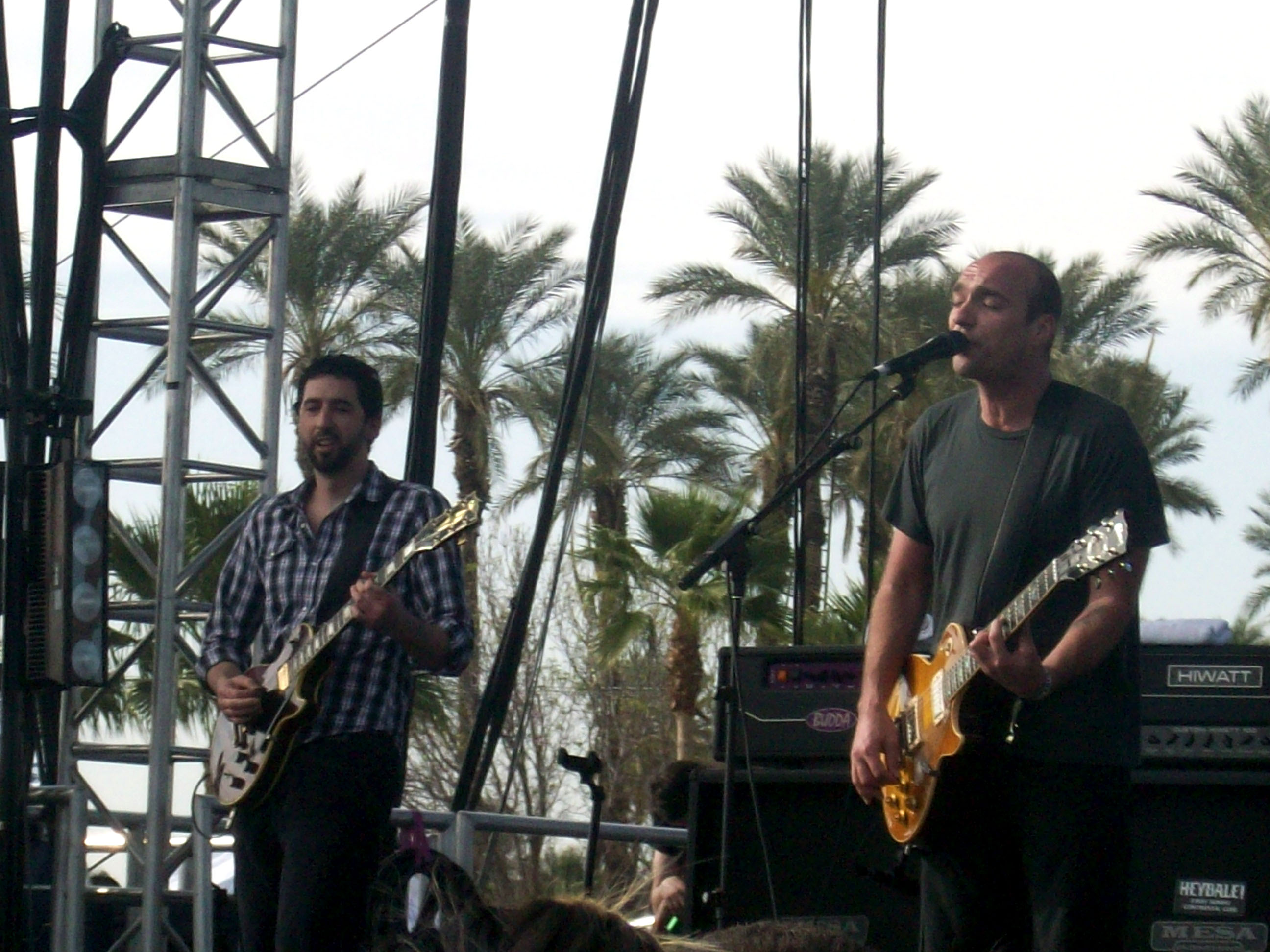 photo: total13 · cc by 2.0 ↗
Sunny Day Real Estate
sourcesLife of the Record — Notes and Transcript, Sunny Day Real Estate (making-of interview on Diary, band's own influence testimony) · The A.V. Club — Sunny Day Real Estate's Jeremy Enigk on being the reluctant godfather of emo · Loudersound — This cult Seattle band helped invent 90s emo (band retrospective, Hoerner quote on legacy)
It started with two friends jamming in the basement of a shared Seattle house known as the Yellow House, then a hunt for "the best drummer in Seattle" spotted at a punk show. Jeremy Enigk, Dan Hoerner, William Goldsmith, and bassist Nate Mendel played two shows before Sub Pop's Jonathan Poneman walked up and asked if they wanted to make a record. "We just signed it," Enigk recalled. What they cut in 1994 as Diary fused hardcore's low-tuned heaviness to open, ringing space and Enigk's raw, screaming-to-whisper voice, a combination that would later get stamped "emo" whether the band liked the label or not. Restraint next to eruption became their whole design.
the sound in question
1994
SevenSunny Day Real Estate
walk the tributaries ↓
Fugazi1990s · Post-hardcore / Punk rock
Dan Hoerner traces the band's earliest instinct for empty space straight back to a single Fugazi pause: "Fugazi has that insane, like 10 second long break at the beginning of that one song... and it just stops," he told the podcast Life of the Record, before drummer William Goldsmith supplied the title, "Waiting Room." "That was so influential," Hoerner said, "the idea that you can use empty space as this palpable, hard-hitting part of your music." Enigk names the same band again for "48"'s guitar breakdown, crediting Ian MacKaye and Guy Picciotto's interlocking octaves as the direct model for the two guitars locking together there.
listen: upstream & heresource: Paste Magazine — 30 Years Later ↗
1988
Waiting RoomFugazi
1994
48Sunny Day Real Estate
listen for"Waiting Room" opens on a full ten seconds of dead air before Fugazi's stuttering riff detonates into it — space itself as the hook. Listen for that same principle, transposed to two guitars, in "48"'s breakdown: Hoerner and Enigk lock into staccato octave lines that answer each other the way MacKaye and Picciotto's guitars do, letting the gaps between hits carry as much weight as the notes.
U21980s · Rock / Post-punk / Arena rock
"The U2 influence is so engraved in me that it's in everything that I did at that time," Enigk said, crediting Bono's "Irish passion" for how he learned to emote in a vocal take. For the wordless, semi-improvised vocal on "Grendel," he points to one specific source: "inspired by 'Elvis Presley and America'... where Bono is doing, like, I believe, Latin or maybe Irish. He's singing in a different language, and he's just kind of feeling it, and I always connected 'Grendel' to that song." Hoerner, meanwhile, describes rigging a volume pedal with taped-down pennies to fake the Edge's delay sound, since the band couldn't afford real effects pedals.
listen: upstream & here
1984
Elvis Presley and AmericaU2
1994
GrendelSunny Day Real Estate
listen forOn "Elvis Presley and America," Bono abandons legible words entirely and just moans and murmurs over the music, chasing feeling rather than lyrics. "Grendel"'s vocal take does the same thing at its most unhinged: Enigk stops narrating and starts howling half-formed syllables, letting the performance itself, not the words, carry the song's dread.
R.E.M.1980s · Alternative rock / Jangle pop
Enigk caught himself in the act: "It was inspired by, for me, like those chords were like an R.E.M. song... one little moment that Michael Stipe does with these chords that are happening on, I think it's 'Hairshirt,' from Green... I just vocal melody-wise made the entire verse that." He adds that R.E.M. guitarist Peter Buck, a Seattle regular who caught the band's earliest shows, called it out on the spot: "Hey, that's an R.E.M. song." Hoerner confirms Buck caught him lifting a guitar lick for "Rodeo Jones" too, and credits Buck with teaching the band to use a stage tuner instead of tuning up in front of the audience.
listen: upstream & here
1988
HairshirtR.E.M.
1994
In CirclesSunny Day Real Estate
listen for"Hairshirt" holds its verse on a small, circling handful of chords under Michael Stipe's murmured vocal melody — a shape that barely resolves before it turns over again. Listen for that same circling verse melody, borrowed almost note for note, under "In Circles"' hushed opening before the full band detonates into the chorus.