walking upstream…
Nas
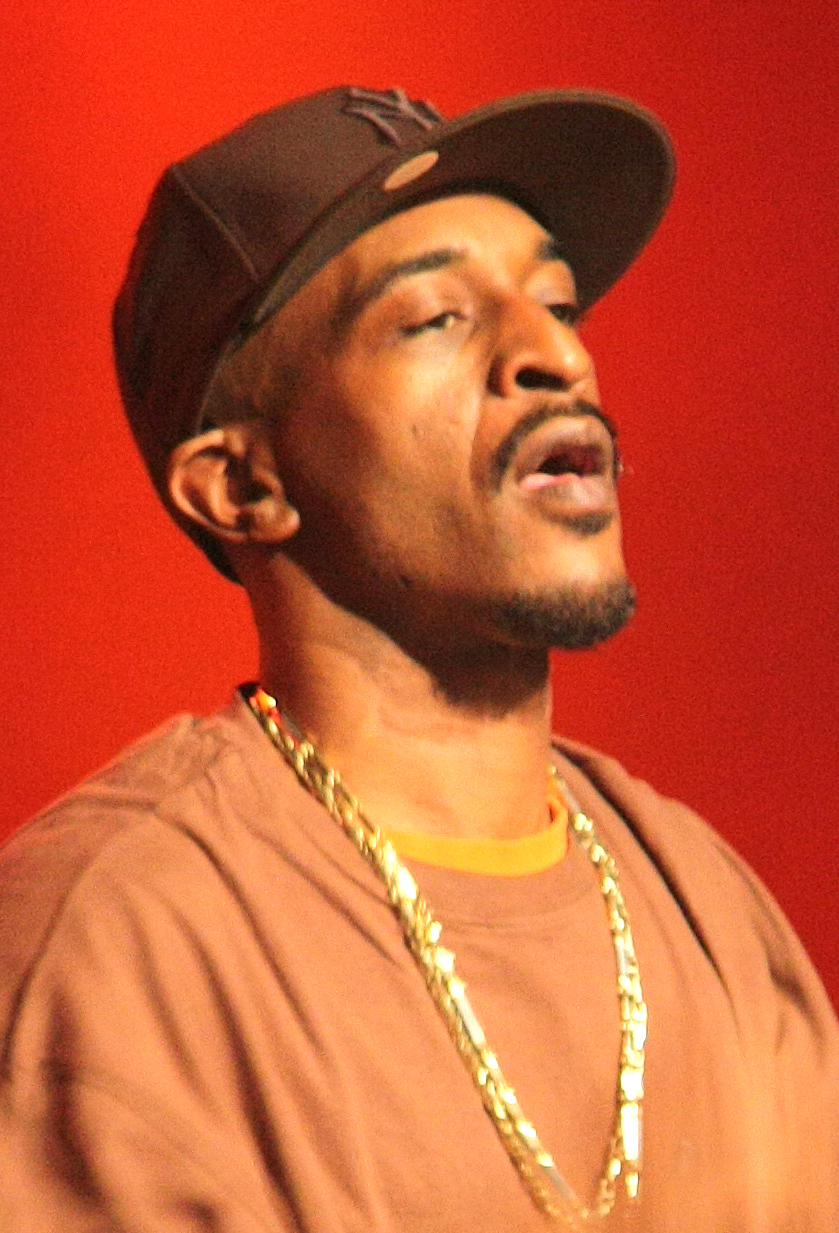


sourcesClash Music — Interview · Huck Magazine — Nas · Complex — 10 Ways Nas' "Illmatic" Changed Hip-Hop Forever (Rob Marriott on Rakim/Nas succession) · Ambrosia for Heads — Kool G Rap Reveals Def Jam Passed On Nas Because He Sounded Too Much Like Him (Kool G Rap's own account) · Rolling Stone — Nas' "Greatest Hits" · Underground Hip Hop Blog — Nas Shares Vintage Picture With His Father (2014 quote on Olu Dara's influence)
Born Nasir Jones in the Queensbridge housing projects in 1973, Nas grew up a few floors from some of hip-hop's hardest rappers and spent his teenage years listening before he ever picked up a pen. By twenty, in 1994, he'd turned that apprenticeship into Illmatic: ten tracks compressing his block's daily grind, his father's jazz cornet, and a whole generation of Queens MCs into a debut so dense that critics still treat it as hip-hop's benchmark for lyricism. "It comes to me way too easy," he has said of writing. "I don't take down notes for rap." That ease was hard-won — years spent absorbing the neighborhood's best before claiming a verse of his own — and it's the reason Illmatic still sounds less like a debut than an inheritance finally collected.
the sound in question
1994
It Ain't Hard to TellNas
walk the tributaries ↓
Rakim1980s–90s · Hip hop / East Coast hip hop / Jazz rap
At sixteen, Nas found his way into the studio where Rakim was cutting his own records and stood there taking notes with his ears. The debt he owed is written into hip-hop's own oral history: the DJ and producer DJ Clark Kent put it plainly — "Everybody was rapping before Rakim. Then Rakim comes and everybody starts rhyming." By the time Illmatic landed, the handoff looked complete enough that critic Rob Marriott could write that Rakim, "who laid the foundation upon which Nas built his opus, found himself in a kind of limbo once Illmatic established Nas as his second coming."
listen: upstream & heresource: Literary Hub — A Brief Oral History of Rakim and the Golden Age of Hip-Hop (DJ Clark Kent on Rakim's impact) ↗
1987
Paid in FullRakim
1994
N.Y. State of MindNas
listen forRakim never raises his voice on "Paid in Full" — the rhymes land inside the beat instead of on top of it, internal rhymes threaded mid-line so the verse reads like it's folding in on itself. "N.Y. State of Mind" borrows that same unhurried, coiled delivery, and it does so literally: the hook lifts Rakim's own instrumental "Mahogany" from the Paid in Full album, so Nas is quite audibly rapping over his teacher's beat while extending his sentence-inside-a-sentence technique into full paranoid, room-by-room narration.
Olu Dara1970s–80s · Avant-garde jazz / Blues
Nas's father, cornetist Olu Dara, spent the 1970s and '80s in New York's avant-garde jazz scene, touring alongside David Murray and Cassandra Wilson years before his son picked up a mic. Promoting the Illmatic documentary in 2014, Nas put the debt in one line: "My dad is one of my biggest influences and even did his own thing on #Illmatic. He always thought I was gonna be a trumpet player but I ended up rhyming instead." It wasn't symbolic: Nas asked his father to close "Life's a Bitch" on cornet, telling Rolling Stone, "I told him to play whatever comes to mind when he thinks of me as a kid."
listen: upstream & heresource: Vice — The Story Behind Nas's 'Illmatic' Is Almost as Great as the Album Itself (Olu Dara's role in the album) ↗
1980
MingOlu Dara
1994
Life's a BitchNas
listen forOn the David Murray Octet's 1980 recording "Ming," Olu Dara's cornet threads through the horn section with a rough, vocal-toned phrasing that owes as much to the blues as to jazz technique. Fourteen years later, that same instrument closes "Life's a Bitch" unaccompanied — no beat, no rhyme, just the cornet worrying a phrase over and over the way a preacher worries a line. It's the one moment on Illmatic where the hip-hop stops entirely and the source material speaks for itself.
Kool G Rap1980s · Hip hop / Mafioso rap / East Coast hip hop
The same 1989 studio where Nas watched Rakim record also belonged, some days, to Kool G Rap — and Nas absorbed him too, so thoroughly Def Jam passed on his demo, saying he sounded too much like G Rap already. G Rap heard it differently once he heard the young Queensbridge rapper himself: "I do hear a lot of influence, but then again, I hear the influence of Rakim in him," he said. "I understand I may have been an influence on Nas, but I heard his originality, as well." Rolling Stone later credited G Rap's narratives as "a style that would come to define later Queens MCs like Nas."
listen: upstream & heresource: Wikipedia — Kool G Rap (Rolling Stone and Peter Shapiro on G Rap's influence on Nas) ↗
1989
Road to the RichesKool G Rap
1991
Live at the BarbequeNas
listen for"Road to the Riches" moves at a clip that barely lets a rhyme resolve before the next one starts stacking on it — G Rap narrating a criminal rise in the same rushed, cinematic present tense he'd patent for a decade of Queens rap. Nas's first released verse, on Main Source's "Live at the Barbeque," chases that same density at seventeen years old — internal rhymes doubled and tripled inside single lines — and the resemblance was so immediate that it got him noticed by, and then compared directly to, G Rap himself.