walking upstream…
Eric B. & Rakim



Rakim's Long Island basement doubled as classroom. The first rap record he heard played there — his brother's friend dropping the funk group Fatback Band's "King Tim III" — and a few years later, in 1985, his mother spun a John Coltrane record on the same turntable, its saxophone moving so freely between notes that Rakim resolved on the spot: "I'm never gonna use the same cadence in one show." He'd already been rhyming for years, chasing the technical command of Melle Mel and Grandmaster Caz; now he had a model for how far a voice could bend. Teamed with DJ Eric B., he cut "Eric B. Is President" in 1986, its beat built from a James Brown horn break, then Paid in Full (1987), where the Coltrane lesson turned audible: internal rhymes moving like a saxophone solo over Eric B.'s funk-sample foundation.
the sound in question
1987
Paid in FullEric B. & Rakim
walk the tributaries ↓
John Coltrane1960s · Jazz / Modal jazz / Spiritual jazz
Rakim has been exact about the model: "One of the thoughts that I used to play with was trying to write in a John Coltrane solo style," he said. "That's how a lot of my styles came up—in solo mode... It's just up and down the scale, any rhythm you want to hit, it don't have to be no set rhythm throughout the whole song." Where earlier MCs rhymed to a bar's four corners, Rakim let a verse run like an improvised sax line, phrases spilling past the beat's usual stopping points and doubling back on themselves mid-bar.
listen: upstream & heresource: Okayplayer — Revivalist Exclusive ↗
1965
A Love Supreme, Pt. I – AcknowledgementJohn Coltrane
1987
I Ain't No JokeEric B. & Rakim
listen forOn "A Love Supreme"'s opening movement, Coltrane's tenor climbs and doubles back across a four-note bassline without repeating the same phrase length twice, runs arriving early or late against the pulse rather than on it. "I Ain't No Joke" does the rhythmic equivalent in rhyme: listen for how Rakim's syllables land mid-word and mid-line rather than stacking neatly at each bar's end, internal rhymes arriving a beat early or late the way Coltrane's runs do, so the verse never quite locks into a predictable four-bar shape.
Melle Mel1980s · Hip hop / Old-school hip hop
Ask Rakim to name his influences and the answer arrives instantly: "Grandmaster Caz, Melle Mel, and Kool Moe Dee are my Mount Rushmore," he told The Ringer. He singled out Mel's particular weight in a separate account: "Melle Mel was like the lion of the game, man... a street poet then," delivering neighborhood reportage with a preacher's command. Rakim absorbed that gravity, then rebuilt it — folding Mel's chest-out authority into a rhyme scheme dense enough that no single bar carries the whole thought.
listen: upstream & heresource: Red Bull Music Academy — Rakim Lecture (Melle Mel as 'the lion of the game'; a 'street poet') ↗
1982
The MessageMelle Mel
1986
My MelodyEric B. & Rakim
listen for"The Message" delivers its lines like statements read from a pulpit — Mel's cadence measured, each thought closing near the end of its bar. "My Melody" borrows that same unhurried, commanding pace but keeps talking past where Mel would stop: listen for how Rakim tucks a second and third rhyme inside a line that hasn't finished its first one, stretching one bar's worth of authority into two bars' worth of wordplay without raising his voice.
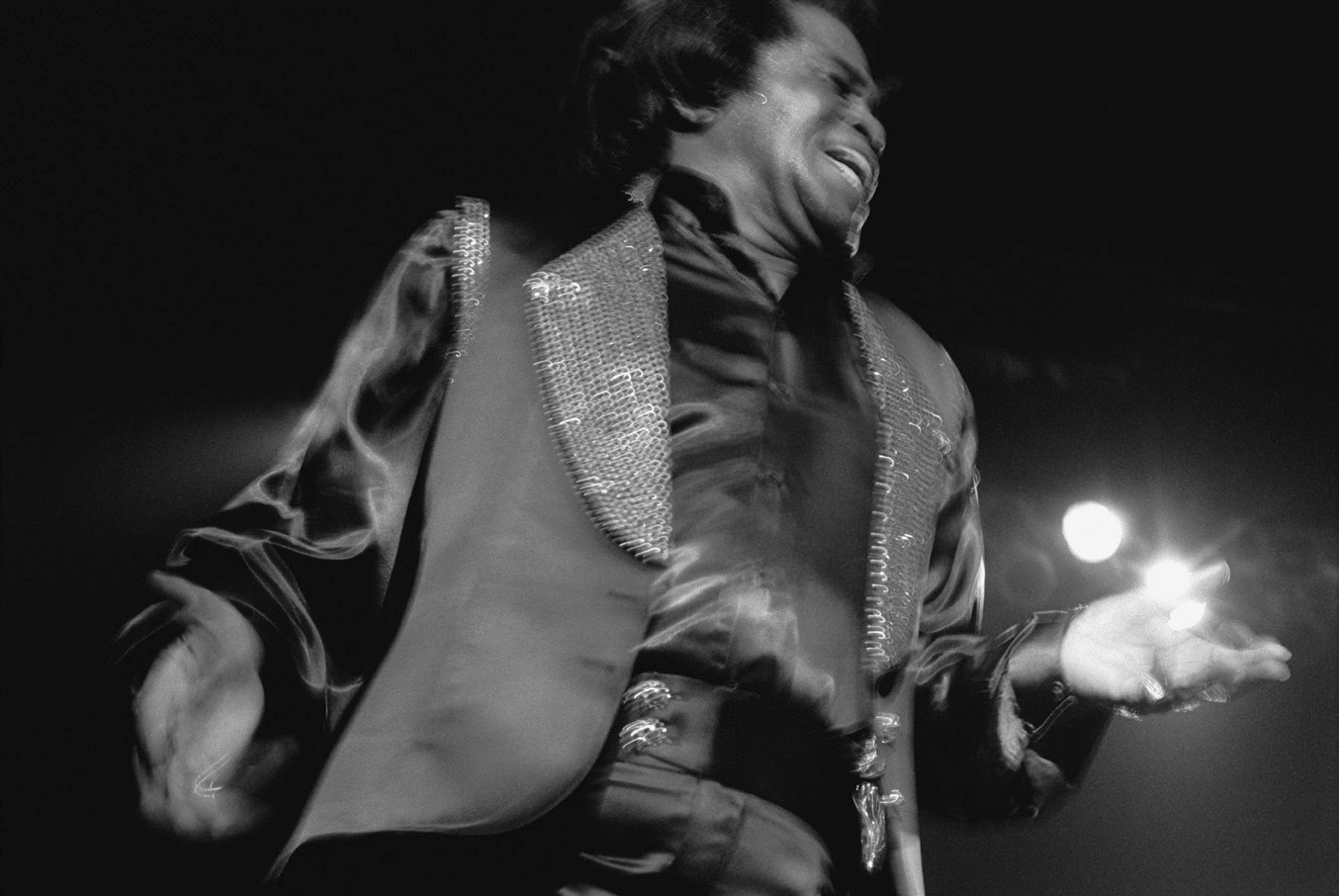
James Brown1960s–70s · Funk / Soul / Rhythm and blues
Eric B. has described the exact moment "Eric B. Is President" came together: "I picked up Fonda Rae's 'Over Like A Fat Rat' and took the bassline and matched it to the 'Funky President' beat." Rakim laughed at the combination — until Eric B. cut him off: "this is a serious tune," he said. "I can hear when a beat is gonna stick." The instinct was right: built almost entirely around a James Brown horn-and-drum break, the track became one of the records that made a James Brown sample hip-hop's default building block.
listen: upstream & here
1973
Funky President (People It's Bad)James Brown
1986
Eric B. Is PresidentEric B. & Rakim
listen for"Funky President" runs on a tight, repeating pocket — a horn stab, a driving bassline, a drum break that never lets up. "Eric B. Is President" lifts that same pocket almost note for note and loops it for the length of the record: listen for how little the beat changes across the whole track, the groove doing the work a live band would, while Rakim's verse rides on top of a rhythm that's entirely borrowed, not built new.