walking upstream…
Marley Marl

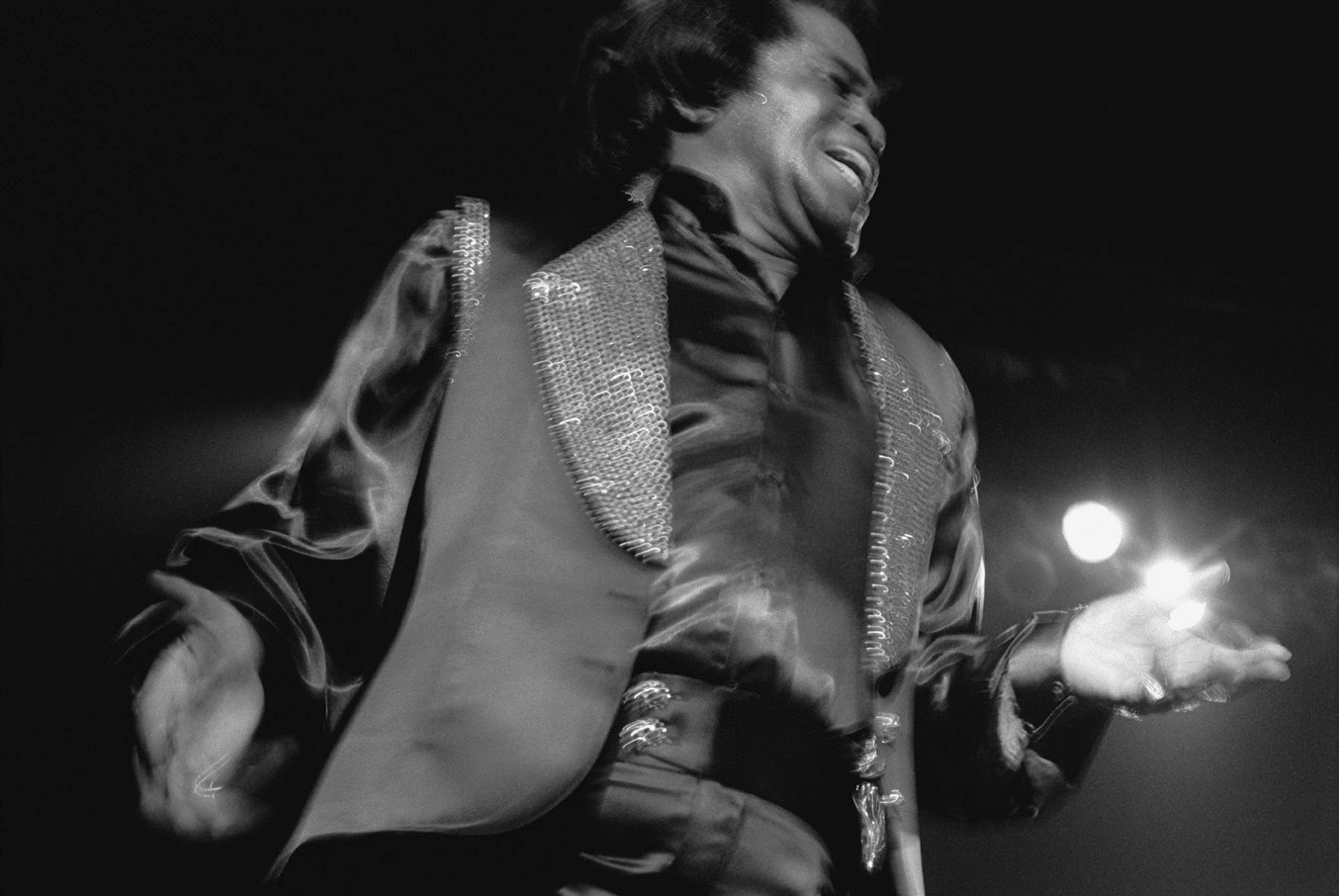
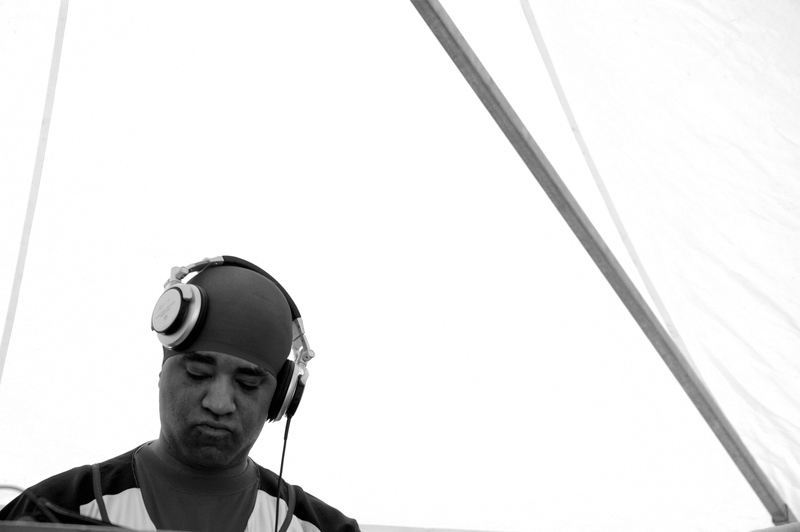 photo: ronald van holst · cc by-sa 2.0 ↗
Marley Marl
Marlon Williams was interning at Manhattan's Unique Recording Studios in the early 1980s, splicing a Captain Rock record, when a mistimed cut let a snare hit land ahead of the beat — and he realized any drum sound from any record could become his own. He'd grown up watching his older brother's DJ crew work a mixer in their Queensbridge, Queens apartment before he could reach one himself, then built his own hip-hop crew and, later, the Juice Crew, the roster he ran out of DJ Mr. Magic's WBLS radio show and the Cold Chillin' label built around it. The sound he assembled from that studio accident — James Brown breaks chopped into triggered pulses, borrowed from a production style he'd first loved in disco — became "The Bridge," "The Symphony," and the basic vocabulary of sample-based hip-hop after him.
the sound in question
1988
The SymphonyMarley Marl
walk the tributaries ↓
Giorgio Moroder1970s–80s · Disco / Euro disco / Electronic / Hi-NRG
Asked in 2013 whether growing up on James Brown and Otis Redding led him to Kraftwerk, Marley Marl volunteered a different name entirely: "You know who my hero was before I even got into hip-hop? I just gotta lay it on the line: Giorgio Moroder. I was into Giorgio like you would not believe... I was a sequence head." The specific record was Donna Summer's Moroder-produced "I Feel Love," which he says "really, really, really changed my life" — the moment, while interning at a Manhattan studio, that he decided to chase machine-sequenced production himself.
listen: upstream & heresource: NPR Microphone Check — Marley Marl on the Bridge Wars, LL Cool J and discovering sampling (Giorgio Moroder "hero" testimony; "trigger music"/"The Bridge" quote) ↗
1977
I Feel LoveGiorgio Moroder
1986
The BridgeMarley Marl
listen for"I Feel Love" runs on one thing: a syncopated, relentlessly even bassline pulse, sequenced rather than played, that never breaks stride across eight minutes. Marley Marl chased that same electronic tightness into "The Bridge": "The whole 'Bridge'... all that was trigger music, triggering samples from a 808 with separate samplers around the room," he said. "The pulse from the 808 would go into my sampler and make it react" — the same sequenced-pulse logic he first heard, and fell for, on Moroder's record.
James Brown1960s–70s · Funk / Soul / Rhythm and blues
"I have my James Brown foundation," Marley Marl said bluntly of his early catalog. "When I tripped upon sampling, it was actually through James Brown," he explained, "because I realized that being a DJ, every time a DJ would put on a James Brown record, people would lose their mind." The debt got literal on Kool G Rap & DJ Polo's "It's a Demo": chasing that same reaction, he lifted the snare, hi-hat and ghost note off "Funky Drummer" after its drummer, Clyde Stubblefield, personally walked him through where the ghost notes fell.
listen: upstream & heresource: Red Bull Music Academy — Marley Marl lecture, Tokyo 2014 (James Brown "foundation" quote; Clyde Stubblefield/"It's a Demo" sampling account; DJ Breakout schoolyard story) ↗
1970
Funky DrummerJames Brown
1986
It's a DemoMarley Marl
listen forListen to "Funky Drummer" for the ghost notes themselves — the near-silent extra snare taps Clyde Stubblefield drops between the main hits, filling space most drummers of the era left alone. On "It's a Demo," Marley Marl doesn't loop the whole break; he isolates just that snare-hi-hat-ghost-note cluster and rides it under Kool G Rap's verses, the same tiny fraction of a beat repeating under the rhymes instead of a full bar cycling past.
DJ BreakoutHip hop
Marley Marl has told the same story a decade apart, almost word for word: a schoolmate named DJ Breakout — who'd go on to join the Bronx crew Funky 4 + 1 — walked through his Manhattan high school blasting a mixtape of park jams. "It was a tape. It was a Breakout tape," he remembered. "And the [dude] walked through the gym... he walked through the lunchroom with that shit blasting. Everybody stopped and looked and was like, 'What the fuck was that?' I went home and made a crew." He founded his own that same afternoon, before he'd ever made a hip-hop record himself.
listen: upstream & heresource: Red Bull Music Academy — Marley Marl lecture, Tokyo 2014 (James Brown "foundation" quote; Clyde Stubblefield/"It's a Demo" sampling account; DJ Breakout schoolyard story) ↗
1980
That's the JointDJ Breakout
1985
Marley Marl ScratchMarley Marl
listen forNo recording survives of the schoolyard tape itself, so listen instead to Funky 4 + 1's "That's the Joint," the sound of the crew DJ Breakout would join — call-and-response chants trading off over a live, unbroken groove built for a room to shout back at. Marley Marl chases that same crowd-built energy on "Marley Marl Scratch," MC Shan's voice cut up and repeated against turntable scratches, the DJ's hands still doing the work a rapper's mouth would later take over.