walking upstream…
Massive Attack
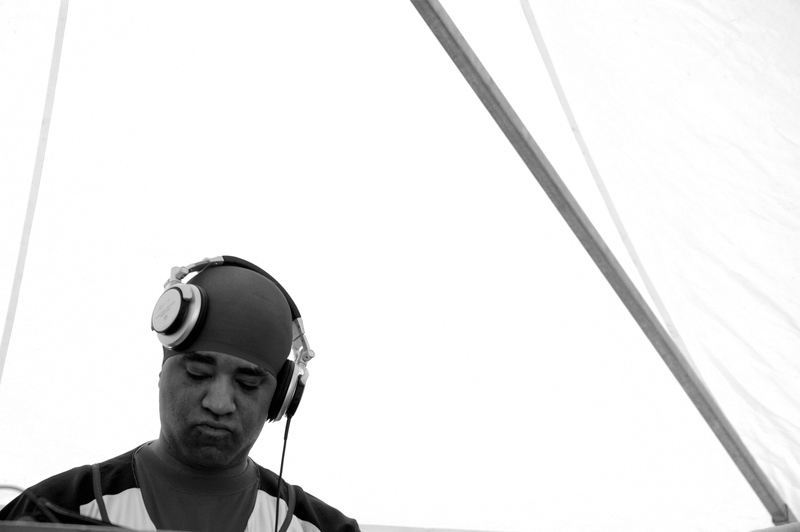

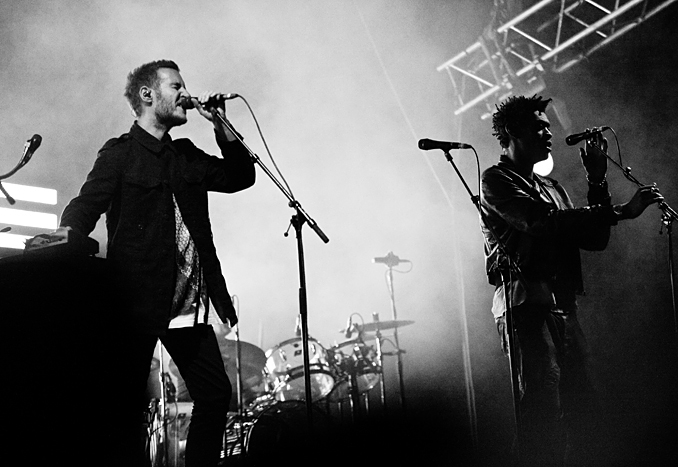 photo: platonova alina · cc by-sa 3.0 ↗
Massive Attack
Robert "3D" Del Naja and Grant "Daddy G" Marshall emerged from Bristol's Wild Bunch sound system, a loose DJ-and-MC collective that mashed hip-hop, reggae, punk, and jazz-funk into its own late-night blend. With Andrew "Mushroom" Vowles they turned that sample-and-toast aesthetic into 1991's Blue Lines, widely credited as the founding record of trip hop: slow, bass-heavy, dub-spacious productions built for reggae-style guest vocalists and hip-hop-trained MCs to trade lines over. Mezzanine (1998) darkened the formula into something closer to gothic rock, and the group has spent three decades restlessly refusing the genre tag it invented.
the sound in question
1991
Unfinished SympathyMassive Attack
walk the tributaries ↓
Marley Marl1980s · East Coast hip-hop / Golden age hip-hop / Hip hop
Daddy G has said hip-hop was "the first thing that encapsulated what we did with the Wild Bunch" — the same crate-digging, drum-break-first production ethic the group heard on records from mid-80s New York, where Marley Marl was the reigning sample scientist. A 1998 Vibe profile of the band specifically named Marley Marl, alongside Lee "Scratch" Perry, among the pioneering producers Massive Attack cited as inspiration for their own studio approach.
listen: upstream & heresource: The Paris Review — Twenty Years Later ↗
1988
The SymphonyMarley Marl
1990
DaydreamingMassive Attack
listen forPlay Marley Marl's 'The Symphony,' then Massive Attack's 'Daydreaming.' Listen for the shared architecture — a stark, looped breakbeat as the whole foundation, with vocalists trading turns over it rather than a song built verse-chorus-verse.
The Clash1970s–80s · Punk rock / New wave
3D has said plainly, "we all grew up listening to punk music and funk stuff and those attitudes sort of snuck into our music" — and he traces his own graffiti stencil technique directly to The Clash. The Clash were themselves the template for what Massive Attack would become: a punk band that treated reggae not as a novelty but as an equal, structural influence, mixing genres a UK crowd wasn't supposed to mix.
listen: upstream & heresource: Robert Del Naja — Wikipedia (3D on Crass/The Clash stencil influence; 'we all grew up listening to punk music and funk stuff') ↗
1978
(White Man) In Hammersmith PalaisThe Clash
1991
Five Man ArmyMassive Attack
listen forPlay The Clash's '(White Man) In Hammersmith Palais' — a punk song built entirely around a reggae rhythm and a lyric about crossing over into Jamaican dancehall culture — then Massive Attack's 'Five Man Army.' Listen for the same move: a crew of voices trading toasts over a stripped, reggae-weighted groove, punk's confrontational energy rerouted through a sound-system pulse.
King Tubby1970s · Dub / Reggae
Massive Attack came up on Bristol's Jamaican sound-system culture — Daddy G has described the Wild Bunch's whole method as growing out of that world, DJs hauling speaker stacks and mixing on the fly, fed by Bristol record shops that specialized in Jamaican imports. King Tubby is the engineer who invented the vocabulary those sound systems ran on: stripping the voice off a rhythm, chasing the bassline, and letting tape echo and reverb do the emotional work. Massive Attack's whole production language — vocals floating in cavernous space over a dub-weight bassline — descends from that desk.
listen: upstream & here
1975
Roots of DubKing Tubby
1994
KarmacomaMassive Attack
listen forPlay King Tubby's 'Roots of Dub,' then Massive Attack's 'Karmacoma.' Listen for the same instinct: the mix built around empty space and a rolling sub-bass, vocals treated like one more echo trailing off into the dark rather than sitting up front.