walking upstream…
Les Paul
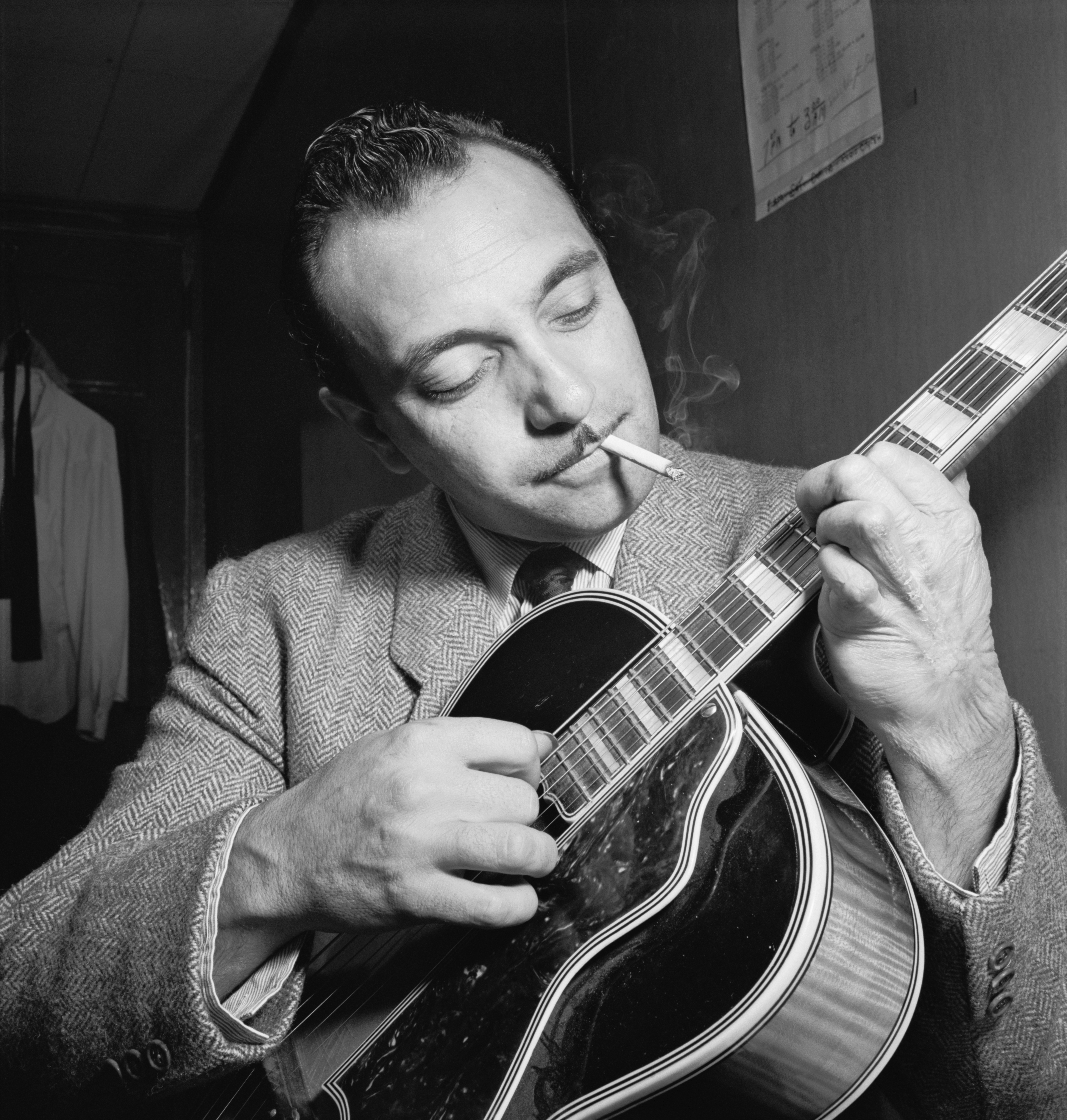
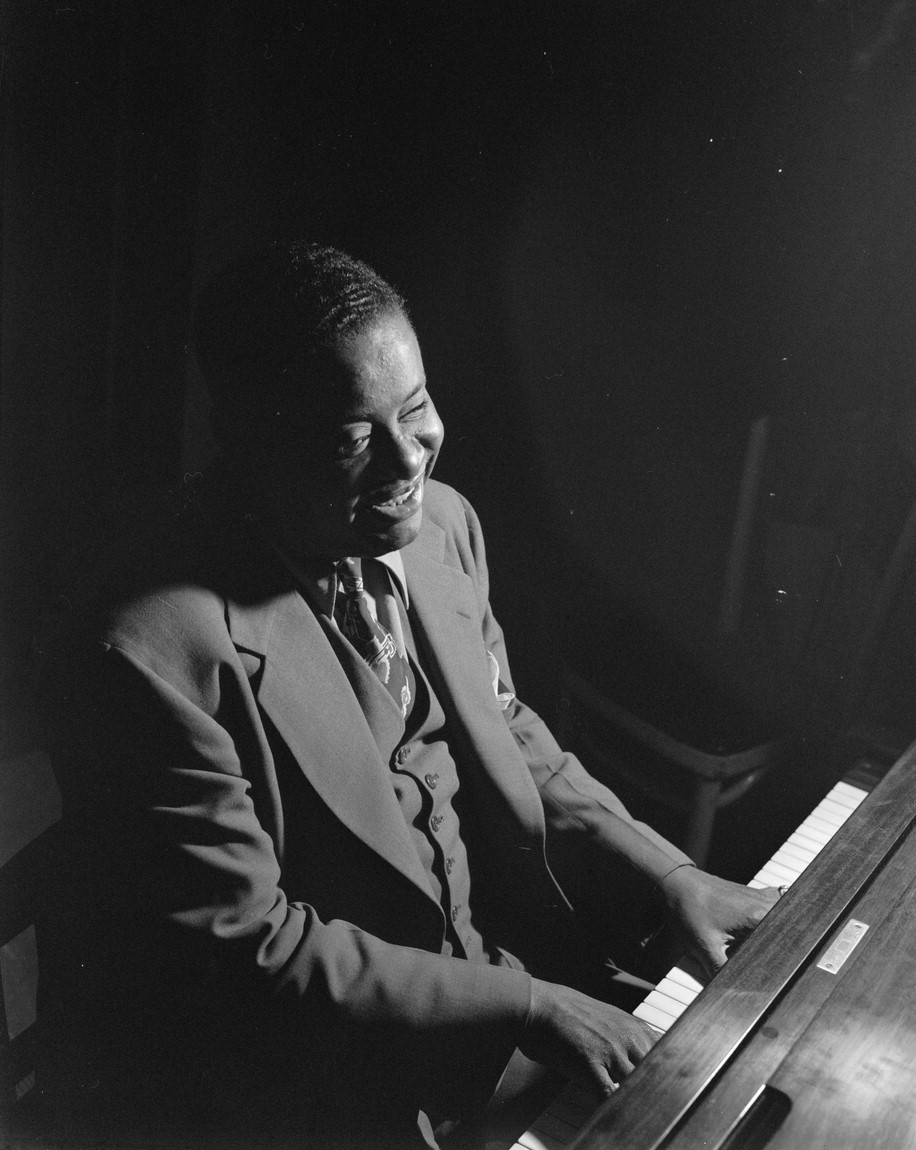

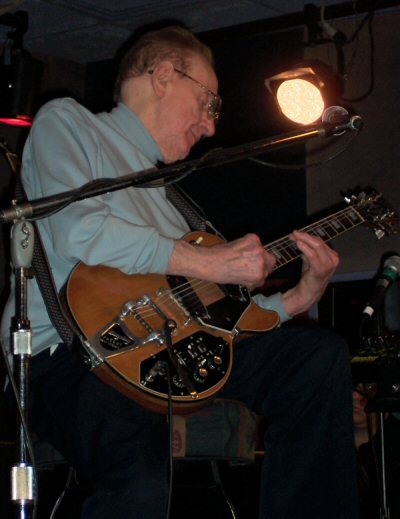 photo: didi46 · cc by-sa 3.0 ↗
Les Paul
In 1928, at thirteen, Les Paul talked his way through a men's-room window into a Waukesha dance hall to watch a touring guitarist work a Gibson L-5. "This is the finest guitar in the whole world," the man told him, and Paul -- born Lester Polfuss -- was hooked. By his teens he lived a double life: "Rhubarb Red" on hillbilly radio by day, "Les Paul" in Chicago jazz clubs by night. He moved to New York in 1938, backed Bing Crosby to a number-one hit, then spent the postwar years building the "New Sound" -- overdubbing, tape delay, the solid-body "Log" -- with his wife Mary Ford, scoring pop hits before rock and roll displaced them. He kept playing New York clubs into his nineties, dying in 2009: the inventor everyone remembers had built his ear first, chasing two players he never stopped naming as the best he'd heard.
the sound in question
1951
How High the MoonLes Paul
walk the tributaries ↓
Django Reinhardt1930s · Gypsy jazz / Jazz / Swing
At the Paramount Theatre, a doorman got a message wrong the first time: "Les, you have a visitor down here, name of Django Reinhardt." Paul figured it a joke -- "Well, send up Jesus Christ and a case of beer!" It wasn't. Reinhardt, touring the U.S. with Duke Ellington in 1946, spoke no English; he picked up a spare guitar and the two started playing. "We played very similar," Paul said, "which makes it easy for one guitarist to know what the other is doing" -- Reinhardt's rapid single-note runs chasing the chord changes were already the standard Paul measured his playing against, absorbed off records years before they met.
listen: upstream & heresource: Performing Musician -- "Les Paul ↗
1937
Minor SwingDjango Reinhardt
1947
Lover (When You're Near Me)Les Paul
listen forSet Reinhardt's 1937 "Minor Swing" against Paul's 1947 "Lover (When You're Near Me)": both solos run on the same hot-club device, fast single-note lines launched off arpeggiated chord shapes and pushed by a forward-leaning swing feel rather than a straight on-the-beat pulse. Paul multiplies it -- eight guitar parts layered into one, sped up past any band's tempo -- but the phrasing habit underneath, a run leaping off the beat and tumbling back down through the changes, is the vocabulary he'd taken from Reinhardt's records before the two men ever spoke.
Art Tatum1930s–40s · Jazz / Stride piano / Swing
Tatum was a pianist, not a guitarist, which is the part of this influence people skip. Paul named him, unprompted, as one of the two greatest musicians he ever played with: "I lived with Art. He was the king... He had so much technique. Sometimes I'd see him play and I had to walk out -- he was just too much. I couldn't digest that much goodness." What transferred wasn't a fingering. Meeting Tatum in mid-1930s Chicago, by Paul's account, convinced him to stay on guitar rather than switch to piano -- Tatum had claimed the instrument's ceiling; Paul spent his career dragging that density onto six strings.
listen: upstream & heresource: Performing Musician -- "Les Paul ↗
1933
Tiger RagArt Tatum
1952
Tiger RagLes Paul
listen forLine up Tatum's "Tiger Rag" against Paul's own 1952 recording of the same tune and the kinship is in the sheer rate of notes: Tatum reharmonizes the melody on the fly under torrents of stride-derived runs, and Paul's guitar version chases an equivalent density, rapid single-note lines stacked faster than the tune's original tempo ever asked for -- a guitarist trying to do on six strings what he'd watched a piano do on eighty-eight.
Eddie Lang1920s · Jazz / Early jazz / Dixieland
By his own account, Paul modeled himself on Eddie Lang, Bing Crosby's guitarist through the late 1920s and early '30s, before he'd played a professional date of his own: "Eddie was sort of the cow with the bell... I fell in love with his playing. He was my mentor in the very early days. He was who I wanted to learn from." The debt was practical: Lang's light accompaniment behind Crosby was the style Paul had to master to get hired, sneaking into an empty NBC studio to audition on the strength of it -- "Bing already had Eddie Lang... and I could play just like him."
listen: upstream & heresource: Performing Musician -- "Les Paul ↗
1931
I Surrender, DearEddie Lang
1945
It's Been a Long, Long TimeLes Paul
listen forPlay Lang's 1931 accompaniment behind Crosby on "I Surrender, Dear" against Paul's own guitar work behind Crosby on 1945's "It's Been a Long, Long Time": both guitarists stay out of the vocal's way with the same light touch, brief single-note fills and soft chord punctuation timed to leave the melody room rather than crowd the singer. It's the same job, played the same way, thirteen years and one guitarist apart -- the succession Paul said he'd engineered on purpose.