walking upstream…
Wes Montgomery


sourcesWikipedia · uDiscover Music
Wes Montgomery was a self-taught guitarist from Indianapolis who, at nineteen, heard a Benny Goodman record featuring Charlie Christian and bought a guitar the next day, then spent a year teaching himself Christian's recorded solos note for note before he ever took a paying gig. Working days as a machinist, he practiced at night plucking the strings with the fleshy pad of his thumb instead of a pick so as not to wake his wife and seven children, and out of that quiet habit built a warm, horn-like tone and a vocabulary of parallel octaves and dense block chords that no one else was playing. His Riverside albums, especially 'The Incredible Jazz Guitar of Wes Montgomery' (1960) and the live 'Full House' (1962), reset the instrument's possibilities, and his later, more commercial Verve and A&M records carried that same touch to pop radio before his death from a heart attack at 45.
the sound in question
1960
West Coast BluesWes Montgomery
walk the tributaries ↓
Charlie Christian1930s–40s · Swing / Jazz / Bebop
Montgomery heard a Benny Goodman record featuring Charlie Christian at a dance and, previously indifferent to the instrument, bought a guitar the very next day; he then spent nearly a year teaching himself to play by copying Christian's solos off record, note for note, before he ever performed for pay. Speaking to DownBeat in 1961 about the guitarists he'd absorbed as a young player, Montgomery said flatly that Christian 'was it for me, and I didn't look at nobody else' — naming him as the entire foundation his style was built on.
listen: upstream & here
1941
Solo FlightCharlie Christian
1960
D-Natural BluesWes Montgomery
listen forCue up Christian's featured solo on 'Solo Flight' next to Montgomery's own 'D-Natural Blues' — both ride a clean, unhurried amplified tone that phrases like a saxophone: long, swinging single-note lines drawn from the blues rather than from guitar-specific licks.
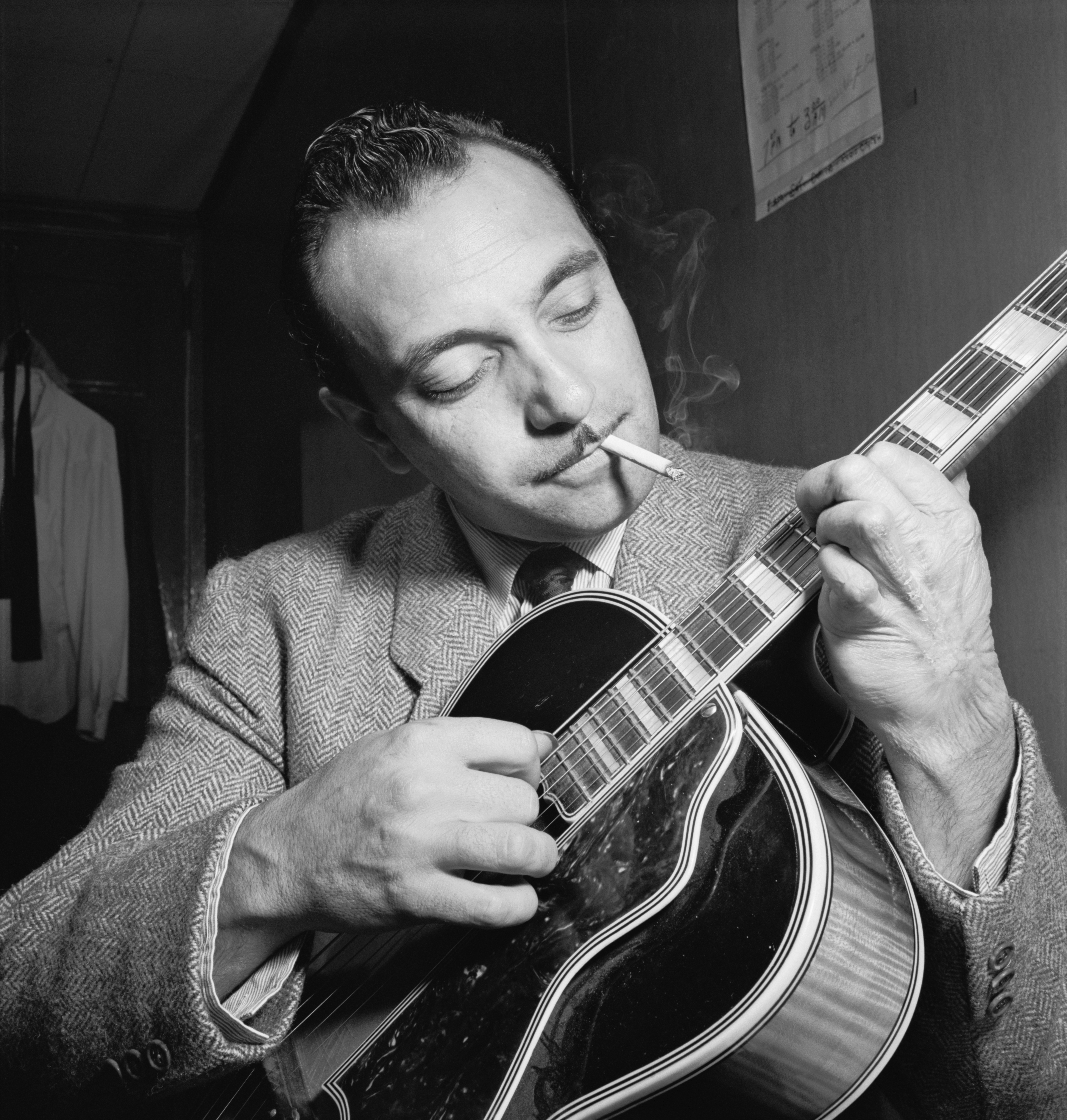
Django Reinhardt1930s · Gypsy jazz / Jazz / Swing
In that same 1961 DownBeat conversation, Montgomery admitted he had 'liked Django Reinhardt and Les Paul and those cats' as a young player, though he added that neither struck him as genuinely new next to Christian. The historical debt runs deeper than Montgomery's own modesty suggested: Reinhardt, playing with only two working fret-hand fingers after a 1928 caravan fire, was already building solos around parallel octaves in the 1930s — most notably on the Quintette du Hot Club de France's 1936 recording of 'Shine' — years before Montgomery made octave lines his own signature device.
listen: upstream & heresource: Jazz History Online ↗
1936
ShineDjango Reinhardt
1960
Four on SixWes Montgomery
listen forListen to Reinhardt shift from single notes into octaves partway through his solo on 'Shine,' then set it against Montgomery's octave-driven improvising on 'Four on Six' — the same doubled, ringing texture, which Montgomery expanded from an occasional color into the central device of his style.
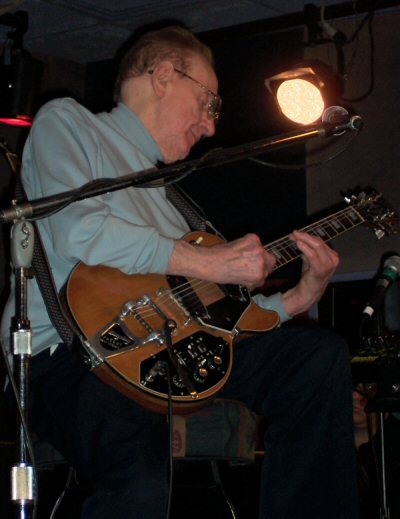
Les Paul1950s · Pop / Jazz / Instrumental rock
Montgomery named Les Paul alongside Reinhardt in that same 1961 DownBeat interview as a guitarist he had enjoyed listening to as a young player, even while singling out Christian as his real model. Paul's early-1950s hits with Mary Ford had already shown a mass pop audience what a clean-toned, technically dazzling electric guitar could do as a lead voice entirely on its own — a case Montgomery's own popular Riverside and Verve records, built around that same warm archtop sound, went on to make for jazz guitar specifically.
listen: upstream & here
1951
How High the MoonLes Paul
1962
Full HouseWes Montgomery
listen forCompare the bright, fluid, effortlessly virtuosic lines of Paul's 'How High the Moon' with Montgomery's playing on the title track of 'Full House' — both trust a clean, warmly amplified guitar tone to carry an entire performance without leaning on horns or vocals.