walking upstream…
K. S. Chithra

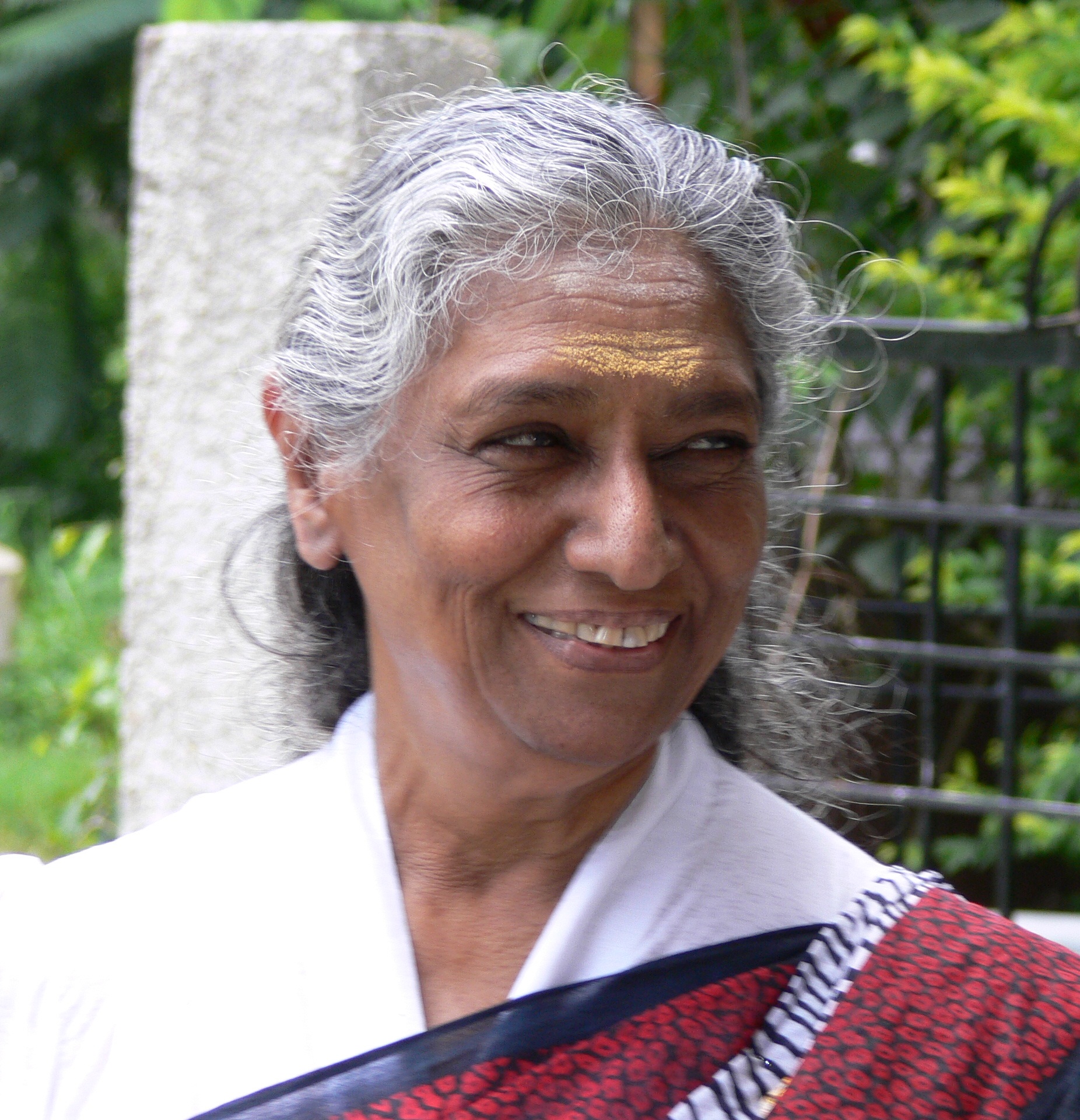

 photo: dr. ajay balachandran · cc by-sa 4.0 ↗
K. S. Chithra
sourcesThe Hindu — "Celebrating 40 years of singer KS Chithra, the queen of melody" (Yesudas and SPB mentorship quotes) · The News Minute — "Four decades and counting" (Janaki stagecraft quote, Aalorungi Arangorungi and Madhuram Jeevamritha Bindu backstories) · IndiaGlitz — SPB death tribute (Chithra's Twitter condolence quote) · Times of India — father Krishnan Nair remembrance (bio detail) · Wikipedia (chronology only)
Krishnan Nair Shantakumari Chithra was born in Thiruvananthapuram in 1963 to two music teachers. Her father Krishnan Nair, self-taught by eavesdropping on the guru who came to tutor his sister, was her "first teacher" and accompanied her to nearly every session until cancer killed him in 1986. After seven years of Carnatic training under K. Omanakutty, the composer M. G. Radhakrishnan brought her into Malayalam playback in 1979, just as the generation of S. Janaki, P. Susheela and Vani Jayaram was exiting the industry. She went on to record more than 25,000 songs across a dozen-plus languages, winning six National Film Awards and a Padma Bhushan. Asked what kept her going four decades in, she gave a plain answer: "My inspiration has been my seniors, each one of them."
the sound in question
1995
Kannalane (Kehna Hi Kya)K. S. Chithra
walk the tributaries ↓
K. J. Yesudas1970s–80s · Playback singing / Carnatic / Devotional / Filmi
K. J. Yesudas — "Das ettan" to her — was the reigning voice of Malayalam cinema when Chithra came up, and for years she toured concert stages beside him, watching him guard his instrument like an athlete: he wouldn't let her eat certain foods before a show, insisting they would cause throat trouble, and drank only lukewarm water while she carried hot. The care extended to her technique. "Das ettan taught me how to avoid distortions while stressing certain words and syllables," she told The Hindu in 2019 — a discipline she carried into her own recordings long after the concert tours ended.
listen: upstream & here
1993
Madhuram Jeevamritha BinduK. J. Yesudas
1993
Madhuram Jeevamritha Bindu (Chithra's version)K. S. Chithra
listen forComposer Johnson wrote "Madhuram Jeevamritha Bindu" for Yesudas's Chenkol (1993); by one account he also had Chithra record a full alternate take, and was so overwhelmed by it that he shook her hand — her version went unused in the film but survives on record. Set the two side by side and listen for the shared control at the edge of a syllable, the same clean, unforced attack on "Madhuram" Yesudas is known for, now audibly relearned by the singer who says he taught her exactly how.
S. Janaki1980s · Playback singing / Filmi / Semi-classical
Soon after her 1979 debut, composer Jerry Amaldev needed a voice for "Aalorungi Arangorungi," and by one music historian's account had already lined up S. Janaki before switching, as a cost-cutting move, to a teenage singer from Kerala instead — Chithra, who became a star overnight, effectively replacing the voice she had grown up idolizing. She never treated the handoff as a rivalry. "For Janakiyamma, I am like her daughter, and I am very emotionally attached to her," she told Onmanorama in 2023, decades into a career spent largely on the same composers and the same expressive melodies Janaki had defined before her.
listen: upstream & heresource: Onmanorama — "I can't bring myself to think I am 60, says K S Chithra" (S. Janaki closeness, Yesudas diet anecdote) ↗
1977
Senthoora PooveS. Janaki
1989
Indupushpam Choodi NilkumK. S. Chithra
listen forPlay Janaki's "Senthoora Poove" (1977) against Chithra's National Award-winning "Indupushpam Choodi Nilkum" (1989) and listen for the same trick: both let a soft, semi-classical melody swell entirely through breath control, never volume. "I have grown up watching S Janaki ma'am standing stoically on stage and bringing out all the expressions in her voice," Chithra has said — the stillness her own guru drilled into her is the same discipline that lets one sustained note carry a line's full emotional weight.
S. P. Balasubrahmanyam1970s–90s · Playback singing / Film music / Light classical / Devotional
On 25 September 2020, hours after S. P. Balasubrahmanyam died from complications of Covid-19, Chithra posted her tribute on Twitter: "An era is over... Words are not enough to Thank him for guiding me to be a better singer. Cannot think about a concert without your great & gracious presence." It closed out a partnership of more than 2,500 recorded duets, the largest of her career — but the debt she named that day was not to the duets. It was to the guidance underneath them.
listen: upstream & here
1973
Ye Divilo Virisina ParijathamoS. P. Balasubrahmanyam
1985
Paadariyen PadippariyenK. S. Chithra
listen forSPB called "Ye Divilo Virisina Parijathamo" (Kannevayasu, 1973) his own turning point — a plain melody sold entirely on shading and breath, no ornament wasted. "He taught me how to infuse expressions, how to emote before the microphone," Chithra has said of him; hear that lesson worked out on her own solo breakthrough "Paadariyen Padippariyen" (Sindhu Bhairavi, 1985), the same unforced emotional shading, carried this time without a duet partner to lean on.