walking upstream…
Jimmy Smith


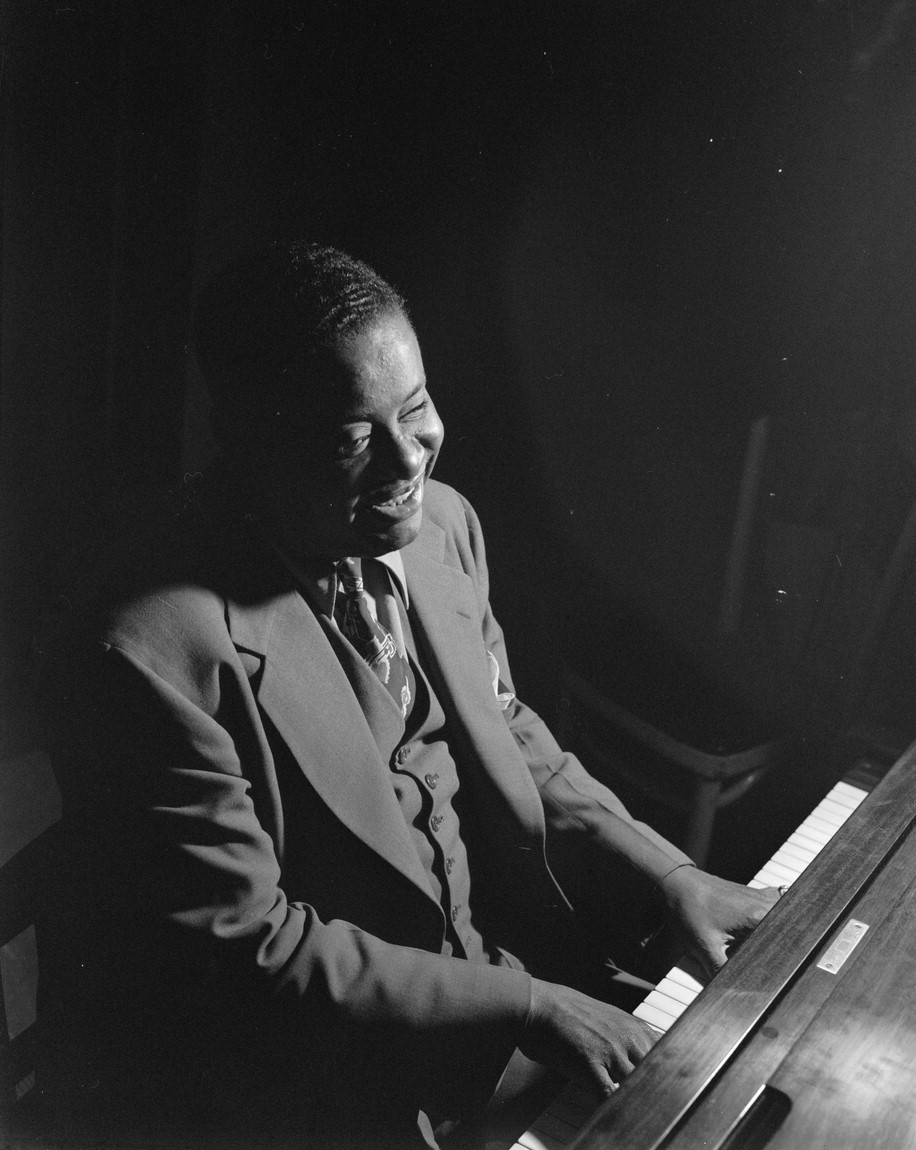

A Philadelphia-born organist who taught himself the Hammond B-3 after a loan-shark-funded purchase, Jimmy Smith invented the postwar jazz organ trio almost single-handedly — fusing bebop's harmonic vocabulary with the blues and gospel textures of the church organ. His run of Blue Note albums in the late 1950s made the B-3 a first-call jazz instrument and gave a generation of organists, Booker T. Jones included, their reference point.
the sound in question
1958
The SermonJimmy Smith
walk the tributaries ↓
Wild Bill Davis1950s · Jazz / Soul jazz / Organ jazz
Smith has said he saw Wild Bill Davis play organ at an Atlantic City club, thought "that's for me," and snuck onstage afterward to feel how soft the action was — the moment that sent him to buy his own Hammond. Davis's trio format (organ, guitar, drums standing in for a horn section) is the exact shape Smith's own trio took.
listen: upstream & heresource: WBGO — book excerpt on Jimmy Smith seeing Wild Bill Davis and studying with/around Bud Powell ↗
1951
Chicken GumboWild Bill Davis
1960
Back at the Chicken ShackJimmy Smith
listen forDavis's OKeh trio side "Chicken Gumbo" has that same conversational give-and-take between organ and guitar that defines Smith's "Back at the Chicken Shack" — the organ vamping low while the guitar answers in short phrases.
Bud Powell1940s–50s · Bebop / Jazz
Before he ever touched an organ, Smith immersed himself in bebop piano, hanging around Bud Powell's house and picking up ideas by way of Powell's brother Richie — until Powell noticed how much Smith was absorbing and cut off the visits. Smith carried those fast, horn-like bebop lines straight onto the Hammond's upper manual.
listen: upstream & heresource: WBGO — book excerpt on Jimmy Smith seeing Wild Bill Davis and studying with/around Bud Powell ↗
1951
Un Poco LocoBud Powell
1962
Walk on the Wild SideJimmy Smith
listen forThe tumbling, single-note right-hand runs on Powell's "Un Poco Loco" reappear almost note-for-note in spirit on Smith's up-tempo "Walk on the Wild Side" — same bebop vocabulary, just voiced through drawbars instead of hammers.
Art Tatum1930s–40s · Jazz / Stride piano / Swing
Smith immersed himself in Art Tatum's recordings while developing his own style, and Tatum's harmonic density and stride-rooted virtuosity gave Smith a model for filling space on an instrument that can sustain notes indefinitely — something a pianist can't do.
listen: upstream & here
1933
Tiger RagArt Tatum
1963
Prayer Meetin'Jimmy Smith
listen forTatum's dazzling, cascading runs on "Tiger Rag" find their slower, bluesier cousin in the way Smith piles up chords and runs on "Prayer Meetin'," — both players treat the keyboard as an orchestra unto itself.