walking upstream…
George Michael
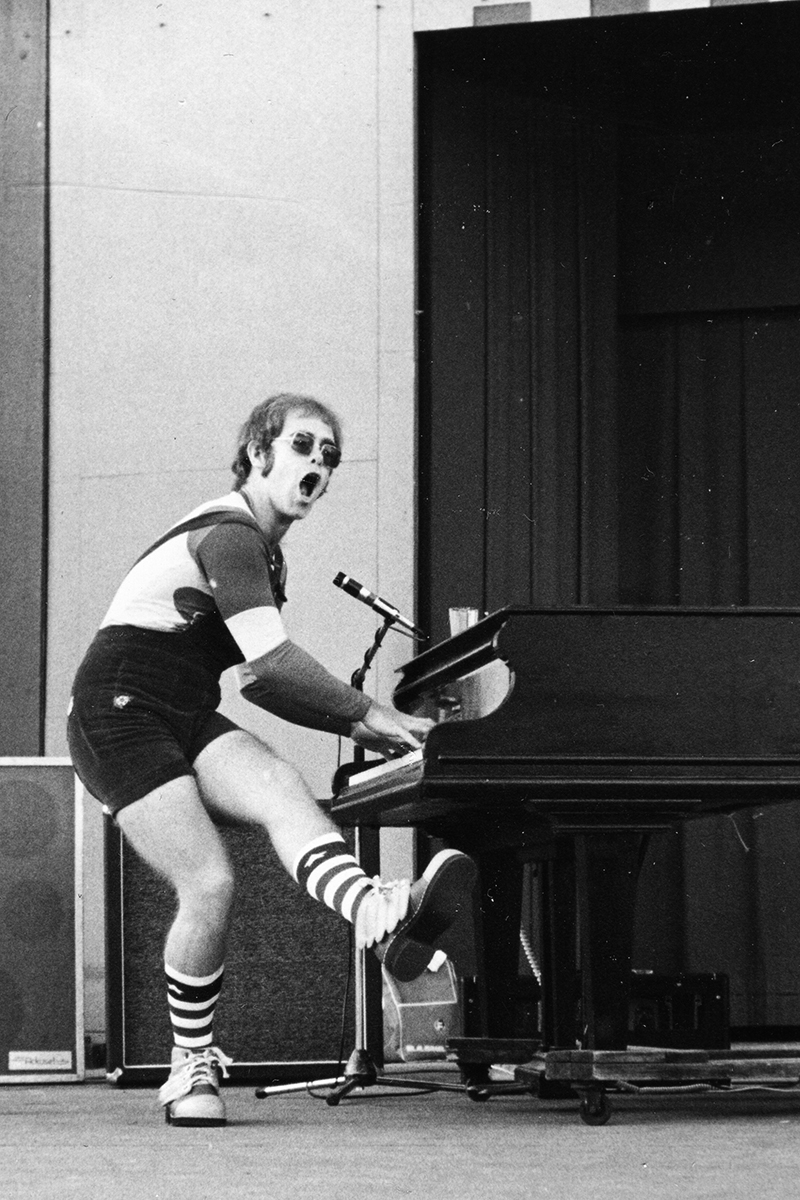


 photo: insasse · cc by-sa 2.5 ↗
George Michael
George Michael turned teenage Motown fandom and an aching, gospel-schooled falsetto into some of pop's biggest solo hits after breaking out as one half of Wham!, writing, arranging, and largely producing his own catalog. Records like "Careless Whisper" and "Faith" fused disco-trained grooves with soul phrasing so convincingly that he ended up dueting with the very singers he'd grown up idolizing.
the sound in question
1984
Careless WhisperGeorge Michael
walk the tributaries ↓
Elton John1970s · Pop / Rock / Piano rock
George named Elton as one of his two teenage touchstones -- "after that I listened to an awful lot of Elton John and Queen. I loved anything that had a good melody" -- and owned Elton's Caribou LP as a kid. The two later turned that fandom into a real friendship, surprising a Wembley crowd in 1991 with a live duet of Elton's "Don't Let the Sun Go Down on Me" that George then released as a single; it hit #1 in both the UK and US.
listen: upstream & heresource: No. 1 Magazine (1985) ↗
1974
Don't Let the Sun Go Down on MeElton John
1991
Don't Let the Sun Go Down on Me (Live)George Michael
listen forSet the 1974 original against the 1991 live duet: George doesn't just harmonize under Elton, he answers each line with the same big, aching melodic hook-writing instinct that drives his own ballads.
Aretha Franklin1960s-70s · Soul / R&B / Gospel
George cited Aretha alongside Diana Ross as one of the soul singers he idolized growing up, and in 1987 he got to prove it directly: he'd originally hoped to duet on "I Knew You Were Waiting (For Me)" with Michael Jackson or Stevie Wonder before Aretha took the song, and it became her second and final US #1 single, winning the pair a Grammy for Best R&B Performance by a Duo or Group.
listen: upstream & heresource: Aretha Franklin on recording "I Knew You Were Waiting (For Me)" with George Michael ↗
1967
RespectAretha Franklin
1987
I Knew You Were Waiting (For Me)George Michael
listen forNotice how George holds back through the verses, leaving room for Aretha's church-trained power, then matches her volume for volume on the bridge -- that call-and-response restraint-then-release shows up across his own vocal-driven ballads.
Stevie Wonder1970s · Soul / Funk / R&B
George grew up on Motown records his parents handed down, and in 1985 he sang Wonder's own "Love's in Need of Love Today" opposite him on the Motown Returns to the Apollo TV special. He later said the moment "was either going to make me scared s---less and I was going to sing like crap, or it would bring something out of me -- and it did." That gospel-soul phrasing runs through his falsetto and ad-libs for the rest of his career.
listen: upstream & heresource: George Michael on singing Stevie Wonder's "Love's in Need of Love Today" with him, Motown Returns to the Apollo (1985) ↗
1976
Love's in Need of Love TodayStevie Wonder
1987
Father FigureGeorge Michael
listen forListen for how Wonder never just holds a note -- he bends it into a conversational run. George chases that same slide from chest voice into falsetto, treating the melody like something spoken as much as sung.