walking upstream…
Gang of Four



Andy Gill and Jon King met at Leeds University in 1976, studying under the Marxist-feminist scholar Griselda Pollock and bonding over Dr. Feelgood singles and Frankfurt School theory in equal measure. A month spent sleeping on strangers' floors amid New York's punk scene that summer convinced Gill 'anyone can do this'; he came home and told King he wanted to take the band seriously. They filled out the lineup with drummer Hugo Burnham — who had a drum kit and, crucially, a transit van — and bassist Dave Allen, then built a sound around subtraction: Gill's guitar fired off in short, staccato bursts and then cut out mid-phrase, leaving the rhythm section exposed. The 1979 debut Entertainment! turned that restraint into one of post-punk's founding blueprints.
the sound in question
1978
Damaged GoodsGang of Four
walk the tributaries ↓
Dr. Feelgood1970s · Pub rock / R&B / Rock and roll
Gill has said the connection wasn't stylistic dabbling but formation: watching Wilko Johnson's chordless, staccato guitar attack in Dr. Feelgood's mid-1970s pub-rock sets taught him what a rock band could sound like without solos. 'I was quite into Dr. Feelgood,' he said. 'I was very into that minimal, stripped-down nature... the barely suppressed violence of the dramatic presentation of their personas onstage. I thought they were incredibly powerful... extremely influential on Gang of Four.' Hugo Burnham independently ranks the band 'very high' on his own list, pointing straight at Gill's playing: 'Andy's guitar has that sort of urgent attack... that Wilko Johnson had.'
listen: upstream & heresource: Perfect Sound Forever — Andy Gill interview (Dr. Feelgood and James Brown influence, in Gill's own words) ↗
1975
RoxetteDr. Feelgood
1979
I Found That Essence RareGang of Four
listen forBurnham singled out 'I Found That Essence Rare' as the Gang of Four song closest to 'punk, pub rock, Dr. Feelgood... heads-down, no-nonsense, mindless, boogie.' Start with Dr. Feelgood's 'Roxette': Wilko Johnson never strums, he chops, snapping single notes off the beat with no chord ringing behind them. 'Essence Rare' runs the same trick faster — Gill's guitar jabs land in short, percussive bursts that leave space for Burnham's drums, rather than filling it with sustain.
James Brown1960s–70s · Funk / Soul / Rhythm and blues
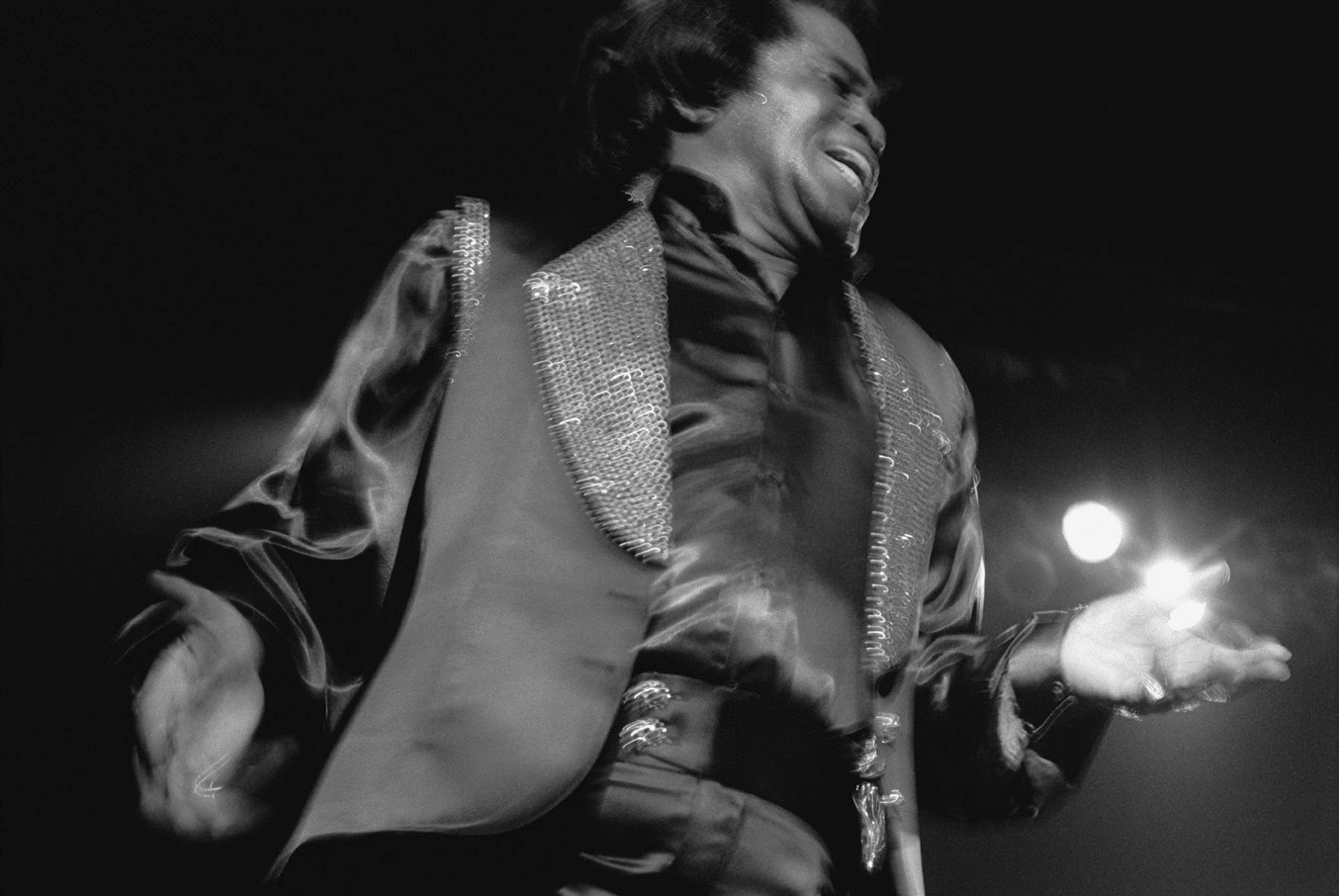
Gill grew up on James Brown and Funkadelic, but insists the debt was structural, not an impression job: 'The drumming was basically funky but not through copying various icons of black music,' he said. 'It was more through simply deconstructing the nature of drumming and where you place the beats.' Burnham confirms the whole rhythm section was listening the same way — bassist Dave Allen had played in funk cover bands before Leeds. The result impressed INXS singer Michael Hutchence enough to call Entertainment! 'art meets the devil via James Brown' — funk's logic, run through punk's discipline.
listen: upstream & heresource: The A.V. Club — 'Art meets the devil via James Brown' ↗
1970
Get Up (I Feel Like Being a) Sex MachineJames Brown
1979
At Home He's a TouristGang of Four
listen forLine up James Brown's 1970 'Get Up (I Feel Like Being a) Sex Machine' against 'At Home He's a Tourist': both ride a vamp that barely moves harmonically, the whole band locking onto one groove and holding it there. But listen to where the guitar sits — Brown's is one more percussive voice buried in the mix, while Gill's stabs are pushed forward and made to sound alone, dropping out completely rather than looping, so the groove keeps moving without it.
Free1970s · blues rock / hard rock
Burnham is precise about what Free gave them, and it wasn't the hit single. 'Free was a huge influence on us, which probably most Americans know from one song alone, "All Right Now,"' he said, 'but they really taught us, along with all the reggae and dub reggae we were listening to, about space — not to fill every hole, not to do big fills on the drums... or really fast guitar solos.' That restraint became a structural habit in Gill's own playing, the guitar cutting out mid-song so the silence carries the beat instead of a fill.
listen: upstream & heresource: The Current — interview with Hugo Burnham of Gang of Four (Dr. Feelgood and Free influence) ↗
1970
Mr. BigFree
1979
AnthraxGang of Four
listen forFree's 'Mr. Big' locks the whole band into a tight blues-rock strut, then drops to just drums and bass while guitarist Paul Kossoff disappears for measures at a time. 'Anthrax' pushes the same move further: the guitar surfaces only as feedback, cuts out entirely, and the track keeps running on drums alone before it returns. Both songs treat the missing instrument as the hook, not the one still playing.