walking upstream…
Etta James

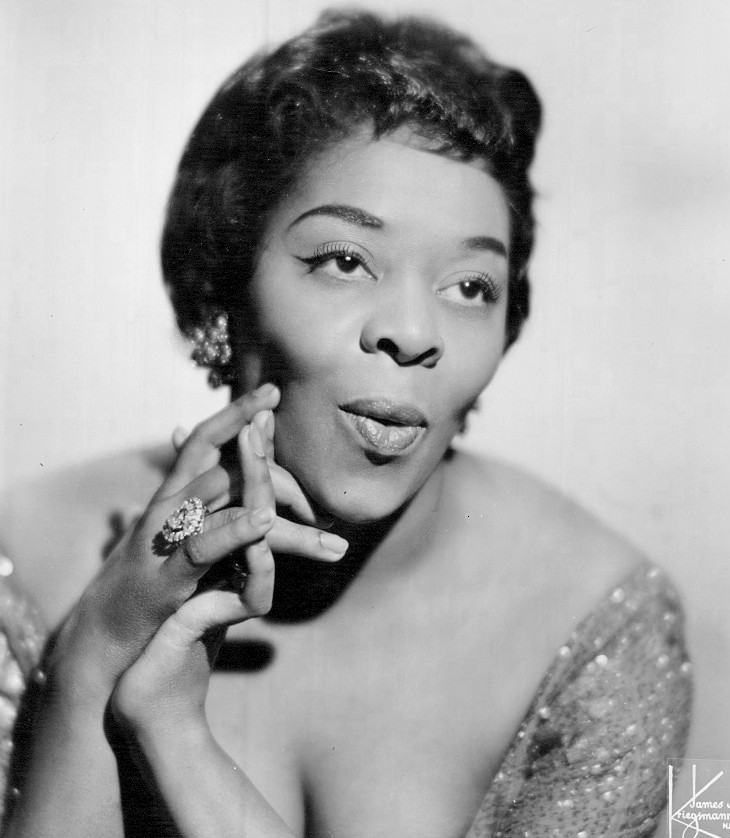

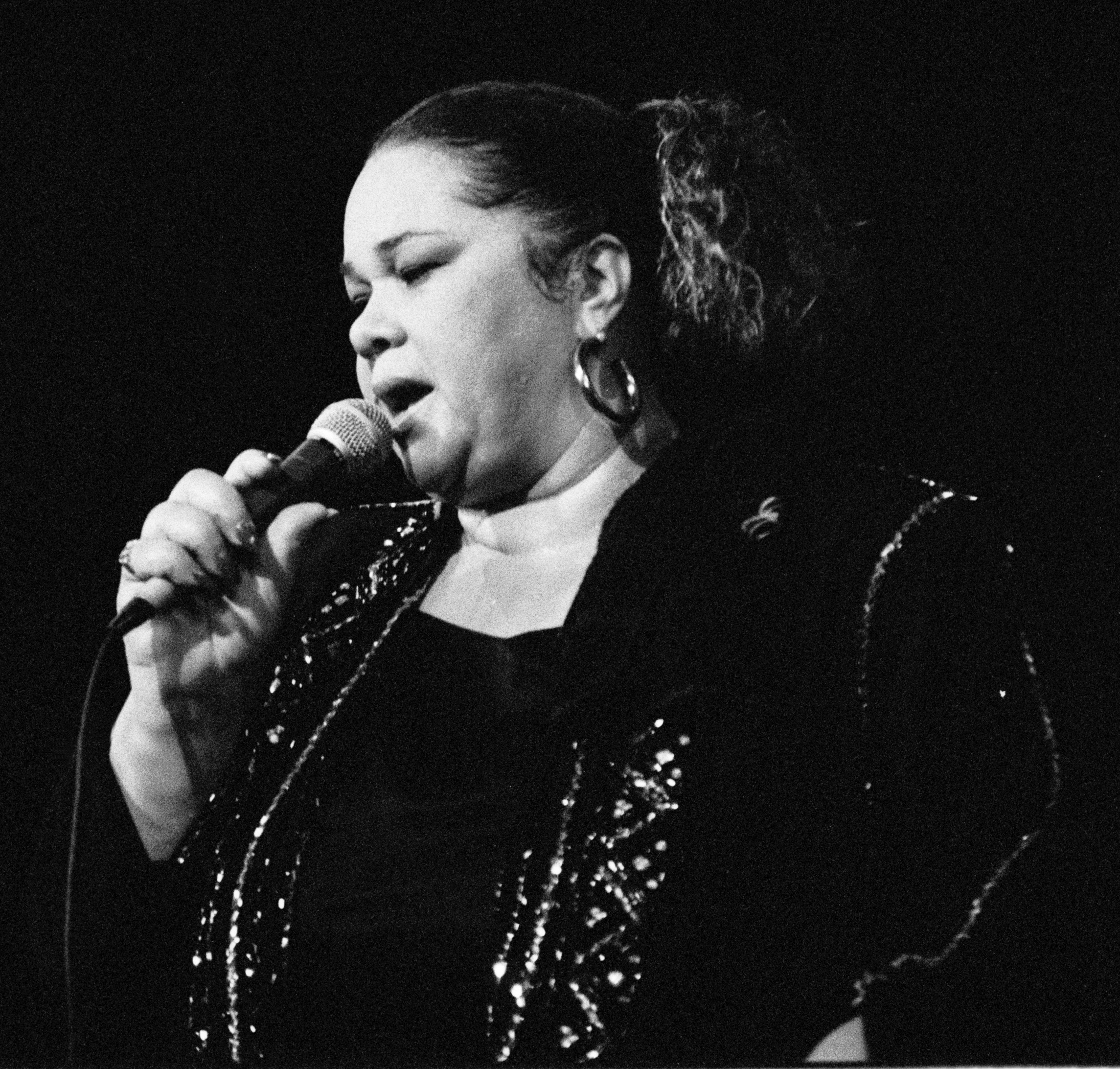 photo: roland godefroy · cc by-sa 3.0 ↗
Etta James
Jamesetta Hawkins was fifteen when she talked her way into Johnny Otis's hotel room after a show and became Etta James on the spot — Otis transposed her name, renamed her trio Peaches, and cut her defiant reply to Hank Ballard's "Work With Me, Annie," "The Wallflower," a hit before she had finished high school. James spent the mid-1950s a raw, unharnessed shouter on Modern Records, trading choruses with the label's bluesmen. The turn came in 1960, when her second mentor, Harvey Fuqua, moved her to Chess, and she found the ballad voice — a soft, jazz-tinged alto that made "At Last" a standard. She spent the next five decades pulling blues, soul, gospel and jazz into one instrument, until her death in 2012. What never changed was the church-trained control beneath the grit: a voice built to hold a shout and a whisper in the same breath.
the sound in question
1960
At LastEtta James
walk the tributaries ↓
Johnny "Guitar" Watson1950s · Blues / R&B / Funk
James and Johnny "Guitar" Watson worked the same rooms as young R&B players in 1950s Los Angeles, close enough that she made a habit of crediting him whenever she recorded a song he had written. She never softened the debt: "I got everything from Johnny," she said. "He was my main model... my whole ballad style comes from my imitating Johnny's style. He was the baddest and the best." No single record pairs their two names — they never share a writing credit on tape — but the phrasing she borrowed from him underlies every ballad she cut afterward.
listen: upstream & heresource: Daily Kos — "A True American Original, Johnny 'Guitar' Watson" (backs the Johnny "Guitar" Watson influence quote) ↗
1957
Gangster of LoveJohnny "Guitar" Watson
1962
Something's Got a Hold on MeEtta James
listen forPlay Watson's 1957 "Gangster of Love" first: a strutting, stop-time blues shuffle built for a singer to talk as much as sing over it. Then cue James's 1962 "Something's Got a Hold on Me" — the same stop-and-start push, horns punching into the gaps, her voice sliding from a growl into a gospel holler and back. It is not a cover; it is the swagger and phrasing she said she lifted wholesale from Watson, reshaped into one of her biggest uptempo sides.
Dinah Washington1950s · Jazz / Blues / R&B / Traditional pop
Dinah Washington once flipped her own table over a song. James had opened her midnight set at a small Providence club with "Unforgettable," Washington's own hit, and Washington, watching from the room, erupted: "Bitch, don't you ever sing the Queen's songs when the Queen is right in front of you!" She apologized within the hour, but the lesson held, and so did the model. David Ritz, who co-wrote James's memoir, later named Washington outright as "her most dominant influence," tracing James's soft, jazz-tinged Chess-era ballads directly back to her.
listen: upstream & heresource: Rock & Roll Hall of Fame — 1993 induction essay by David Ritz, "Etta James" (bio; names Dinah Washington as her most dominant influence) ↗
1959
What a Diff'rence a Day MakesDinah Washington
1960
At LastEtta James
listen forCue Washington's 1959 "What a Diff'rence a Day Makes" first — strings swelling under a voice that turns pop phrasing into something conversational and wise. Then James's "At Last," cut the following year at Chess: the same lush orchestral bed, the same unhurried, behind-the-beat delivery that lets a simple melody sound hard-won. Ritz's own essay names "At Last" itself as one of the recordings James built directly in Washington's image.
Billie Holiday1930s–40s · Jazz / Vocal jazz
James traced her connection to Billie Holiday back to her mother, who hummed Holiday's songs while getting ready for bar work each night and put her own spin on them — "she would put different little runs in them," James remembered. It was Holiday's own phrasing, though, that stayed with her: "I really loved the way she put a song over." Three decades into her career, James made the connection explicit, recording a full album of Holiday's songbook, Mystery Lady: Songs of Billie Holiday (1994), which won the Grammy for Best Jazz Vocal Album.
listen: upstream & heresource: Rolling Stone — "Etta James on Billie Holiday ↗
1946
Don't ExplainBillie Holiday
1994
Don't ExplainEtta James
listen forHoliday's 1946 "Don't Explain" is spare and devastating — she barely raises her voice, letting the lyric's quiet humiliation do the work. James's 1994 version, cut for Mystery Lady, keeps that restraint intact even though her own voice carries decades more weight and grain; she under-sings a song she could have belted, the clearest sign of how closely she studied Holiday's control rather than her volume.