walking upstream…
Doc Watson

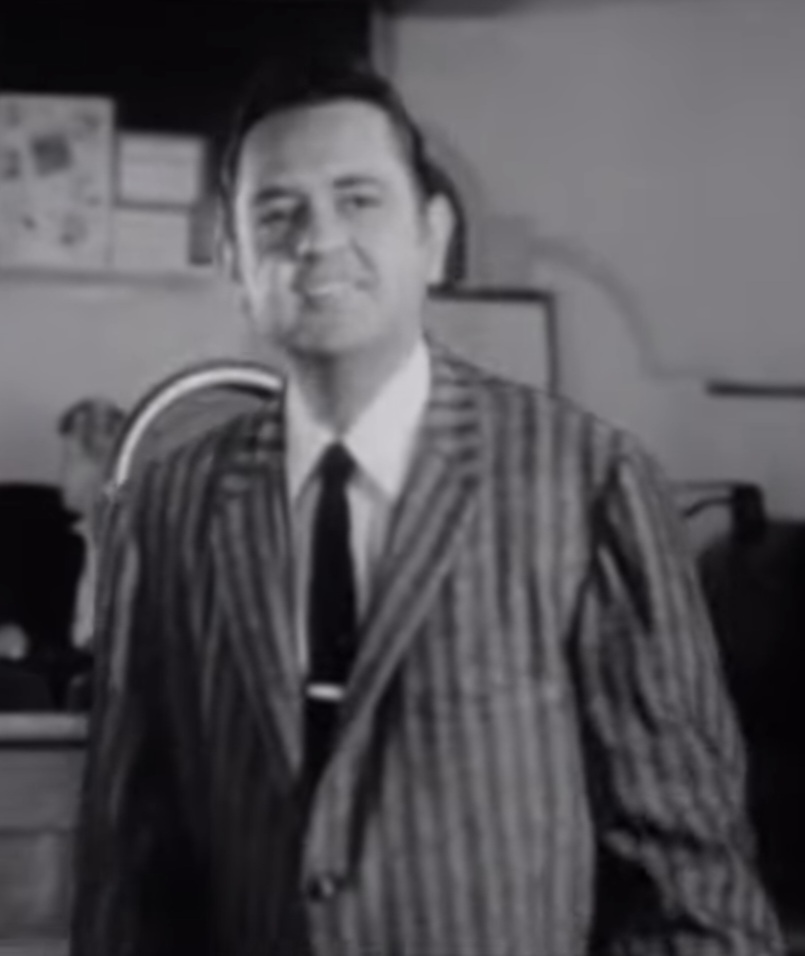

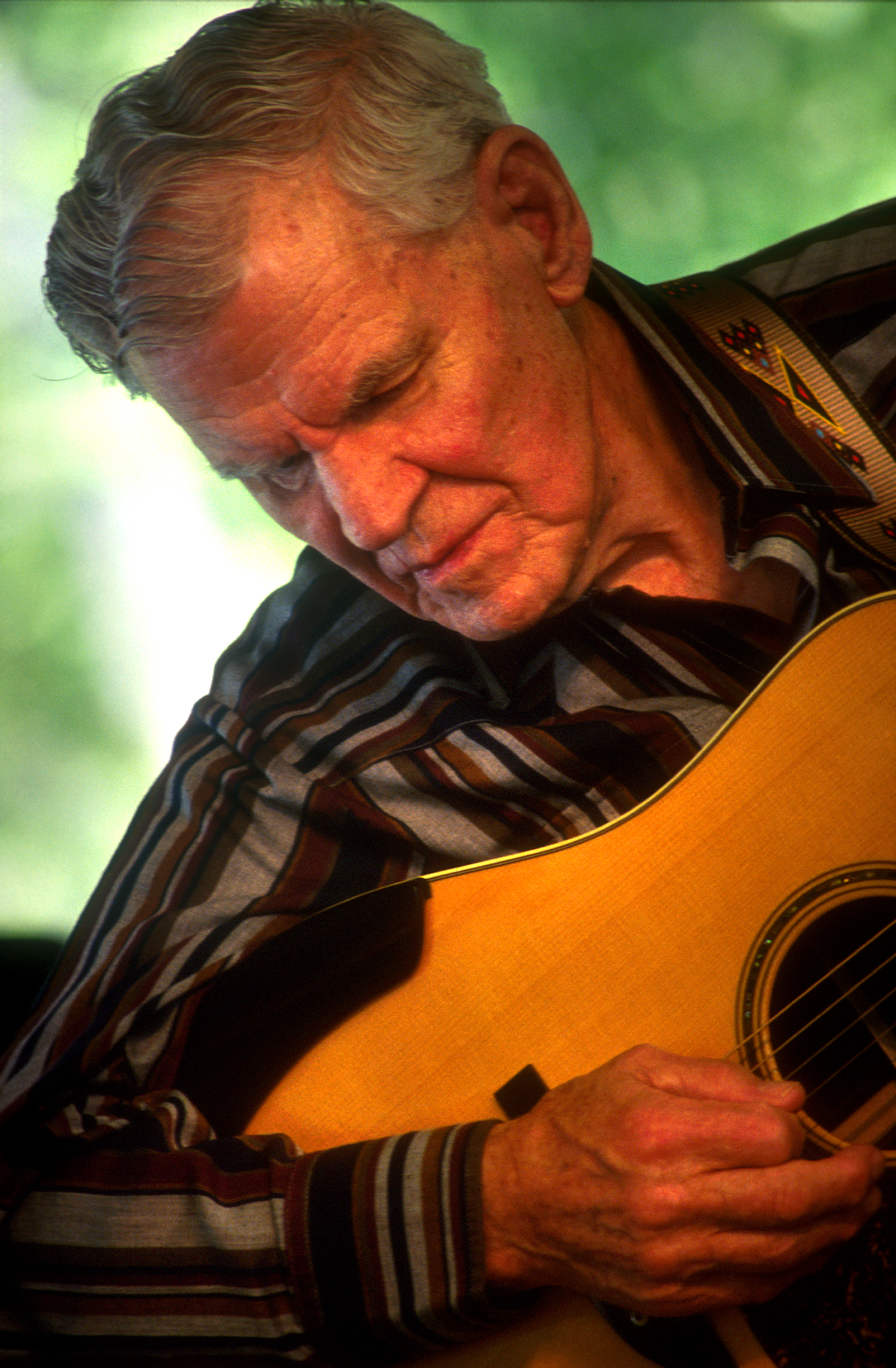 photo: wilkesccmfwc · cc by-sa 3.0 ↗
Doc Watson
Blind from an eye infection in infancy, Arthel 'Doc' Watson grew up in Deep Gap, North Carolina, learning guitar from his father's records and the singing at his family's church before radio and 78s introduced him to the Carter Family, Jimmie Rodgers, and Merle Travis. Playing electric lead in local bands through the 1950s to earn a living, he was drawn into the folk revival almost by accident in 1960, when a field-recording trip aimed at banjo player Clarence Ashley discovered his flatpicking — a technique that translated fiddle-tune runs note-for-note onto acoustic guitar and became a foundation of modern bluegrass and Americana guitar. His 1964 Vanguard debut and decades of touring, later alongside his son Merle, made him a folk-revival icon; he won seven competitive Grammys and lent his name to MerleFest before his death in 2012.
the sound in question
1965
Tennessee StudDoc Watson
walk the tributaries ↓
The Carter Family1930s · Country / Old-time / Gospel
Watson said the original Carter Family — Sarah and Maybelle — were his first guitar influence: the very first thing he learned to play was their thumbpick-and-strum style, on the old Carter tune 'When Roses Bloom in Dixieland.' Maybelle Carter's percussive bass-and-melody 'scratch' technique on guitar gave young Doc his rhythmic foundation, well before he developed the flatpicking runs he'd become famous for.
listen: upstream & here
1928
Wildwood FlowerThe Carter Family
1963
Storms Are on the OceanDoc Watson
listen forHear the Carters' 'Wildwood Flower' next to Watson's 'Storms Are on the Ocean' — both let the guitar carry a steady thumb-driven bass pulse under the melody, voice and strings moving in the same unhurried, hymn-like meter.
Merle Travis1940s-50s · Country / Western swing / Honky tonk
Watson named the Delmore Brothers, Jimmie Rodgers, and Merle Travis as his three biggest influences, and said of Travis simply, 'oh, God, I loved his music' — he later named his own son Eddy Merle partly in Travis's honor. Travis's thumb-and-finger picking, playing an independent bass line against a syncopated melody on the same instrument, is the direct ancestor of the fingerstyle instrumentals Watson became known for.
listen: upstream & here
1958
Cannonball RagMerle Travis
1964
Windy and WarmDoc Watson
listen forCompare Travis's 'Cannonball Rag' with Watson's 'Windy and Warm' — both are guitar showpieces built on a rolling, self-accompanying thumb bass under a bright, ragtime-tinged melody line, one instrument doing the work of two.
Jimmie Rodgers1920s–30s · Country / Old-time / Blues
Watson called Jimmie Rodgers 'the first man that I started to claim as my favorite,' and drew from him a syncopated, blues-inflected sense of momentum — a way of pushing a train-song rhythm forward that Watson folded into his own hard-driving guitar style alongside the Carters' steadier pulse.
listen: upstream & here
1928
Waiting for a TrainJimmie Rodgers
1966
Way DowntownDoc Watson
listen forPlay Rodgers' 'Waiting for a Train' beside Watson's 'Way Downtown' — both ride a loping, syncopated train rhythm with a bluesy lift in the phrasing, the guitar swinging just slightly off the beat instead of sitting flat on it.