walking upstream…
Davido
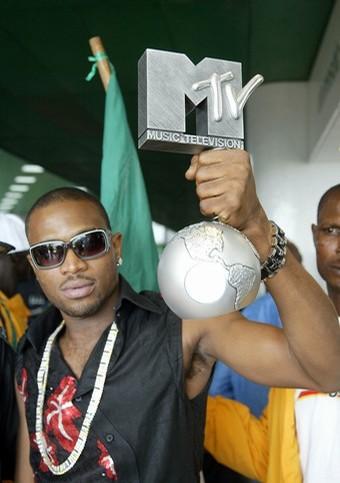

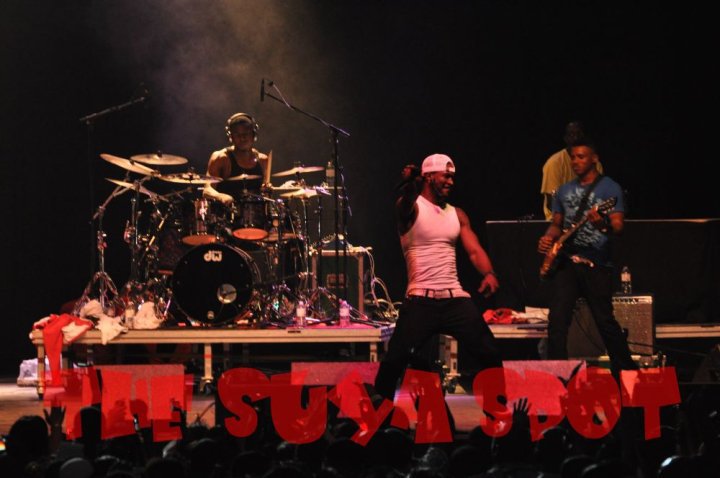

David Adedeji Adeleke was born in Atlanta in 1992 and split his adolescence between Georgia and Lagos, dropping out of Alabama's Oakwood University — where he had been recording rap demos with cousins as the group KB International — after a ten-day Christmas visit home reset everything. "I went home for about 10 days and just fell in love with the music and culture," he later said. He returned to Lagos, released "Dami Duro" off his 2012 debut album Omo Baba Olowo, and became a founding star of what the world would soon call Afrobeats, carrying its crossover ambitions through "Aye," "Skelewu," and 2017's "Fall." The rapper who could not get a deal in America went home and helped rewrite the sound of a generation instead.
the sound in question
2017
FallDavido
walk the tributaries ↓
D'Banj2000s–2010s · Afropop / R&B / Dance-pop
In 2011, watching Kanye West sign D'Banj to G.O.O.D. Music and "Oliver Twist" climb the UK charts, a college dropout in Atlanta decided his own shot had arrived. "Guys like D'banj, they were legendary status," Davido told The FADER. "I was looking at them like, damn, these guys are really big out here... I need to take the opportunity now." Within months he was back in Lagos recording his first single. He later called it "important to pay homage" to that generation — the artists, in his account, who cleared the ground his own career was built on.
listen: upstream & heresource: The FADER — Davido cover story (D'Banj influence quote) ↗
2008
TongoloD'Banj
2011
Dami DuroDavido
listen forNigerian critic Wale Owoade drew the parallel directly: D'Banj's 2008 hit "Tongolo" was, in his words, "a song that defined his audience and launched his Koko Master persona," much as Davido's 2011 breakout "Dami Duro" did for him. Play them together and the kinship is in the construction: both bury the verses and ride a single barked hook-phrase over a hard, synthetic club beat until the phrase becomes shorthand for the artist himself — "Koko Master" for D'Banj, "Dami Duro" as Davido's own nickname across Lagos within weeks.
50 Cent2000s · East Coast hip hop / Gangsta rap / Hip hop
Long before he discovered his father's Nigerian records, Davido's musical diet in Atlanta was American radio rap. "What artists did you grow up listening to?" OkayAfrica asked him. "I grew up listening to 50 Cent, T.I., artists like that," he said, tracing the same taste in a separate interview to his mother's house parties, where he remembers being "a big Ja' Rule fan, 50 Cent, everybody." He started out rapping in a group called KB Entertainment before switching to the sound that made him famous, but the chant-first, party-detonating instinct of that hip-hop upbringing never left his music.
listen: upstream & heresource: OkayAfrica — Davido interview (50 Cent, T.I. namecheck; Nigeria trip quote) ↗
2003
P.I.M.P.50 Cent
2013
SkelewuDavido
listen forSet 50 Cent's 2003 hit "P.I.M.P." beside Davido's 2013 hit "Skelewu": each rides a slinky, minimal groove built less to be sung along with than to be moved to. 50 Cent's half-sung swagger over that beat became its own walk; "Skelewu" became a viral dance craze of the same name across Nigeria within weeks of release. Both turn a hook into an instruction the whole room can follow.
P-Square2000s–2010s · Afropop / R&B / Hip hop / Dance-pop
Years before his own breakout, an Atlanta high schooler with outsized ambition used to play his American classmates records by two Nigerian acts. "When I was in school in Atlanta, I was playing D'Banj and P-Square and my friends loved it, but if they didn't hear it, how would they find out about it?" Davido told Complex. P-Square, the twin duo Peter and Paul Okoye, were among the architects of what writers call Naija Hip-Hop — R&B, hip-hop, and house folded into Nigerian rhythm — the pre-Afrobeats sound Davido's own early singles grew directly out of once he got home.
listen: upstream & heresource: Complex — Davido interview (D'Banj and P-Square namecheck) ↗
2011
No One Like YouP-Square
2017
IfDavido
listen forNeither artist has pointed to one song passing the torch here; the tie is stylistic, built on the sound P-Square helped define rather than a specific homage. Set their 2011 hit "No One Like You," with its glossy synth pads and close-harmonized vocals, against Davido's 2017 hit "If": both stretch one simple, repeated declaration of devotion over a warm, mid-tempo Afro-R&B groove, engineered as much for a wedding playlist as a night out.