walking upstream…
Barry White

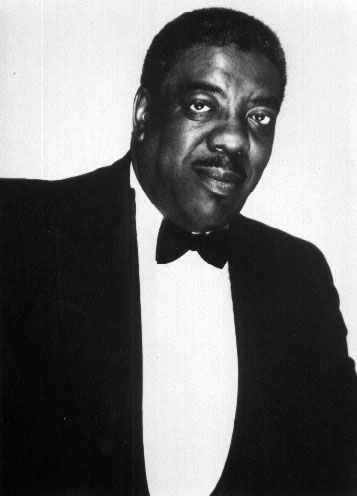

 photo: fotograaf onbekend / anefo · cc0 ↗
Barry White
Barry White turned the bass register into an instrument of seduction, pairing a bottomless baritone croon with the sweeping strings of his 40-piece Love Unlimited Orchestra to invent a lavish, cinematic strain of 1970s soul. Songs like "Can't Get Enough of Your Love, Babe" and "You're the First, the Last, My Everything" turned spoken-word intimacy and orchestral disco into a signature so complete it earned him the nickname the Walrus of Love. He kept recording into the 1990s, closing his career with two Grammy wins before his death in 2003.
the sound in question
1974
Can't Get Enough of Your Love, BabeBarry White
walk the tributaries ↓
Elvis Presley1950s–70s · Rock and roll / Rockabilly / Pop / Gospel
White told this story for the rest of his life: at 16, doing four months in a California juvenile facility for stealing tires, he heard Elvis's operatic "It's Now or Never" drifting from another inmate's radio and it hit him like a personal message — "Stop wasting your time, Barry... it's now or never" — the moment he credited with turning him away from crime and toward music.
listen: upstream & here
1960
It's Now or NeverElvis Presley
1973
Never, Never Gonna Give Ya UpBarry White
listen forPlay Presley's grand, Neapolitan-song-derived vocal on "It's Now or Never" next to one of White's own theatrical ballads — the same operatic build and sense of a love song as a life-or-death declaration, just filtered through White's bass register and a bigger orchestra.
James Cleveland1960s–70s · Gospel
White grew up singing in, and eventually directing, gospel choirs in Los Angeles church settings, and biographers list Rev. James Cleveland — gospel's 'King' and the pioneer of the modern mass-choir arranging style — among the formative influences on his musical ear, well before he turned to secular soul production.
listen: upstream & here
1963
Peace Be StillJames Cleveland
1973
I've Got So Much to GiveBarry White
listen forListen for the same instinct in both records: massed voices and a slow, building intensity aimed at maximum emotional weight. Cleveland conducts a choir toward catharsis on 'Peace Be Still'; White layers his own multi-tracked vocals and the Love Unlimited Orchestra's strings toward a comparably overwhelming, wall-of-sound crescendo.
Ray Charles1950s–60s · Soul / R&B / Gospel
Ray Charles is named alongside Aretha Franklin and Marvin Gaye among the R&B and soul singers White grew up listening to; Charles's fusion of gospel-rooted vocal fervor with secular subject matter set a template White pushed further into the orchestral and cinematic.
listen: upstream & here
1954
I Got a WomanRay Charles
1977
It's Ecstasy When You Lay Down Next to MeBarry White
listen forCompare the call-and-response between Charles and his backing singers on 'I Got a Woman' with the interplay between White's lead vocal and the Love Unlimited backing singers — the same gospel-quartet exchange, just dressed in 1970s strings and rhythm.