walking upstream…
Anirudh Ravichander
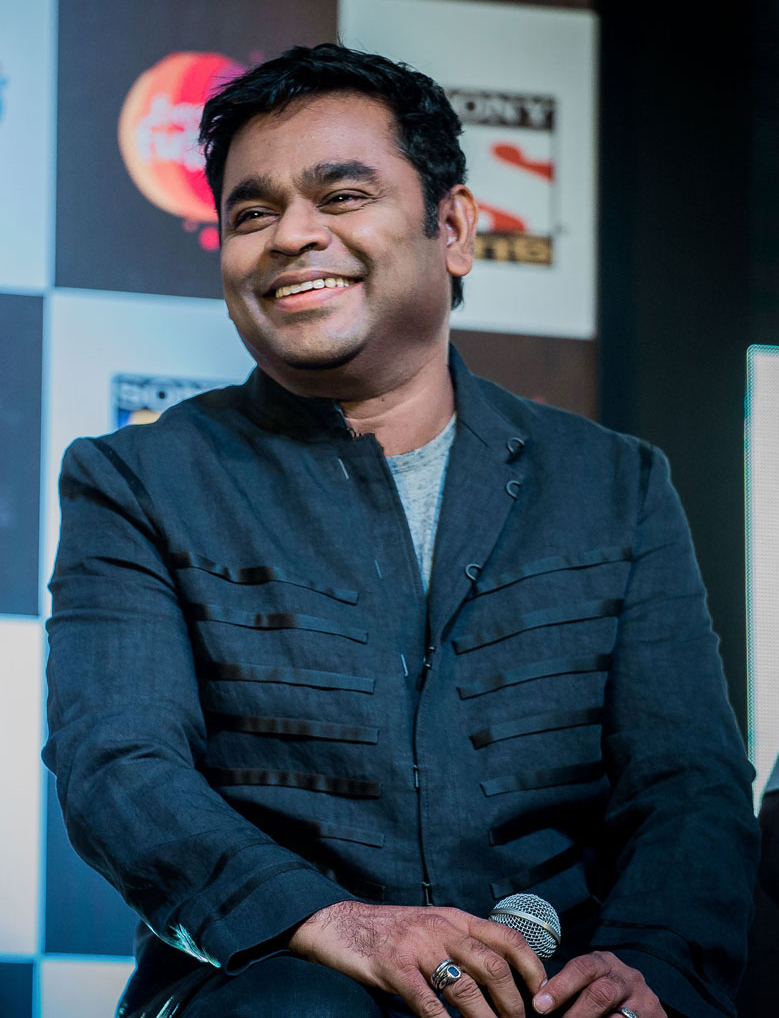


 photo: silverscreen.in · cc by-sa 3.0 ↗
Anirudh Ravichander
Anirudh Ravichander was 21 and largely unknown when his 2011 novelty single "Why This Kolaveri Di" (from the Tamil film 3) became a subcontinent-wide viral sensation, turning a scratch demo cut with actor Dhanush into an overnight production career. He's since become Tamil cinema's most in-demand young composer, scoring dozens of films across Tamil, Telugu, and Hindi and stacking up billion-view mass anthems — "Rowdy Baby"-scale hero-intro songs like "Vaathi Coming" and "Arabic Kuthu" — that fuse Kollywood's folk kuthu rhythms with EDM drops, trap, and dubstep. He composes and frequently sings his own tracks, giving his productions a distinctly synth-pop, dance-floor-ready edge that's kept him working with Tamil cinema's biggest stars for over a decade.
the sound in question
2012
Why This Kolaveri Di (from "3")Anirudh Ravichander
walk the tributaries ↓
A.R. Rahman1990s–2000s · Film score / Indian classical fusion / Sufi
Rahman is Anirudh's stated idol since his teens (his school Carnatic-fusion band was picked by Rahman himself for a studio album deal), and Anirudh has said flatly "He is my inspiration" while waving off comparisons to him. Press coverage of Anirudh's career repeatedly frames his sound as continuing Rahman's move of grafting global dance-pop production onto mass Tamil-cinema songwriting — the same crossover trick, run through a 2020s electronic palette.
listen: upstream & heresource: Behindwoods ↗
1994
Urvasi Urvasi (from "Kadhalan")A.R. Rahman
2022
Arabic Kuthu (from "Beast")Anirudh Ravichander
listen forRahman's 1990s dance-fusion singles like "Urvasi Urvasi" stack a programmed, four-on-the-floor electronic pulse and a shout-along hook under a folk-adjacent Tamil melody; Anirudh's "Arabic Kuthu" runs the identical move — a call-and-response club chant riding a kuthu rhythm with synth stabs standing in for Rahman's era of samplers and drum machines.
Michael Jackson1980s · Pop / R&B / Funk
In an early interview Anirudh named Michael Jackson among his biggest personal musical inspirations, ahead of Coldplay and Maroon 5. It surfaces less as a specific sonic quotation than as a showman's template: mass, hero-introduction numbers built as physical, choreography-first spectacles — a monster hook engineered for repetition and dance rather than lyrical density.
listen: upstream & heresource: Silverscreen ↗
1983
Billie JeanMichael Jackson
2021
Vaathi Coming (from "Master")Anirudh Ravichander
listen forSet Jackson's rhythm-first, groove-engineered "Billie Jean" against "Vaathi Coming," a hook built explicitly around Vijay's on-screen dance sequence — both foreground a stripped-down, insistent groove designed to be danced to on first listen, over melodic or lyrical complexity.
Ilaiyaraaja1980s–1990s · Indian film music / Carnatic fusion / Symphonic
Coverage of Anirudh's career consistently pairs him with Rahman and Ilaiyaraaja as the two composers whose "crossover music style" he inherited and gave "a new, edgier feel" — Ilaiyaraaja's 1980s trick of dressing a simple, hummable Tamil folk melody in dense Western orchestration is the template Anirudh reworks with electronic production instead of a string section. This is a press-attributed lineage rather than a direct Anirudh quote naming Ilaiyaraaja, so treat the specific stylistic claim as inferred, not confirmed in his own words.
listen: upstream & heresource: Open Magazine ↗
1991
Rakkamma Kaiya Thattu (from "Thalapathi")Ilaiyaraaja
2015
Thangamey (from "Naanum Rowdy Dhaan")Anirudh Ravichander
listen forIlaiyaraaja's "Rakkamma Kaiya Thattu" carries a plain, folk-rooted vocal hook over full orchestral scoring; Anirudh's "Thangamey" does the same — an intimate, melody-first tune (Anirudh's own line is that "melodies will stand the test of time") built up with layered strings and production rather than left bare.