walking upstream…
AC/DC


sourcesHistory.com — This Day in History, Oct. 25 1980 (formation, High Voltage, Back in Black breakthrough) · The Conversation — How AC/DC's 1975 debut shocked Australian culture (pub-rock context) · Guitar Noise — AC/DC music biography (duck walk, Malcolm's rhythm-guitar synthesis, Bon Scott/Little Richard) · Far Out Magazine — the three bands who shaped Malcolm Young (Stones/Who quotes, verified verbatim) · Far Out Magazine — the one genre Angus Young said he would love all his life (1992 Playboy Australia quote on blues/Muddy Waters/Robert Johnson, verified verbatim)
The Young brothers were born in Glasgow, Scotland, and raised in Sydney after their family emigrated in 1963; a decade later, twenty-year-old Malcolm and eighteen-year-old Angus formed AC/DC. The band cut its teeth in what one retrospective calls the "suburban garages and sticky-carpet pubs" of Australia's mid-1970s pub-rock circuit, a scene "finding its confidence to break from British and American influences" even as AC/DC kept building directly on those older sources. Frontman Bon Scott died in February 1980; five months later, Back in Black, the first album with new singer Brian Johnson, carried the band to a U.S. Top 40 breakthrough that October with "You Shook Me All Night Long." The method never changed from High Voltage in 1975 to that 1980 landmark: borrow a handful of chords from rock and roll's oldest well, then hit them harder than the source ever did.
the sound in question
1979
Highway to HellAC/DC
walk the tributaries ↓
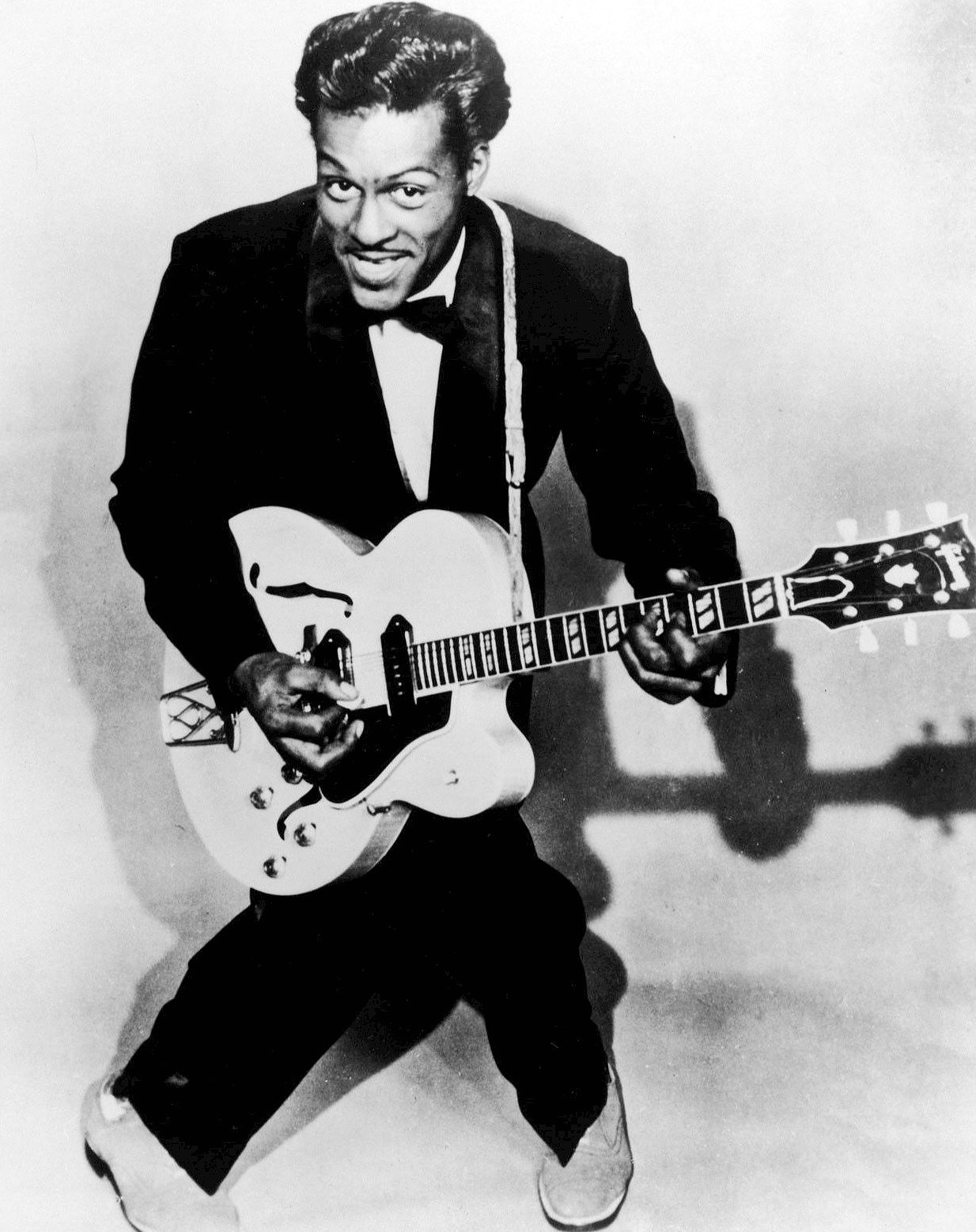
Chuck Berry1950s · Rock and roll / Rhythm and blues
Malcolm Young named the starting point without hesitation: "As a kid, it started with Chuck Berry," he told Rolling Stone. "You can't forget Chuck Berry. I mean, just about everything he did back then was great." Angus took the debt further than admiration, copying Berry's stage move down to the duck walk across the stage, one biography notes. "I think Chuck Berry has a lot of gifts," Angus said in 2000, "because he brought together blues, country music, folk music, and a bit of jazz, and put it all together into what we call rock and roll."
listen: upstream & heresource: Far Out Magazine — the musician Angus and Malcolm Young agreed was the greatest (Chuck Berry quotes, verified verbatim) ↗
1958
Johnny B. GoodeChuck Berry
1980
Back in BlackAC/DC
listen forChuck Berry's 1958 "Johnny B. Goode" runs on one insistent double-stop riff, hammered in eighth notes over a boogie-woogie bassline, the guitar carrying rhythm and lead in a single part. AC/DC's 1980 title track "Back in Black" strips that same idea to its studs: one guitar chugs the riff while the other punches accents on the offbeat, and the song never modulates or complicates the pattern — just Berry's formula played at a slower, heavier gait, tuned down and turned up.
The Rolling Stones1960s-70s · Rock / Blues rock / Hard rock
Malcolm Young placed the Rolling Stones above his own catalogue: "If we're having a party, we won't be sticking on an AC/DC record," he said. "It'll be the Stones, Chuck Berry, Little Richard, that kinda bag." Asked once to name his favourite bands outright, he was just as blunt: "The Stones and The Who… and that's about it." Where Keith Richards built songs from open-tuned, riff-first rhythm guitar, Malcolm found his own version of that same idea and drilled it into AC/DC's lockstep, rhythm-led attack.
listen: upstream & here
1968
Jumpin' Jack FlashThe Rolling Stones
1975
T.N.T.AC/DC
listen forThe Rolling Stones' 1968 "Jumpin' Jack Flash" rides on Keith Richards' two-chord, open-tuned riff, repeated so relentlessly it works almost like a chant under Mick Jagger's vocal. AC/DC's 1975 "T.N.T." runs the same trick as a terrace singalong: Malcolm Young's rhythm guitar hammers one riff while the whole band shouts the title back at him, the song built entirely from repetition and call-and-response rather than harmonic movement — the Stones' stomp turned into a chant of its own.
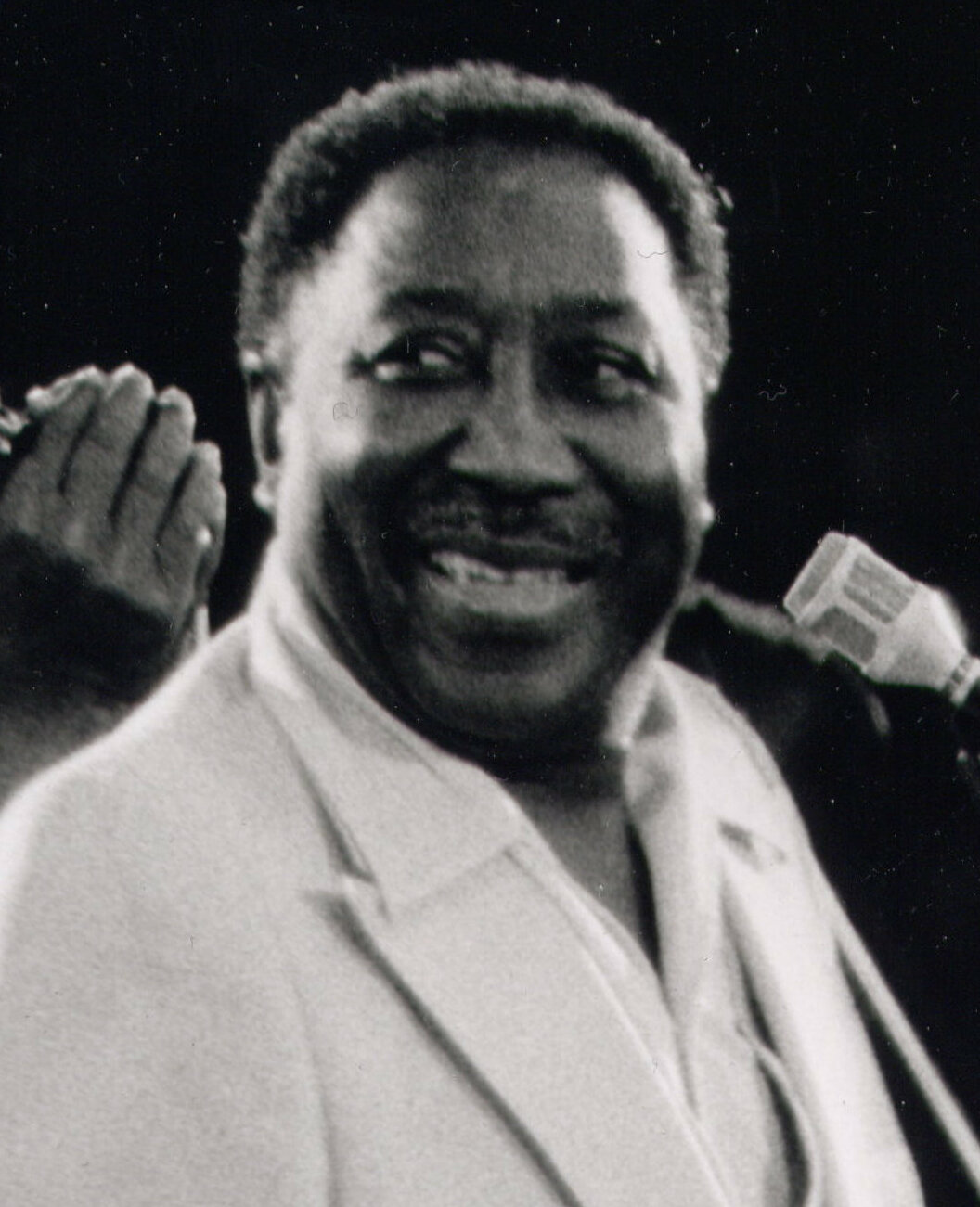
Muddy Waters1950s · Chicago blues / Electric blues / Delta blues
Angus Young has named Muddy Waters among the handful of guitarists who shaped him, alongside his brother and Chuck Berry, and he's been specific about the debt. "For me, the blues have always been the foundation to build on," he told Playboy Australia in 1992. "I've always liked the blues... not only Muddy Waters or Robert Johnson." In 2020 he narrowed it further, telling Total Guitar: "I've always liked the happy sort of blues music, like Muddy Waters." Waters' economical, amplified phrasing became the template for Angus's own soloing.
listen: upstream & heresource: Rock and Roll Garage — 3 guitarists Angus Young listed as influences (2020 Total Guitar quote on Muddy Waters, verified verbatim) ↗
1955
Mannish BoyMuddy Waters
1977
Hell Ain't a Bad Place to BeAC/DC
listen forMuddy Waters' 1955 "Mannish Boy" barely moves off one chord, its power coming from stop-time phrasing and slide guitar answering his voice line by line. AC/DC's 1977 "Hell Ain't a Bad Place to Be" runs the same principle through a full band: Angus Young's solo sticks to a handful of bent, blues-scale notes rather than a run of them, letting attack and silence do the work extra notes wouldn't — the same economy Waters built his whole career on.