walking upstream…
Nickelback
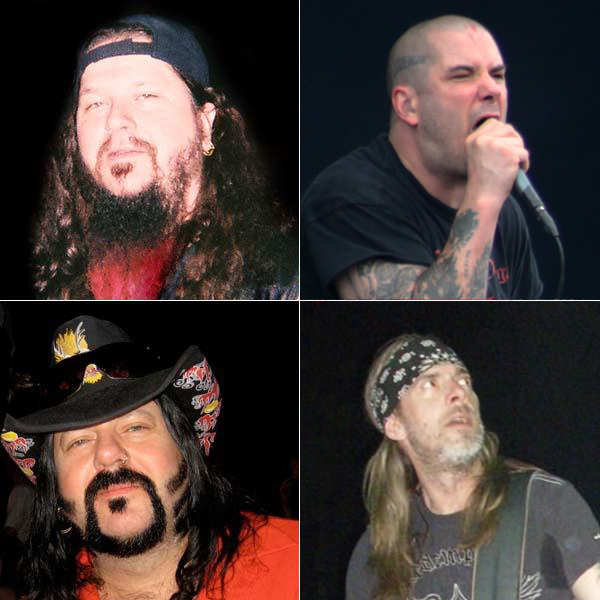

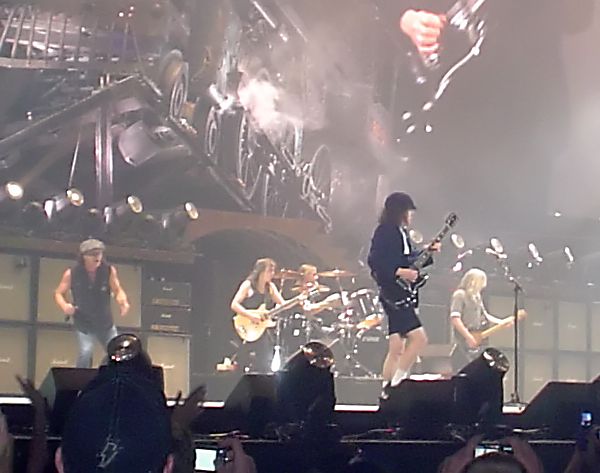
 photo: jkmusicgroup · cc by 3.0 ↗
Nickelback
In a Vancouver club in 1998, Roadrunner Records scout Ron Burman watched a bar band tear through "Leader of Men" to a room singing along with lighters raised. "I got goosebumps and knew I had to sign them," he recalled — four years into a grind of unheated vans and nine-hour drives across a country too big for shortcuts. The Alberta group, formed in 1995 around brothers Chad and Mike Kroeger, cashed in that persistence in 2001: "How You Remind Me," written in under an hour in a Vancouver basement after a fight with a girlfriend, became the most-played song on American radio that decade. Nickelback's post-grunge melody welded to blunt, riff-first hard rock made them arena-filling and, in equal measure, a favorite critical target — a band built less on innovation than on unembarrassed, hook-hungry craft.
the sound in question
2001
How You Remind MeNickelback
walk the tributaries ↓
Pantera1990s · Groove metal / Thrash metal / Heavy metal
Chad Kroeger's list of guitar heroes settles on two names, and one of them is Pantera's own guitarist, a friend he lost. "Between Dime and Hetfield, those are the two biggest influences for me," he told Guitar World, praising how Dimebag Darrell could turn "bluesy lines" into "harmonics and horse squeals" inside one solo. The debt is literal, not just stylistic: Kroeger and his band took unreleased Dimebag outtakes from the Cowboys From Hell and Far Beyond Driven sessions, "chopped them up," and built a new solo around them for "Side of a Bullet" — with the blessing of Dimebag's brother, Vinnie Paul.
listen: upstream & heresource: Guitar World — Chad Kroeger reveals the 10 guitarists who shaped his sound (Pantera, Metallica, AC/DC testimony) ↗
1990
Cowboys From HellPantera
2005
Side of a BulletNickelback
listen forListen to Dimebag Darrell's playing from the Cowboys From Hell era for his signature move: a note popped sharp on the third fret, then pulled back into tune with a huge, warbling whammy-bar vibrato. Then cue the guitar solo on Nickelback's "Side of a Bullet" — it isn't an imitation of that technique, it is Dimebag's own unused solo audio from those sessions, edited into the track. The harmonics and bar-dips are his hands, not a tribute; the rest of the song builds a Nickelback arrangement around a real, physical fragment of Pantera's most virtuosic guitarist.
Metallica1980s–90s · Thrash metal / Heavy metal
"Any time I talk about my influences, I have to mention Mr. Hetfield," Kroeger told Guitar World in 2022, singling out the "heaviness and groove" of Metallica's "Sad But True" as a songwriting model. As a teenager he wore out Metallica alongside Megadeth and Anthrax — "the staples of my childhood" — and the debt resurfaced decades later on camera: shooting the video for "San Quentin," Kroeger played a black Explorer guitar through the same EMG-and-Mesa/Boogie rig James Hetfield favors, "definitely getting that Metallica sound," and pushed his own voice toward Hetfield's "chainsaw" rasp for the chorus.
listen: upstream & heresource: Guitar World — Chad Kroeger reveals the 10 guitarists who shaped his sound (Pantera, Metallica, AC/DC testimony) ↗
1991
Sad But TrueMetallica
2022
San QuentinNickelback
listen forDrop the needle on "Sad But True" and feel how slowly it moves for a metal song — a lumbering, downpicked riff built to make a room air-drum rather than sprint. "San Quentin" chases that same low-gear weight: guitars tuned down and thickened in layers, the tempo held back so the groove can land instead of race. The clearest tell is Kroeger's chorus vocal, pushed into a rasping snarl he has said was a conscious reach for James Hetfield's aggression — a Metallica-shaped growl inside a Nickelback hook.
AC/DC1970s-80s · Hard rock / Blues rock / Rock and roll
Kroeger names AC/DC's Angus Young among the ten guitarists who shaped his sound, and the tribute is about difficulty, not simplicity. "You have no idea how hard it is to create something that grooves like AC/DC until you've sat down and given it a go," he told Guitar World, singling out "Thunderstruck" for the moment "the riff kicks in" and your "head is banging back and forth." He even got to play Angus's SG backstage once, strung so light it felt "like butter" — proof, he said, of how much craft hides inside AC/DC's blunt-seeming riffs.
listen: upstream & heresource: Guitar World — Chad Kroeger reveals the 10 guitarists who shaped his sound (Pantera, Metallica, AC/DC testimony) ↗
1990
ThunderstruckAC/DC
2005
RockstarNickelback
listen for"Thunderstruck" runs almost entirely on one riff, repeated and building until it is less a song than a chant everyone in the room already knows. "Rockstar" works the same trick at a slower, boastful strut — a single guitar hook stated up front, then ridden through the whole track so a crowd can shout the title back at the band. Neither song leans on a verse-chorus surprise; both bet everything on one riff being catchy enough to survive an arena's worth of repetition, the blunt, meat-and-potatoes songwriting Kroeger says looks simple until you try to write it yourself.