walking upstream…
YoungBoy Never Broke Again


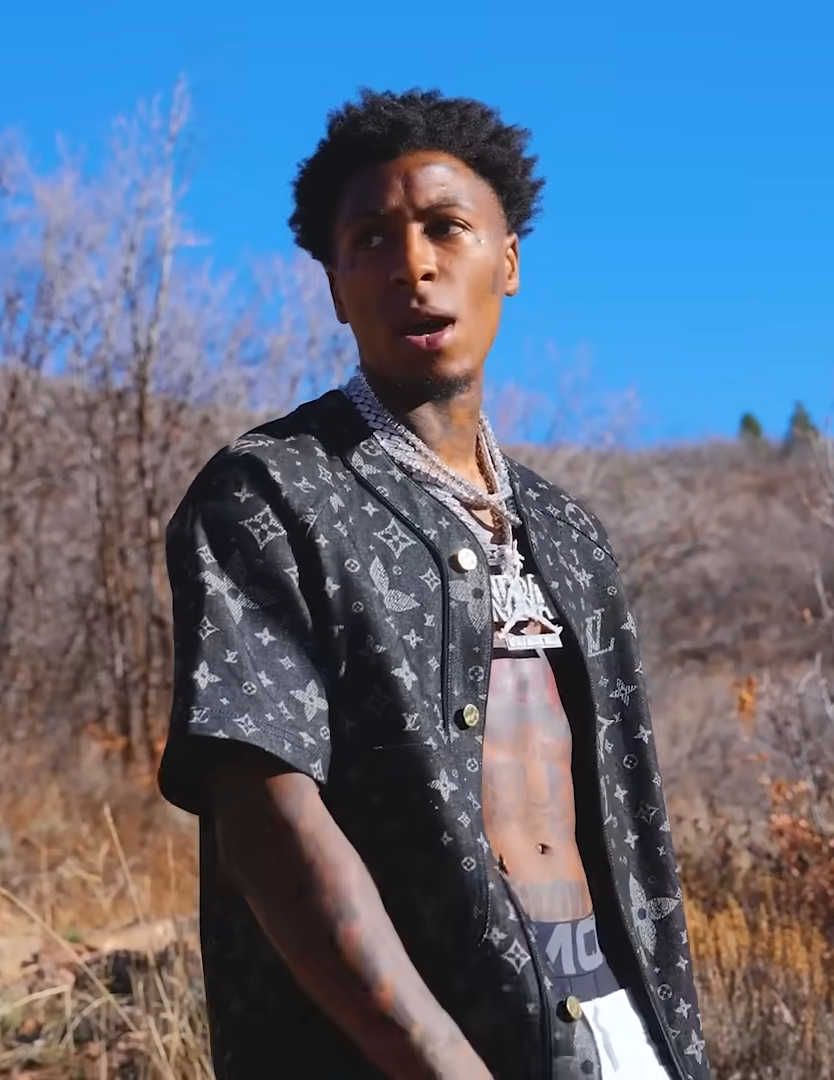 photo: million dollaz worth of game · cc by 3.0 ↗
YoungBoy Never Broke Again
sourcesThe FADER — "The Teen Rap Prodigy Worth Rooting For" (bio, Boosie relationship, critical consensus on the three Louisiana influences) · XXL — "The Break Presents · XXL — prison interview (Lil Phat as "biggest influence," Boosie/Gates on 38 Baby) · The Hollywood Reporter — "Rapper Lil Phat Killed in Atlanta Shooting" (Lil Phat biography) · HotNewHipHop — "Kevin Gates Says He Influenced NBA Youngboy & Other New Rappers" (Gates's own testimony) · Billboard — "YoungBoy Never Broke Again Teams Up With Kevin Gates for '4 Respect' EP" (joint EP, Gates as "mentor")
Kentrell Gaulden broke his neck in a wrestling accident at four — three scars on his forehead still mark the halo brace — and lost the grandmother raising him in north Baton Rouge not long after. He dropped out of school, was arrested for robbery, and spent six months in a juvenile detention center in Tallulah, Louisiana, writing the songs that became his first mixtape, Life Before Fame (2015). The tapes came fast after that until Atlantic signed him for $2 million in October 2016. Weeks later he was charged with attempted murder after a Baton Rouge shooting, pleading down to a ten-year suspended sentence the same year the press started calling him the city's next star. "I come from a rare place," he says of it — and the confessional bluntness he raps with, over sinister piano and bass, still sounds like testimony from inside it.
the sound in question
2018
Outside TodayYoungBoy Never Broke Again
walk the tributaries ↓
Lil Phat2000s–10s · Southern hip hop / Gangsta rap
Ask YoungBoy who he grew up on and the answer never changes. "I grew up listening to Lil Phat, because he was young," he told XXL in 2016, naming the Trill Entertainment rapper gunned down outside an Atlanta hospital in 2012 at nineteen. A year later, from a Baton Rouge jail cell, he named a favorite song: "I like all of 'em. I like 'It Won't Be Long.'" The Fader called it the only influence YoungBoy has ever claimed outright — not Boosie, not Gates, just the one rapper from his own block who never got the chance to become one.
listen: upstream & heresource: The FADER — "Meet NBA YoungBoy, Baton Rouge's Rawest New Rapper" (Lil Phat and Kevin Gates as claimed influences) ↗
2011
It Won't Be LongLil Phat
2015
Range RoverYoungBoy Never Broke Again
listen forLil Phat's "It Won't Be Long" is plain, unhurried street reporting — a young voice narrating hustle and dread over a beat that barely rushes him. "Range Rover," cut when YoungBoy was fourteen for Life Before Fame, works the same register: nasal, higher-pitched, dejected past its years, over production just as sparse. Listen for how little either song performs — no punchlines, no boasting, just a kid stating what's true and letting the silence around his voice carry the rest of the weight.
Boosie Badazz2000s–10s · Southern hip hop / Gangsta rap / Trap
Boosie Badazz was Baton Rouge's biggest rap export throughout YoungBoy's adolescence, and the relationship moved from admiration to family fast — Boosie rapped alongside him on "Up in Blood" off 2016's 38 Baby, then, after YoungBoy's release from Parish Prison, posted a warning under a photo of him walking free: "Welcome home... Leave BR asap." The Fader's 2017 profile traced YoungBoy's everyman directness straight back to Boosie, writing that, like Boosie before him, he "deals in reality rather than elaborate metaphor" over the same sinister piano and bass.
listen: upstream & here
2006
Set It OffBoosie Badazz
2016
Up in BloodYoungBoy Never Broke Again
listen forBoosie's "Set It Off" is unhurried menace — a flat, matter-of-fact delivery that treats violence as just another fact of the day. "Up in Blood" puts that same flatness in the same room: YoungBoy raps his verses in an identical deadpan, then hands the beat to Boosie, whose verse doesn't shift the temperature at all — same register, same threat level, one generation confirming the other learned the lesson. Listen for how neither voice ever raises to make its point.
Kevin Gates2010s · Southern hip hop / Hip hop / Trap
Before YoungBoy had a record deal, he was freestyling over Kevin Gates's own instrumentals — "he's rapped over multiple instrumentals from Gates's catalogue," The Fader noted in 2016 — and by 2018 the two were making records together outright, Billboard describing Gates as YoungBoy's "mentor" on their joint 4 Respect EP. Gates has since confirmed the direction of the debt himself: asked about the rappers who came after him, he named YoungBoy specifically. "I love NBA Youngboy," he said in 2023. "That's my lil' baby. I'll die for him right now."
listen: upstream & heresource: The FADER — "Meet NBA YoungBoy, Baton Rouge's Rawest New Rapper" (Lil Phat and Kevin Gates as claimed influences) ↗
2013
4:30 AMKevin Gates
2018
2 HandsYoungBoy Never Broke Again
listen forGates's "4:30 AM" is the clearest example of what critics call his melodic leanings — the rap dissolving into a half-sung, cracking hook mid-verse, grief bleeding through the technique. On "2 Hands," from their joint 4 Respect EP, YoungBoy sings through his own verses the same way, the melody wavering right where the lyric turns painful, before handing off to Gates, who does it again on the same beat. Listen for the pitch break in both voices — the moment rapping stops being enough and the voice just cracks open.