walking upstream…
Wisin & Yandel
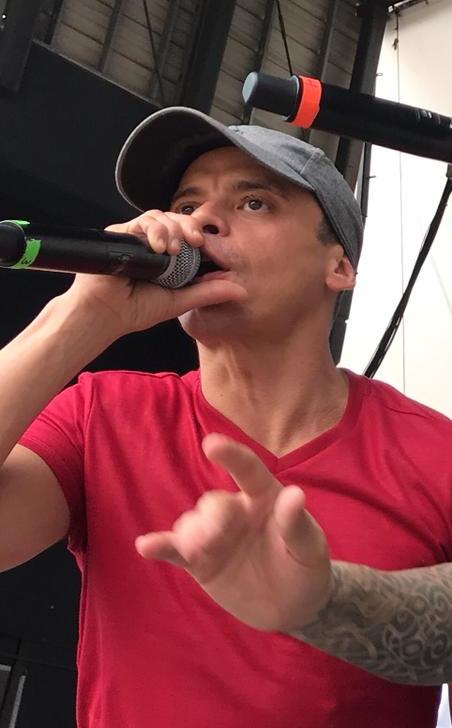

 photo: jorge mejía peralta · cc by 2.0 ↗
Wisin & Yandel
sourcesThe Ticket Blog — "How Yandel Went from Cayey Barber to Grammy-Winning Artist" (meeting Wisin in high school over reggae en español and dancehall) · Rolling Stone — "Wisin Y Yandel's Classic 'Pa'l Mundo' Turns 20" (marquesina party culture, Luny Tunes production, the 2005 breakthrough) · Wikipedia — Dem Bow (riddim lineage from Shabba Ranks and Panama to Wisin & Yandel's 2003 "Dembow") · Wikipedia — El General (biography, years active, "Tu Pum Pum") · Wikipedia — DJ Playero (biography, Playero 34/37 mixtapes and Daddy Yankee's start) · Wikipedia — Reggaeton (DJ Playero and DJ Nelson's early mixtape era) · Wikipedia — Wisin & Yandel (formation, discography, Grammy and breakup timeline)
In 1998, at a high school in Cayey, Puerto Rico, a barber's apprentice named Llandel Veguilla Malavé bonded with a classmate, Juan Luis Morera Luna, over dancehall cassettes and the borrowed slang of reggae en español; by year's end they had taken the names Yandel and Wisin and cut their first track for a local mixtape. It took seven years and one modest debut album before 2005's Pa'l Mundo — its ballpark organs and ringing-telephone samples courtesy of the production duo Luny Tunes — turned San Juan's underground perreo into an international sound. Los Extraterrestres made them the first reggaeton act to win a Grammy in 2009. They split in 2013, reunited in 2018, and closed the partnership for good in 2023, twenty-five years after two Cayey classmates became reggaeton's longest-running duo.
the sound in question
2005
RakataWisin & Yandel
walk the tributaries ↓
DJ Playero1990s · Reggaeton / Dancehall / Freestyle
DJ Playero's mixtapes were reggaeton's underground trade routes — cassettes passed hand to hand across San Juan, built from dancehall riddims and teenage MCs recorded in his home studio. Yandel later named him, alongside Vico C, as the reason he thought a life in music was possible at all: "DJ Playero and also Vico C" made him realize he could be an artist full-time, he told Billboard, because "urban music really connected with me... it was really a genre of the streets." Playero's tapes had already turned one of those teenage rappers, Daddy Yankee, into a name before Wisin & Yandel cut a record of their own.
listen: upstream & heresource: Billboard — "20 Questions With Yandel" (Yandel names DJ Playero and Vico C as the influences that convinced him to pursue music full-time) ↗
1994
Dónde Mi No VengasDJ Playero
2005
RakataWisin & Yandel
listen forPlayero 37's "Dónde Mi No Vengas" catches a teenage Daddy Yankee rapping in short, clipped bursts over a raw, tape-hissy dancehall loop — reggaeton before it had a studio budget. Wisin & Yandel's 2005 breakout "Rakata" keeps that same rapid hand-off between two voices trading a hook back and forth, but polishes the low end into a controlled subwoofer thump. Listen for the cypher instinct underneath the gloss: the vocal volley still snaps the way Playero's mixtape sessions did, just mixed for arenas instead of cassette decks.
Vico C1990s · Hip-hop / Reggaeton / Christian hip-hop
A decade before Wisin & Yandel existed as a duo, Vico C had already proven a Puerto Rican could rap entirely in Spanish and sell records doing it. Yandel named him, next to DJ Playero, as one of two artists who convinced him music could be a career, and traced the pull straight back to his own upbringing: "I was raised in a neighborhood where war was waged every day, and I saw a lot, I learned a lot in the streets, and urban music allowed me to reflect that," he told Billboard. Vico C had already shown that street narrative could ride a melody, not just a beat.
listen: upstream & heresource: Billboard — "20 Questions With Yandel" (Yandel names DJ Playero and Vico C as the influences that convinced him to pursue music full-time) ↗
1990
Me AcuerdoVico C
2006
Yo Te QuieroWisin & Yandel
listen forVico C's 1990 breakthrough "Me Acuerdo" rides a spare beat while he slides between a sung hook and conversational, half-rapped verses recounting a real heartbreak — melody and street-level storytelling sharing the same four bars. Wisin & Yandel's 2006 ballad "Yo Te Quiero" works the same seam: Wisin sings the chorus straight, then Yandel drops into a half-rapped verse without the tempo ever breaking stride. It is the move Vico C popularized on the island — treating the line between singing and rapping as something to cross, not respect.
El General1990s · Reggae en español / Dancehall / Reggae
Before reggaeton had a name, Wisin and Yandel were two teenagers at a Cayey high school bonding over the same cassettes: a biography of the duo records that they "bonded over a shared love for the emerging reggae en español and dancehall sounds that would become reggaeton" — the style El General had spent the early '90s building in Panama, setting Spanish vocals over Jamaican dancehall riddims on hits like "Tu Pum Pum." The duo's own 2003 track "Dembow," named for the riddim pattern El General helped carry into Spanish-language reggae, is the clearest receipt for how directly that teenage fandom shaped their catalog.
listen: upstream & heresource: La Mezcla — "From Panama to the World ↗
1990
Tu Pum PumEl General
2003
DembowWisin & Yandel
listen forEl General's 1990 "Tu Pum Pum" lays a sung-and-chanted Spanish vocal over a stripped dancehall riddim, naming the rhythm — dembow — that would outlive him across two more decades of Caribbean music. Wisin & Yandel's 2003 track "Dembow" keeps that same clipped, off-beat drum pattern and trades El General's raw dancehall toasting for a sleeker, sung-rapped hook. Play them back to back and listen for the shared skeleton underneath the arrangement: identical rhythmic DNA, dressed for a different decade's club.