walking upstream…
Willie Dixon


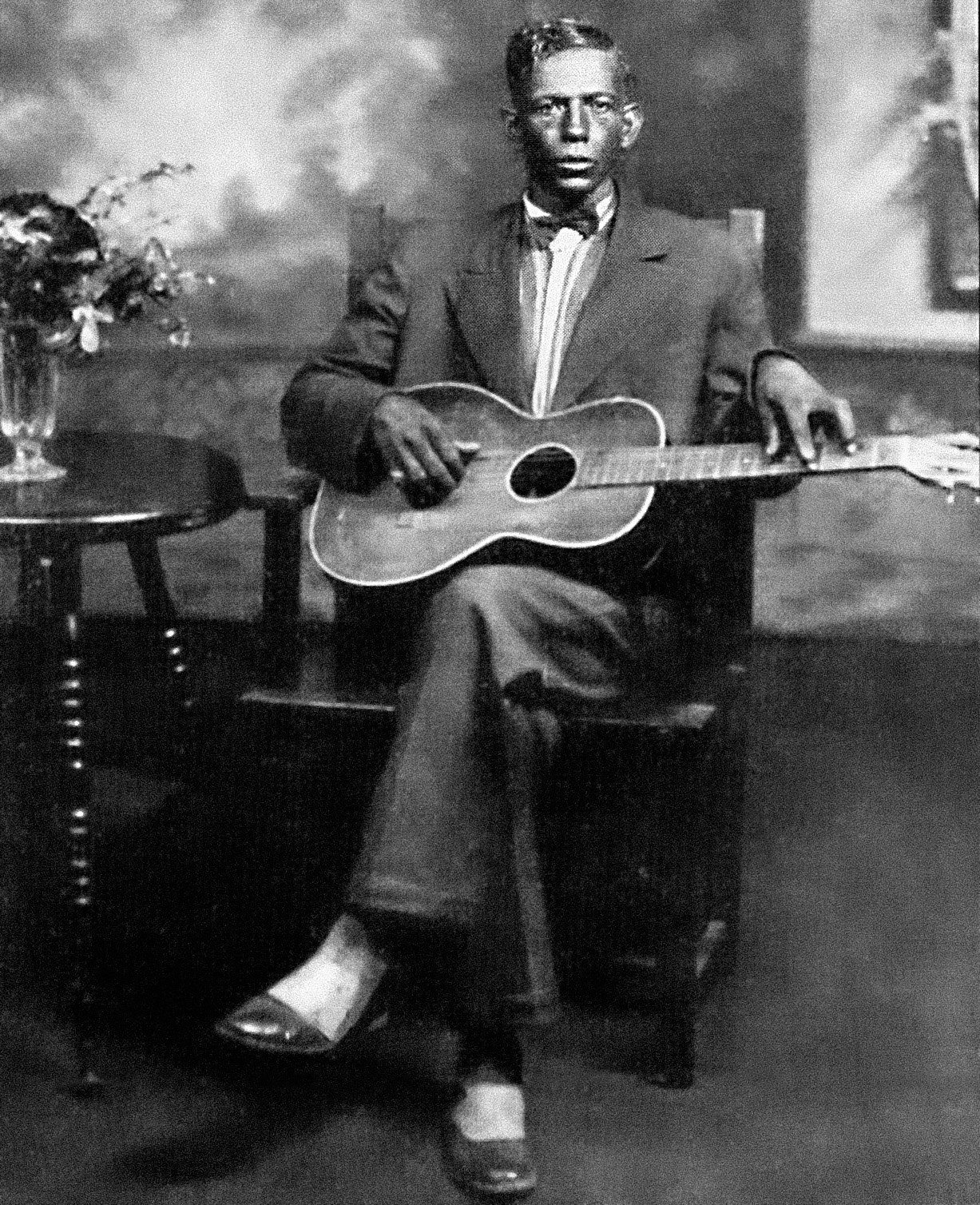
 photo: brian mcmillen · cc by-sa 3.0 ↗
Willie Dixon
Willie Dixon grew up in Vicksburg, Mississippi, singing bass in a gospel quintet led by a local carpenter and, as a boy, trailing the barrelhouse piano of Little Brother Montgomery through the town's juke joints. He arrived in Chicago in 1936 a heavyweight boxer first and a musician second, but by 1951 he was Chess Records' de facto architect: staff songwriter, producer, talent scout, and the walking bass line under half the label's classic sides. 'Hoochie Coochie Man,' 'Spoonful,' 'Little Red Rooster,' 'Back Door Man' — songs he wrote for Muddy Waters and Howlin' Wolf became the vocabulary of postwar blues and then rock and roll wholesale. He kept recording his own versions of them too, most fully on 1970's 'I Am the Blues.'
the sound in question
1970
(I'm Your) Hoochie Coochie ManWillie Dixon
walk the tributaries ↓
Little Brother Montgomery1930s · Blues piano / Barrelhouse / Boogie-woogie
As a boy of about seven or eight in Vicksburg, Dixon fell for a band fronted by pianist Little Brother Montgomery, catching Montgomery's rolling barrelhouse style firsthand. Dixon named Montgomery directly among his childhood musical heroes, and the piano-centered, storytelling structure Montgomery represented — verses built for a singer to ride over a rolling keyboard pulse rather than a single guitar riff — runs through Dixon's own songwriting, which he built for bands leaning on piano and bass.
listen: upstream & heresource: Mississippi Blues Trail ↗
1930
Vicksburg BluesLittle Brother Montgomery
1959
Built for ComfortWillie Dixon
listen forSet Montgomery's 'Vicksburg Blues' against Dixon's own 'Built for Comfort' — both ride a rolling, syncopated left-hand figure under a conversational, almost spoken vocal that treats the piano as a rhythm section unto itself.
Big Bill Broonzy1930s-40s · Chicago blues / Country blues / Folk blues
After Dixon settled in Chicago in the mid-1930s, he found stage and session work alongside Big Bill Broonzy, one of the city's reigning blues elders and, by most accounts, an informal mentor to nearly every younger player who passed through its clubs. Broonzy had already spent a decade turning Delta-rooted verses into songs built for a city audience — plainspoken narrative lyrics over a steady, unhurried groove pitched at listening rooms rather than porches — and that same instinct for a well-constructed, bandstand-ready blues song runs through Dixon's own writing for Chess.
listen: upstream & here
1941
Key to the HighwayBig Bill Broonzy
1970
SpoonfulWillie Dixon
listen forCompare Broonzy's 'Key to the Highway' with Dixon's own 'Spoonful' — both keep a plain, first-person lyric moving over an unhurried, steady groove built to let a whole room lock in, blues written like a well-turned short story rather than a field holler.
Charley Patton1920s-30s · Delta blues
Listening in as a small child, Dixon heard Charley Patton perform in Vicksburg alongside Little Brother Montgomery — an early, direct exposure to Patton's booming, percussive delivery and the folk-belief imagery of mojo hands, hoodoo, and bad luck that ran through Delta blues lyrics. Dixon's own songwriting kept returning to that same well of superstition and folk magic, dressed up decades later for a Chicago studio band rather than a single guitar on a porch.
listen: upstream & here
1929
Pony BluesCharley Patton
1970
I Ain't SuperstitiousWillie Dixon
listen forPut Patton's 'Pony Blues' beside Dixon's own 'I Ain't Superstitious' — both lean on the stock imagery of Delta folk belief, delivered with a blunt, declarative certainty that treats superstition as plain fact rather than metaphor.