walking upstream…
Tyler, the Creator


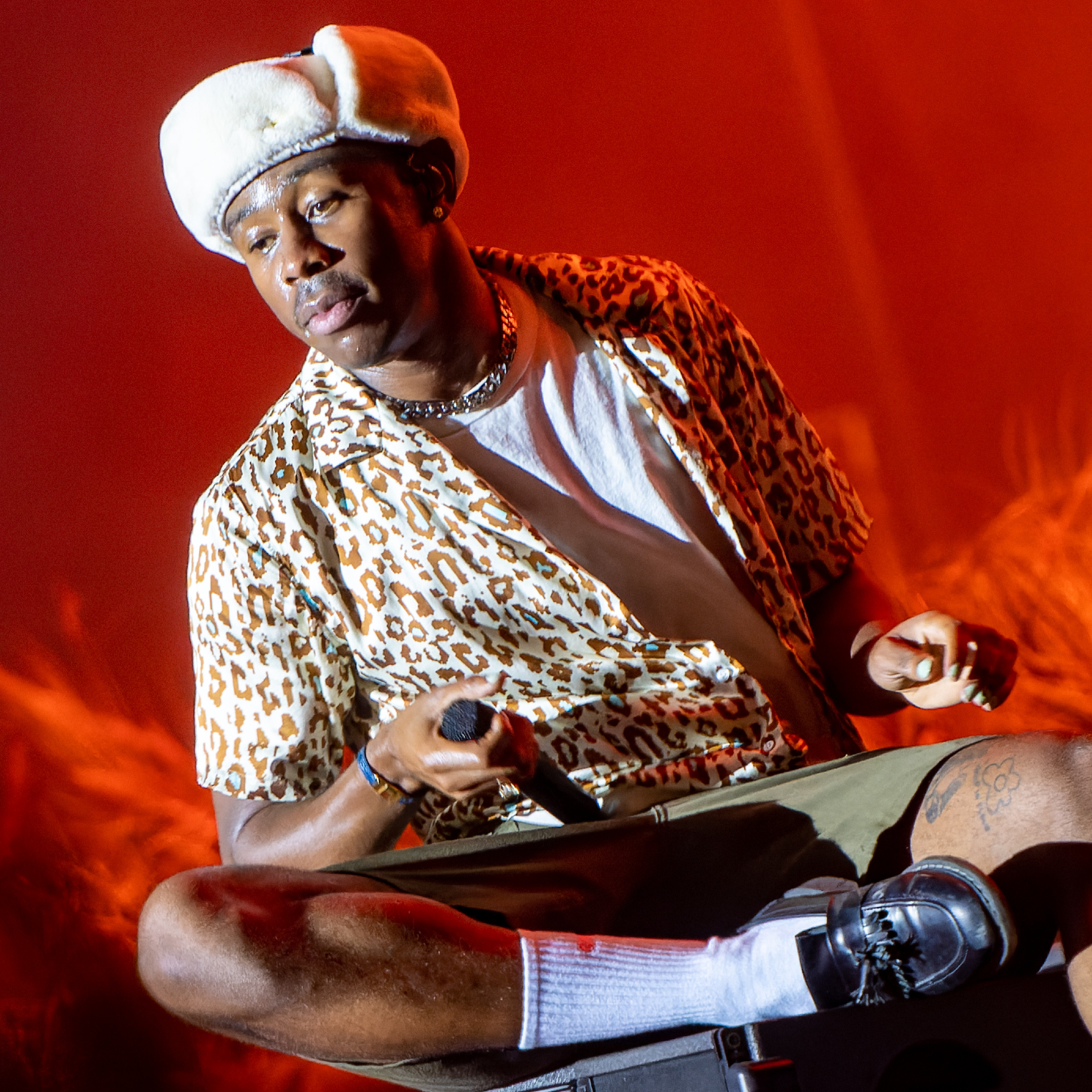 photo: raph_ph · cc by 2.0 ↗
Tyler, the Creator
sourcesVice — We Found the Radio DJ Who Introduced Tyler, the Creator to N.E.R.D. (the 2002 laundromat discovery of "Run to the Sun") · NME — Tyler, the Creator shares Pharrell's life-changing career advice (2023 RapCaviar Presents studio quotes) · Wikipedia — Deathcamp (song) (Pitchfork/Spin critical readings of the N.E.R.D./Neptunes influence) · BET — 10 Iconic Roy Ayers Samples That Defined Hip-Hop and R&B (names "FIND YOUR WINGS") · Billboard — 2017 Camp Flog Gnaw Carnival lineup (confirms Roy Ayers' appearance) · Tunes & More Tunes — first post · Okayplayer — Tyler, the Creator hosts epic MF DOOM tribute set with Erykah Badu, Madlib, live orchestra and more (2024 Camp Flog Gnaw tribute) · Wikipedia — Tyler, the Creator (biography and influence arc)
Tyler Okonma was a teenager in Ladera Heights, Los Angeles, in 2007 when he and a crew of skateboarding friends — among them Frank Ocean and Earl Sweatshirt — named themselves Odd Future. No label was involved: Tumblr and self-shot YouTube videos did the work an A&R department normally does, and by 2010 the collective's confrontational, self-produced tapes had built a national audience out of nothing. Tyler produced his own records from the start, and the debut mixtape Bastard (2009) and its follow-up Goblin (2011) run on a teenage record obsessive's raw materials — a fixation with a masked, mysterious producer's beat-making, plus Eminem's horrorcore theatrics. The turn came with Wolf (2013): the same self-production instinct, redirected at jazz chords and live instrumentation instead of shock. What never moved was the ear he trained years earlier, on a car radio and a stack of records he studied like scripture.
the sound in question
2019
EARFQUAKETyler, the Creator
walk the tributaries ↓
Pharrell Williams2000s–10s · Hip Hop / R&B / Funk / Pop
In 2002, months after that year's Easter, a young Tyler sat in a car outside a Los Angeles laundromat with his mother when N.E.R.D.'s "Run to the Sun" came over the radio — a memory he can still place by the season. Two decades later, Pharrell was still recalibrating him. During a 2023 studio session filmed for the Hulu docuseries RapCaviar Presents, Pharrell told him: "You got it, you just don't see it. You got it, you got the shit." Tyler's own account of that day, relayed to NME, is blunter: "Oh fuck. No more being silly – music first... the switch fucking happened."
listen: upstream & here
2002
Run to the SunPharrell Williams
2015
DeathcampTyler, the Creator
listen forListen for the four-count intro that opens "Run to the Sun," a Neptunes tic Pharrell reused across a decade of hits, and then cue "Deathcamp," the song that opens Cherry Bomb thirteen years later: the same clipped synth stabs and thudding, off-kilter drum programming, sped up into something angrier. Tyler doesn't hide the source — mid-song he raps that N.E.R.D.'s In Search Of... "did more for me than Illmatic," naming the record inside the very track it shaped.
Roy Ayers1970s · Jazz funk / Soul / Funk
By Wolf (2013), Tyler had already reached for Roy Ayers' harmonic language on "Treehome95," the album's most overtly jazz-inflected track. Two years later he got Ayers himself for Cherry Bomb: he sent over the song he wanted him on, and Ayers called back with a verdict Tyler still repeats verbatim, as he told PBS's Tavis Smiley: "Aw, young man — Tyler, these changes, they cold, man, these chords are cold." Tyler, who named Ayers one of his three favorite producers, called that validation from someone "who has been doing this since forever" the whole point. Ayers later played Tyler's own festival, Camp Flog Gnaw, in 2017.
listen: upstream & heresource: Music Times — transcript of Tyler's 2015 PBS/Tavis Smiley interview (Roy Ayers "these chords are cold" quote) ↗
1976
Everybody Loves the SunshineRoy Ayers
2015
FIND YOUR WINGSTyler, the Creator
listen forPlay "Everybody Loves the Sunshine" and its vibraphone runs sit loose over a warm, unhurried groove — the instrument is Ayers' signature, and the network BET later singled it out by name as his fingerprint on hip-hop and R&B production. On "FIND YOUR WINGS," that same vibraphone is Ayers playing live, not sampled, laid under Tyler's own chord changes; the harmonic patience that made Ayers call and compliment those chords is audible in how unhurried the whole track feels, next to almost everything else on Cherry Bomb.
MF DOOM2000s · Hip-hop / Abstract hip hop / Alternative hip hop
On his 2009 mixtape Bastard, teenage Tyler built "Odd Toddlers" around a loop from Cortex's obscure funk cut "Huit Octobre 1971" — the same source Madlib had chopped five years earlier for MF DOOM's "One Beer," the lone Madlib-produced track on DOOM's Mm..Food. Fans studying the lyric sheet noticed a second nod: in the second verse Tyler raps "I'm your favorite rapper," a boast that reads differently once you remember DOOM's own nickname, "your favorite rapper's favorite rapper." Fifteen years later Tyler made the debt literal, staging a 55-minute tribute at his own Camp Flog Gnaw Carnival with a 30-piece orchestra, Madlib, and Erykah Badu.
listen: upstream & heresource: WhoSampled — MF DOOM's "One Beer" sample of Cortex's "Huit Octobre 1971" ↗
2004
One BeerMF DOOM
2009
Odd ToddlersTyler, the Creator
listen forBoth tracks are built from the same four bars of Cortex's "Huit Octobre 1971," but the productions diverge in ways that mark generational distance: DOOM and Madlib chop the sample tight and dry, needling under DOOM's verses. Tyler slows the same loop and layers it thicker, dragging under his and Casey Veggies' bars like a beat still finding its shape. Listen for that swaggering guitar-and-horn riff in both versions — clipped in DOOM's, stretched heavier in Tyler's — a young producer studying his hero's source material rather than copying his exact technique.