Tito Puente


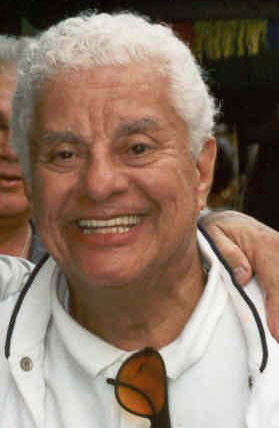 photo: raul rodriguez, jr. · cc by-sa 3.0 ↗
Ernest "Tito" Puente Jr. grew up in Spanish Harlem, switched from piano to percussion at ten under the spell of swing drummer Gene Krupa, and after Navy service in World War II returned to New York to play timbales in Machito's Afro-Cubans. Fronting his own orchestra from the late 1940s on, he became "El Rey del Timbal," fusing Afro-Cuban rhythm with big-band jazz arranging across a half-century and more than a hundred albums, composing the 1963 cha-cha-chá "Oye Como Va" that Santana would later carry onto rock radio.
Puente joined Machito's Afro-Cubans as a young timbalero, stepping into the drum chair when the band's regular player was drafted; the orchestra's fusion of jazz big-band voicings with clave-driven Afro-Cuban rhythm, pioneered on 'Tanga,' became the template Puente built his own mambo orchestra on.
listen forThe horn-section stabs riding an insistent clave on Machito's 'Tanga' reappear, sped up and pointed straight at the dance floor, in Puente's early mambo showcase 'Ran Kan Kan.'
Puente's mambo orchestra ran in the same downtown-uptown circuit as Gillespie's Afro-Cuban jazz experiments with conguero Chano Pozo, and the bebop-meets-clave fusion Gillespie popularized fed directly into Puente's own arrangements of jazz soloists riding a full Latin percussion section.
listen forThe way Gillespie's horns and Pozo's conga trade the beat on 'Manteca' has a direct descendant in Puente's 'Picadillo,' where jazz horn lines sit right on top of a dense Afro-Cuban percussion bed.
Puente has said he drew his earliest inspiration from swing drummer Gene Krupa after switching to percussion at age ten; Krupa's model of the drummer as featured soloist and bandleader, not just a timekeeper, is exactly the role Puente carved out for the timbales.
listen forKrupa's extended tom-tom vamp driving Benny Goodman's band on 'Sing, Sing, Sing' is the same showmanship Puente brings to the drawn-out timbale break on 'Para los Rumberos' — the drummer, not the horns, is the star of the arrangement.