walking upstream…
The Smiths


sourcesMOJO — The Birth Of The Smiths (Morrissey/Marr's 1978 meeting and the Kimberly songwriting story) · Desert Island Morrissey · MusicRadar — Johnny Marr explains his three biggest guitar influences (the "Hand In Glove" Chic-riff quote) · Wikipedia — The Smiths (formation timeline and lineup facts)
On a May afternoon in 1982, an eighteen-year-old guitarist named Johnny Marr walked to a terraced house in Stretford, Manchester, with his friend Steve Pomfret, to propose a band to a reclusive twenty-two-year-old named Steven Morrissey. Marr came prepared, guitar in hand; Morrissey, it turned out, had a stack of unpublished lyrics and a slim book he'd written about the New York Dolls. By the next day, the two had finished their first song together. Over four albums between 1984 and 1987 — The Smiths, Meat Is Murder, The Queen Is Dead, Strangeways, Here We Come — Marr's chiming, Spector-dense guitar interplay and Morrissey's deadpan, literate croon turned a shared record collection of glam, punk and girl-group singles into something neither could have made alone.
the sound in question
1984
How Soon Is Now?The Smiths
walk the tributaries ↓
New York Dolls1970s · Proto-punk / Glam rock / Hard rock
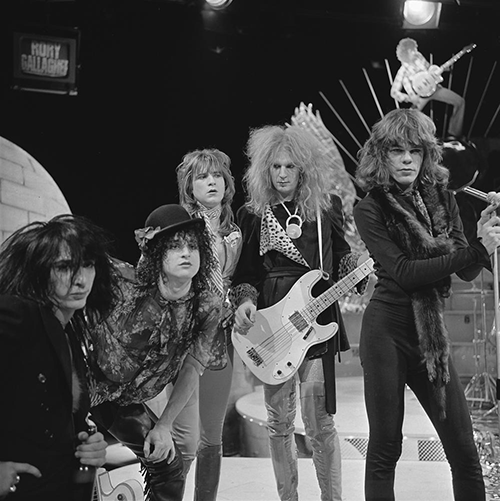
Morrissey was twelve when he found the New York Dolls in a music paper — an item headlined "Arrival Of The Dolly Boys" — and, he said, "thought it all sounded so alive and so witty... now this is MY band." He wrote fan letters to radio stations, papered his schoolwork with the band, and eventually wrote a slim biography of them, published before the Smiths existed. Johnny Marr has said the book is part of why he knocked on Morrissey's door in 1982 — proof, before they'd exchanged a word, that this was someone worth building a band around.
listen: upstream & heresource: Louder Than War — Morrissey talks glam rock and the New York Dolls (his teenage discovery of the band) ↗
1974
(There's Gonna Be A) ShowdownNew York Dolls
1983
Handsome DevilThe Smiths
listen forMorrissey has named only one song as the single most important record of his life: on BBC's Desert Island Discs he picked New York Dolls' 1974 barroom stomp "(There's Gonna Be A) Showdown," saying flatly that the band "changed everything." Cue it up and listen for the scrappy, half-shouted vocal riding a loose, live-feeling guitar attack. The Smiths' "Handsome Devil" carries the same theatrical sneer and jabbing rhythm guitar into a tighter, more controlled arrangement — glam swagger filtered through Marr's cleaner attack, the Dolls' chaos traded for discipline.
Patti Smith1970s · Punk rock / Art rock / Proto-punk
Marr and Morrissey first crossed paths not at a rehearsal but in the foyer of a 1978 Patti Smith show at Manchester's Apollo — Marr was fourteen, Morrissey nineteen. Morrissey's own account, given to MOJO decades later, was blunt: "Johnny first shoved his face in," he said, "and said, 'You've got a funny voice.'" Four years passed before they spoke again, on Morrissey's doorstep in 1982. The very next day, working through the details of a debut song, Marr built the tempo directly from Smith's "Kimberly" — a private tribute to the record that had first put them both in the same room.
listen: upstream & here
1975
KimberlyPatti Smith
1984
The Hand That Rocks the CradleThe Smiths
listen for"Kimberly," the closing track on Smith's 1975 album Horses, rides an unhurried, rolling chord pattern under her half-spoken verses — a tempo built for a lullaby about her baby sister. Marr lifted that same loping pace and chord shape for "The Hand That Rocks the Cradle," the first song he and Morrissey finished together, though Morrissey's lyric turns the title's nursery-rhyme tenderness sinister. The kinship is in the pulse itself: slow the ear down to Smith's tempo first, and the borrowed gait becomes unmistakable.
Chic1970s · Disco / Funk / R&B
Discovering Chic's records in 1978-79, while still developing his own guitar style, Marr called it "a game-changer for me, really sent me down a road that has really stuck with me" — one of only three guitarists he has ever named as a defining influence, alongside Bert Jansch and the Stooges' James Williamson. He has traced the debt to a specific Smiths song, admitting of the band's very first single, "Hand In Glove it just started out as a Chic riff." Decades later, when his son was born, Marr named him Nile.
listen: upstream & heresource: Drowned In Sound — DiS meets Johnny Marr & Nile Rodgers (Marr on discovering Chic and naming his son Nile) ↗
1979
Good TimesChic
1983
Hand in GloveThe Smiths
listen forChic's "Good Times" (1979) is built on Nile Rodgers' clipped, muted rhythm guitar — short, percussive chops functioning almost like a second drum under Bernard Edwards' bassline. The Smiths' 1983 debut single "Hand In Glove" strips away the disco groove but keeps that same choppy, syncopated attack driving the verses, Marr's strumming hand doing Rodgers' rhythmic work harder and rawer, with none of the studio gloss. Listen for the guitar sitting just ahead of the beat in both records — the pocket Marr said he first heard, and never stopped chasing.